Full Article
about Los Pintanos
Ocultar artículo Leer artículo completo
The only traffic jam in Los Pintanos is caused by wheat. In June the combine harvester takes up the entire main street—both lanes—while the driver waves at nobody in particular. The village, 674 m above the Ebro basin, has 37 permanent residents, three dogs and one functioning streetlamp. Mobile reception flickers in and out like a hesitant conversation, and the nearest supermarket is 19 km away in Ejea de los Caballeros. This is not a metaphor; it is simply the geography of emptiness that begins once you leave the A-23 at kilometre 306.
Why the Map Feels Larger Here
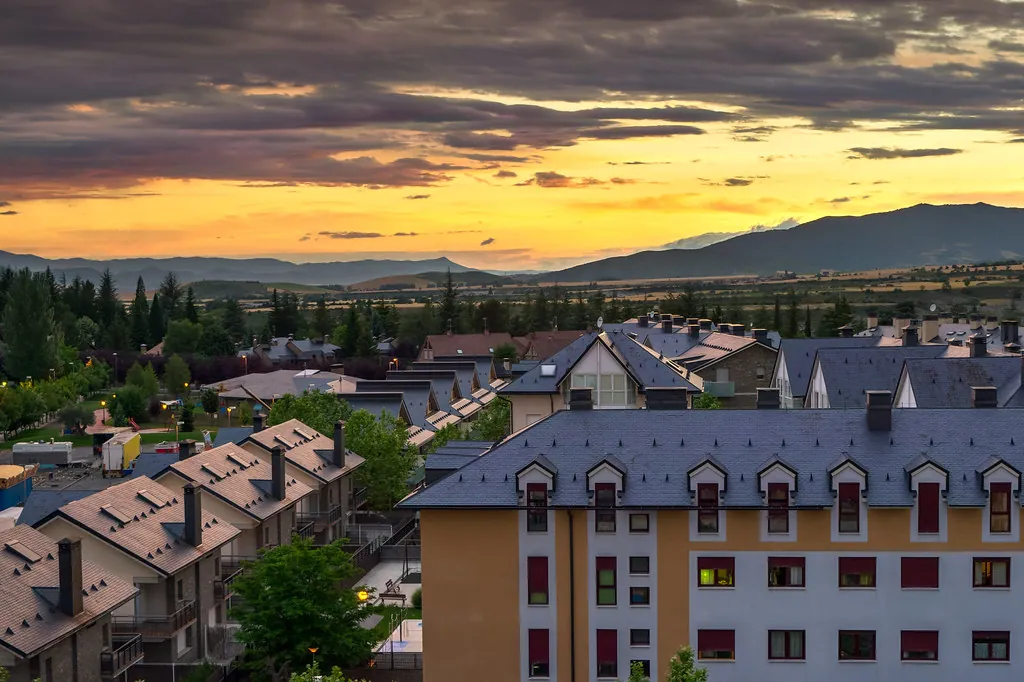
Sat-navs grow vague on the final approach. The road narrows to a strip of tarmac between sunflower plots, then tilts upwards through folds of chalky limestone. At the ridge the land opens into a cereal ocean: barley, durum wheat and the occasional island of almond trees. Los Pintanos sits on the horizon like a breakwater—stone houses shoulder-to-shoulder, their roofs all angled to catch the north wind that sweeps down from the Pyrenees 70 km away. The air is drier than on the coast and carries the smell of straw heated by sun; by night it drops ten degrees, enough to make a summer jumper sensible.
There is no petrol station, cash machine or souvenir shop. What exists is width: 360-degree sky, the sort that British weather rarely permits. On clear days you can pick out the snow-dusted silhouette of the Pyrenean ridge without binoculars; on stormy afternoons the same mountains vanish behind curtains of virga that never quite reach the ground. The spectacle is free and uninterrupted because there are no billboards, no rooftop cranes, barely any traffic.
A Church Older Than the United Kingdom
The parish church of San Esteban does not try to impress. Its sandstone walls are the colour of dry toast, patched with brick where stone ran out. Inside, the nave is barely twelve metres long; the bell tower is shorter than a London double-decker. Yet the building has stood since the twelfth century, predating the Acts of Union. Look closely and you’ll spot a Roman inscription re-used as lintel—evidence that even here builders recycled. The key hangs on a nail in the house opposite; knock and the caretaker, Julián, will lend it without asking your name. He may also tell you that the last wedding was in 1998 and the last baptism in 2004, facts delivered without nostalgia because nostalgia requires an audience.
Walking Where the Orchids Hide
A signed footpath, the Senda de los Pintanos, loops 12.5 km through fields and pine reforestation. April and May are best for wildflowers: purple Oncocyclus irises, bee orchids that mimic furry insects, and the rare sword-leaved helleborine that grows only on north-facing verges. The route is gentle—190 m cumulative ascent—but shadeless; carry at least a litre of water per person and a hat that won’t take off in the cierzo, the regional wind that can gust to 60 km/h. After rain the clay sticks to boots like cold treacle, so lightweight footwear with decent tread is wiser than heavy leather. You will meet more red kites than people; listen for their two-note whistle overhead.
If half a day feels enough, drive ten minutes to the ruins of Castillo de Uncastillo. The medieval walls frame the same cereal sea, but from 200 m higher. Entry is free and the custodian unlocks the tower only when visitors appear—another key-on-a-nail arrangement that feels refreshingly non-corporate.
Eating: Bring Your Own or Ring Ahead
Los Pintanos itself has no bar, café or bakery. The closest place to sit down is Undués de Lerda, 4 km east, where Unduesina opens Thursday to Sunday for lunch. Menu del día is €14 and includes a carafe of local Somontano wine; the lamb shoulder is slow-cooked in a wood-fired oven that was already old when rationing ended in Britain. Phone 976 64 90 30 before you set off—if no one answers, assume the owner has gone to help with the harvest. A more reliable alternative is Ejea de los Caballeros, where Bodegas Langa does a decent tempranillo tasting for €5 and sells bottles at cellar-door prices lower than UK importers ever manage.
Self-caterers should stock up in Zaragoza before leaving the A-23. The village’s only grocery memory is a faded “Colmado” sign above a bricked-up doorway. Villa Pintano, the one rental house, has a serviceable kitchen and a small plunge pool fed by mountain spring water; rates start at €90 per night for the entire three-bedroom house, minimum two nights. Bring £2 coins for the washing machine: it’s an old UK model salvaged from somewhere near Bradford, according to the owner who retired here from Leeds.
Fiestas: When Silence Takes a Holiday
For 51 weeks of the year the soundtrack is wind, birds and the distant clank of a tractor. Then, around the third weekend of August, the population quadruples. Descendants of emigrants return from Zaragoza, Barcelona, even Birmingham; they pitch tents in almond groves and string bunting between houses. The fiesta programme is printed on a single A4 sheet taped to the church door: Saturday night verbena with a covers band whose set list hasn’t changed since 1998; Sunday morning procession, the statue of San Esteban carried by eight men who learned the rhythm from their grandfathers; paella for 200 cooked in a pan two metres wide. By Tuesday the village is empty again, litter bins rattling like tired applause.
If you prefer quieter ritual, come on 3 February for the blessing of the fields. The priest walks the perimeter scattering holy water from a plastic jug while farmers follow with ancient tractors. No fireworks, no souvenirs, just a communal hope for rain at the right time and hail never.
Getting There, Staying Sane
From the UK the simplest route is a Stansted–Zaragoza flight (2 hrs 10 min, Tuesday and Saturday off-season). Hire cars are cheaper booked ahead; allow £90 for three days with basic insurance. Drive north-west on the A-23 past Huesca, exit 306 towards Ejea, then follow the N-125 and local road Z-40 for 19 km. The last stretch is single-track with passing bays; reverse 50 m if you meet a combine. Petrol stations close at 20:00—fill up in Ejea if you’re arriving late.
Winter access is usually trouble-free, though snow can dust the higher ground overnight. Chains are rarely needed but temperatures can dip to –5 °C; most village houses lack central heating, so pack the sort of layers you’d take for a February weekend in the Peak District. Summer hits 35 °C by mid-afternoon; siesta is not a tourist cliché here, it is agricultural survival.
The Honest Verdict
Los Pintanos will not change your life. It offers no Michelin stars, no selfie-mandatory viewpoints, no gift-shop epiphanies. What it does provide is a measuring stick: against the width of sky, the quiet feels almost unnerving for the first hour—then quietly necessary. If you need constant stimulation, stay in Zaragoza. If you can cope with the possibility that the nearest latte is half an hour away, the village repays patience. Come with supplies, a pair of decent walking shoes and an appetite for silence. Leave before you start counting the residents’ cars out of habit; they’ve already counted yours.