Full Article
about Loscos
Ocultar artículo Leer artículo completo
The Village that Wheat Built
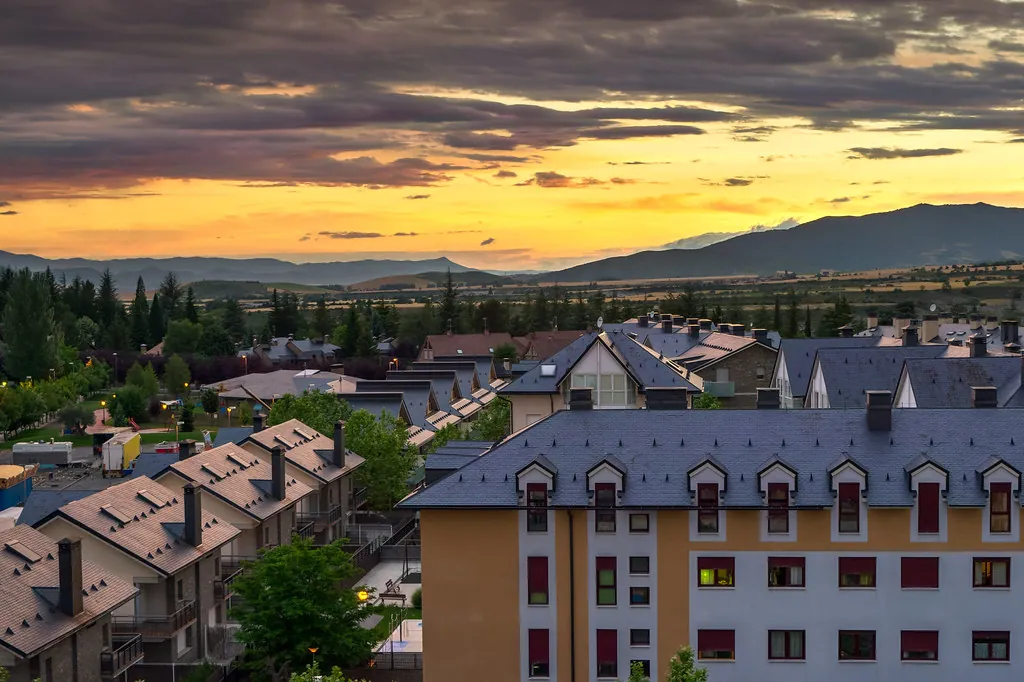
At 981 metres above sea level, Loscos sits high enough to catch the weather before anyone else. The wind arrives first here, sweeping across the Jiloca valley's wheat fields before it hits the village's stone walls. On clear days, you can watch storms form over the distant mountains long before they reach you. On hazy afternoons, the entire valley dissolves into golden light, making the handful of residents—just 118 at last count—feel like they're living above the clouds.
This isn't one of those Spanish villages that time forgot. Time remembers Loscos perfectly well; it just passes differently here. The rhythm follows the agricultural calendar with a precision that would impress a Swiss watchmaker. When the wheat turns amber in June, conversations centre on harvest forecasts. When the first frost hits the higher ground in October, talk shifts to who's got their wood stacked properly for winter.
Stone, Wheat and Sky
The village clings to a ridge, its houses packed tight like they've huddled together for warmth through the centuries. Local stone gives everything a honey-coloured uniformity, broken only by the occasional balcony painted government-issue green. The parish church tower rises above it all, visible from kilometres away across the cereal plains—a beacon for farmers returning from distant fields, or for walkers who've taken a wrong turn on the network of agricultural tracks.
These tracks, mostly used by tractors and the occasional 4x4, form Loscos' real transport network. They lead out into fields that stretch to every horizon, interrupted only by the shallow valleys of seasonal streams. Spring brings an almost violent green that hurts the eyes after winter's browns. By July, the same landscape has shifted through every shade of gold imaginable. It's textbook Mediterranean agriculture, but textbook doesn't prepare you for the scale of it—thousands upon thousands of hectares of wheat and barley, with the village floating in the middle like an island.
Walking Through Worked Land
Loscos offers walking without the drama. No vertigo-inducing cliffs or Instagram-baiting viewpoints here. Instead, the pleasure comes from understanding how thoroughly human activity has shaped this landscape over millennia. The paths follow field boundaries established during the Reconquista, pass through dry stone walls built when labour was cheaper than mortar, and cross threshing floors now abandoned to wildflowers.
A thirty-minute stroll south-east brings you to a low rise where the village drops away and the full extent of the cereal sea becomes apparent. Bring binoculars—not for the view, but for the birds. This is steppe country, home to species most British birders never see at home: great bustards strutting through stubble fields, black-bellied sandgrouse calling from fallow plots, short-toed eagles circling overhead during summer months.
The walking works best as gentle exploration rather than serious hiking. Distances feel greater than they are—the flat terrain and repetitive landscape play tricks with perspective. Carry water; the altitude and dry air dehydrate faster than you'd expect. And don't count on mobile signal once you're beyond the village limits.
What People Actually Eat Here
Food arrives at the table with the weight of agricultural logic behind it. Lamb stews appear because sheep graze the steeper ground unsuitable for crops. Migas—fried breadcrumbs—transform yesterday's bread into today's calories. The garlic soup isn't a fashionable addition; it's winter fuel developed when calories mattered more than cholesterol counts.
The local gastronomy reflects genuine poverty cooking elevated through technique and time. Nothing arrives garnished with microherbs or accompanied by reductions. Instead, dishes arrive in the same earthenware bowls they've used for generations, portions generous enough to satisfy after a morning shifting hay bales.
Don't expect restaurants as such. Eating happens in homes, or during festival periods when someone's converted their garage into a temporary dining room. The bar serves basic tapas—perhaps some local cheese, definitely some cured pork products—but proper meals require invitation or advance arrangement with one of the village's home cooks.
When the Village Wakes Up
August transforms Loscos completely. The population multiplies as families return for the fiesta, grandchildren appear from Zaragoza and Barcelona, and the village's soundscape shifts from wind and distant machinery to brass bands and late-night conversations. The church bell that marks agricultural time gives way to fireworks that mark social time.
Book accommodation well ahead for fiesta week if you must come then, though honestly, you might prefer the village in October. The harvest finishes, bringing a exhausted calm. Wood smoke replaces dust in the air. The grain silos stand empty, waiting. Locals have time to talk without checking their watches or weather apps.
Winter hits hard at this altitude. Snow isn't guaranteed but when it comes, the village becomes properly isolated. The approach road from the A23—a twisting 12-kilometre stretch that takes twenty minutes despite the distance—turns treacherous quickly. Come prepared, or better yet, come in late spring when the fields green up and the village's position on its ridge makes sense again.
The Honest Assessment
Loscos won't change your life. It offers no epiphanies, sells no lifestyle, promises no transformation. What it does provide is access to a way of living that persists despite everything—despite rural depopulation, despite agricultural industrialisation, despite the internet's tendency to make everywhere feel like everywhere else.
Some visitors find this depressing. They see half-abandoned houses, an ageing population, limited facilities. Others recognise something more valuable: continuity. The wheat still grows, the grain still gets harvested, people still gather in the single bar to argue about football and rainfall predictions.
Come if you're interested in how Mediterranean agriculture actually works. Come if you want to understand why Spanish villagers have such strong opinions about weather. Come if you're prepared to slow down to village speed, where conversations take priority over itineraries, and where the landscape reveals its changes slowly, seasonally, honestly.
Just don't come expecting to find anything that isn't already here.