Full Article
about Lucena de Jalon
Ocultar artículo Leer artículo completo
The church bell strikes noon and the only other sound is the Jalón river sliding past the poplars. In Lucena de Jalón, population 226, this counts as the lunch-time rush. The village squats 324 metres above sea-level on the edge of Valdejalón, an hour’s drive south-west of Zaragoza, and it has not rearranged itself for visitors. That is precisely why you might stop.
A Grid Drawn by Water and Wheat
Most maps show a neat square of streets pressed against the riverbank. The reality is looser: houses scatter along a lane that follows the Jalón’s lazy curve, then thin abruptly into almond terraces and cereal plots. There is no dramatic gorge, no cliff-top hermitage—just the steady conversation between water and cultivated land that has shaped the valley for eight centuries. Stone walls the colour of dry clay keep vegetable gardens tidy; irrigation ditches, full in April, shrink to muddy cracks by late August.
The river itself is too modest for kayaks or canoe hire. Instead it offers shade and a place to rinse boots after walking the farm tracks that radiate south towards Lituénigo and north to the disused railway bed now marketed, rather grandly, as the Vía Verde del Jalón. Cyclists who expect asphalt will be disappointed: the surface is compacted grit that dissolves into sand where the path crosses vineyards. A signpost appears, then disappears, so download the track before you set out. The reward is a 14-km loop through waist-high barley where larks rise in panic and the only uphill is a railway embankment barely ten metres high.
What Passes for Architecture
The parish church of San Esteban dominates the single plaza without trying. Its tower is a plain rectangle, the stone patched where lightning removed a corner in 1930. Inside, the air smells of candle wax and river damp; the retablo, painted in brick reds and bottle greens, was paid for by selling two fields of saffron in 1743. Nothing is roped off, nothing is labelled. If the door is locked, ask at the house opposite—Señora Campos keeps the key in a biscuit tin and will open up provided you shut it properly afterwards.
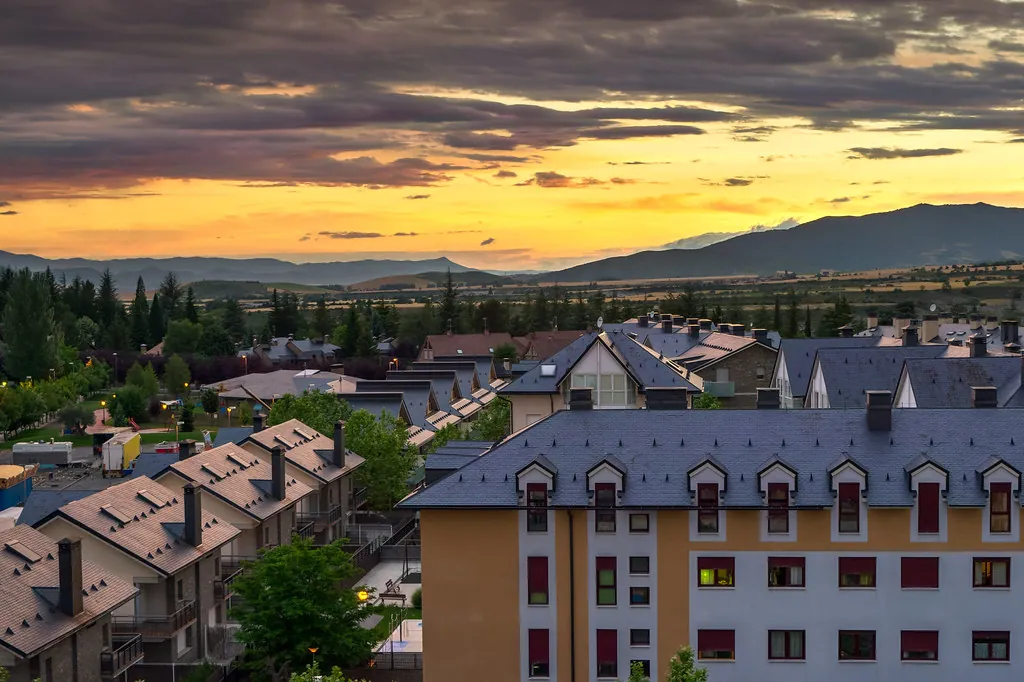
Domestic architecture is equally frank. Cottages rise straight from the pavement, their ground floors once stables or wine presses, now garages for tractors. Upper balconies are narrow enough to shake hands across the lane; iron railings twist into the same fleur-de-lys pattern forged in a workshop that closed in 1978. Several façades retain stone slots where wooden beams once supported the harvest scales. The village never had money for ornament, so what you see is simply what was needed: shade in summer, hay storage, a place to gossip without leaving the house.
Seasons, Plainly Described
Spring arrives suddenly, usually the first week of March, when apricot blossom fogs the orchards and the Jalón swells with melted snow from the Moncayo. By May the river is civil again and locals plant out tomatoes along the banks, staking them with old bed frames. Temperatures sit in the low twenties—perfect for walking—though the wind that funnels up the valley can shave five degrees off by teatime.
Summer is relentless. July averages 35 °C; August tops 40 °C at least twice. The streets empty between two and six; even the dogs crawl under parked cars. If you must visit then, bring water and a hat—shade is scarce once you leave the poplar strip. Accommodation is limited to three guest rooms above the bakery; they cost €45 a night but share a bathroom, and the baker starts work at five.
Autumn is the clever season. Mornings smell of crushed grapes; afternoons are warm enough to sit outside. Farmers burn vine prunings in small pyres that smoulder like oversized incense cones. The village hosts a modest vendimia on the last Saturday of September: free thimblefuls of last year’s wine, bread rubbed with tomato, and a raffle whose first prize is a live rooster. Nobody pretends it is a foodie festival—there are no ticketed tastings or celebrity chefs—just neighbours glad the crop is in.
Winter is short, often grey, sometimes sharp. Night frost is common from December to February; snow reaches the valley floor every three or four years. The road from Zaragoza is normally cleared within hours, but the farm tracks become axle-deep mud. Several houses still rely on butane heaters, so if you rent in January expect to queue at the village shop for a refill.
Eating, Sleeping, Getting Out
The only bar opens at seven for coffee and closes when the last customer leaves, rarely later than ten. The menu is whatever Pilar cooked for her family: today it might be cardoon stew with chunks of morcilla, tomorrow a bowl of lentils sharpened with bay and pimentón. A plate costs €9, wine included, but there is no written list and she will apologise if you arrive after the stew pot is scraped clean. For breakfast the bakery sells flat olive-oil rolls still warm; buy two, they harden by lunchtime.
Rooms are simplest booked by ringing the bakery—ask for Ana. Sheets are line-dried, Wi-Fi theoretical. Hot water comes from a solar tube on the roof, so evening showers are warmer than morning ones. There is no hotel, no swimming pool, no Sunday craft market. The nearest cash machine is in Épila, 12 km away, and it charges €2 for the privilege.
Public transport is skeletal. A weekday bus leaves Zaragoza at 14:15, returns at 06:40 next morning. The timetable favours pensioners with hospital appointments, not day-trippers. With a car the village works as a half-day pause between the Roman mosaics at Villa de los Mosaicos in Albalate del Arzobispo and the wine cooperative of Magallón, each 25 minutes distant.
Why Bother?
Lucena de Jalón will never compete with the postcard villages of Mallorca or the wine-route towns of La Rioja. It offers no viewpoints, no gift shops, no Michelin mentions. What it does provide is an unedited slice of Aragonese valley life: the smell of river mud, the clang of a single church bell, a bar where your coffee is remembered the following year. If that sounds too quiet, stay on the A-2 and keep driving. The village will still be here when the river says it is time to slow down.