Full Article
about Luesia
Ocultar artículo Leer artículo completo
The Village That Refuses to Pose
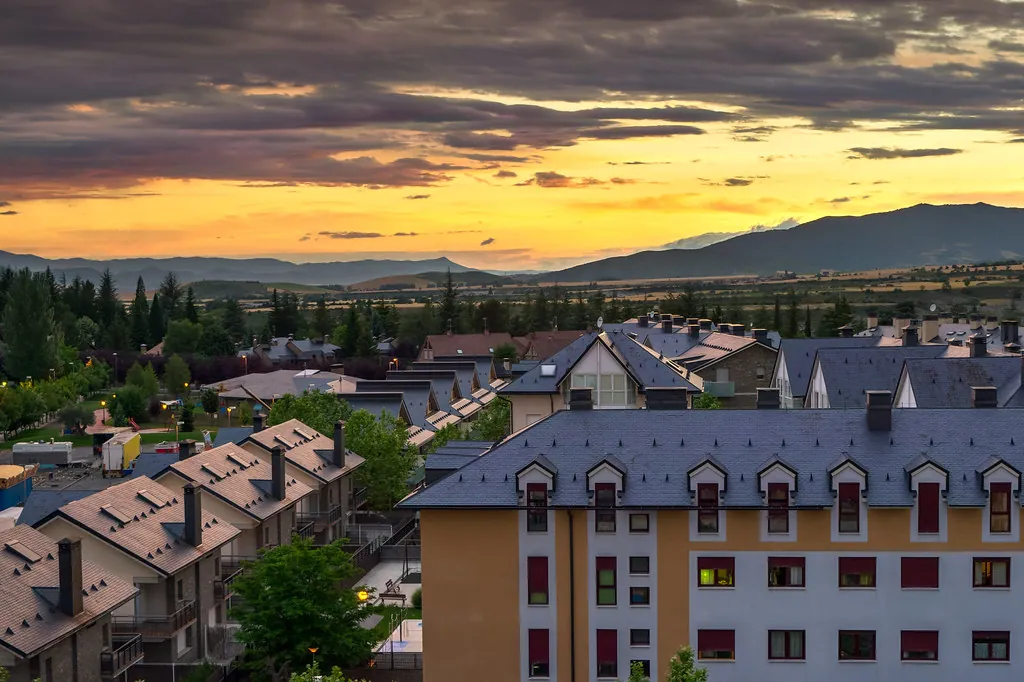
At 810 metres, Luesia sits high enough that the air thins slightly when you climb from the single bar to the castle lookout. The stone houses don't huddle—they stand their ground, roofs weighted with slabs that would slide off in wetter climates. This is dry-country building: thick walls, tiny windows, and timber blackened by centuries of sun rather than rain.
The population hovers around 330, a figure that drops sharply when the harvest ends and swells again during August fiestas. You'll notice the difference within an hour. Mid-morning in May, the only sound is a tractor grinding across the ridge and your own footsteps echoing off stone. Return in August and someone's great-nephew has rigged speakers outside the ayuntamiento, blasting Spanish pop while elderly neighbours argue over folding-chair placement.
Walking Into (and Out Of) the Village
The medieval core is compact enough to cross in five minutes, but that would miss the point. Narrow lanes spiral upward, forcing you to slow for worn steps and sudden drops where gutters have eaten the edge. Doorways still bear mason's marks and faint coats of arms—one shows a boar, another a pair of shears, clues to families long gone.
At the top, the sixteenth-century church of San Salvador blocks the sky. Its tower serves as the village compass: lose sight of it and you've wandered into the newer, equally quiet, barrio bajo. Inside, the Baroque altarpiece glitters with gilt paint rather than gold leaf, a distinction that matters less than the cool darkness after the glare outside. A €1 coin in the box buys three minutes of electric light—enough to pick out cherubs with chipped wings and a Virgin whose robe has faded from royal blue to slate.
Behind the apse, a rough path climbs to the ruined castle. The gate is often locked on Mondays, so check the notice taped to the bar door. If it's open, twenty minutes of stony track deliver you to a platform of crumbling battlements. From here the land falls away into a confusion of gullies and pine-dark ridges. On very clear winter days the Pyrenees appear as a white saw blade on the northern horizon, but more usually the view stops at the next ridge, leaving you alone with wind and the smell of sun-baked rosemary.
The Only Footpaths That Matter
Luesia's hiking routes aren't engineered affairs with handrails and interpretation boards. They're farm tracks that kept going after the last smallholding gave up. Yellow waymarks—when they haven't been shot away by hunters—point towards the Sierra de Luna, a rolling upland of holm-oak and Scots pine. The most straightforward loop follows the GR-1 for eight kilometres, gaining 400 metres before dropping back via an old threshing floor where swallows nest in the rafters.
Summer walking starts at dawn; by 11 a.m. the thermometer nudges 35 °C and the only shade is inside abandoned stone huts that smell of goat. Spring and autumn are kinder, though October can bring sudden downpours that turn the clay paths into grease. Winter, crisp and empty, is magnificent—unless an easterly levante sweeps in, driving sleet through every gap in your clothing.
Leave the village eastwards and you hit the Barranco de Luesia, a limestone trench so narrow that griffon vultures circle at arm's length, riding thermals that rise like express lifts. Binoculars aren't essential; the birds are close enough to see their pale, implacable eyes. Down in the gorge, the path becomes a scramble over fridge-sized boulders. Trainers suffice in dry weather; after rain the rock turns into glass.
What Passes for Lunch
The single bar, unnamed on Google Maps but known locally as "el bar," opens when the owner wakes up—usually 10 a.m., later on Sundays. Inside, a espresso machine hisses beside a ham leg wearing a cloth cap. There is no menu. Ask for "lo que hay" and you'll receive whatever Miguel has decided to cook: perhaps a plate of migas—fried breadcrumbs strewn with grapes and scraps of chorizo—or a bowl of lentils shot through with morcilla. Vegetarians get tortilla, inevitably overcooked on the outside, comfortingly wobbly within. A glass of local garnacha costs €1.80; water comes in an elderly plastic bottle you refill yourself.
There is no shop. If you need crisps, tissues, or paracetamol, drive 19 km to Ayerbe where the Día supermarket keeps eccentric hours (closed 2–5 p.m. and all day Tuesday). Fill the tank while you're there; the village pump closed in 2008 and the nearest fuel is back on the A-127.
Timing Your Arrival
August fiestas honour San Salvador with a procession that starts at the church, pauses for prayers in the plaza, then dissolves into a street party fuelled by cheap lager and grandmother-approved whisky. Visitors are welcome but not fussed over; turn up with your own chair and someone will lend you a plate. Fireworks echo off the stone walls until 3 a.m.; if you need sleep, book a room in Sos del Rey Católico, 25 km away, where the Parador's double glazing muffles the worst.
September's mushroom weekends are less reliable. Some years autumn rains deliver a carpet of níscalos; other seasons the woods stay barren and the programmed tastings are quietly cancelled. The tourist office—really a cupboard inside the town hall—posts updates on a sheet of A4 that someone forgets to change. Call ahead: +34 976 629 006, though the phone is usually answered by whoever is passing.
Winter snow arrives rarely but thoroughly. When it does, the access road from Ayerbe is the last to be cleared; the southern approach via Ejea de los Caballeros stays open longer but adds forty minutes to the journey. Carry chains between December and March, even if the forecast promises blue sky.
Leaving Without a Souvenir
Luesia won't sell you a fridge magnet. The castle has no ticket booth, the church no postcard stand. What you take away is the sound of your own breathing on an empty ridge, the sight of vultures tilting against an updraft, the taste of wine poured from an unlabelled bottle that the barman assures you was made "por un primo." It's enough, and it's all there is.