Full Article
about Magallon
Ocultar artículo Leer artículo completo
The cierzo wind hits you first. It barrels down the Ebro valley, dry and sharp, rattling the vines that march right up to Magallón’s back doors. At 450 metres above sea level the air is thinner than on the coast and winter mornings can start at –2 °C, yet the village sits on a pancake-flat plateau, ringed by a low ripple of hills rather than proper mountains. Locals joke that the only climb is the eight-step ascent to the church porch; still, the altitude is enough to give the Campo de Borja garnacha its bite.
Magallón doesn’t do postcards. The skyline is a single Gothic-Mudéjar tower, stone the colour of burnt cream, with no souvenir shops at its base. What it does do is everyday Aragón, played out at the pace of the harvest. Tractors stop in the middle of the road for a chat; the bakery sells out of pastries by 09:30; and the town hall still rings the church bell by hand at noon. For visitors fresh from the Costas, the surprise is how little the place bends to tourism.
A Walk Round the Block and 500 Years
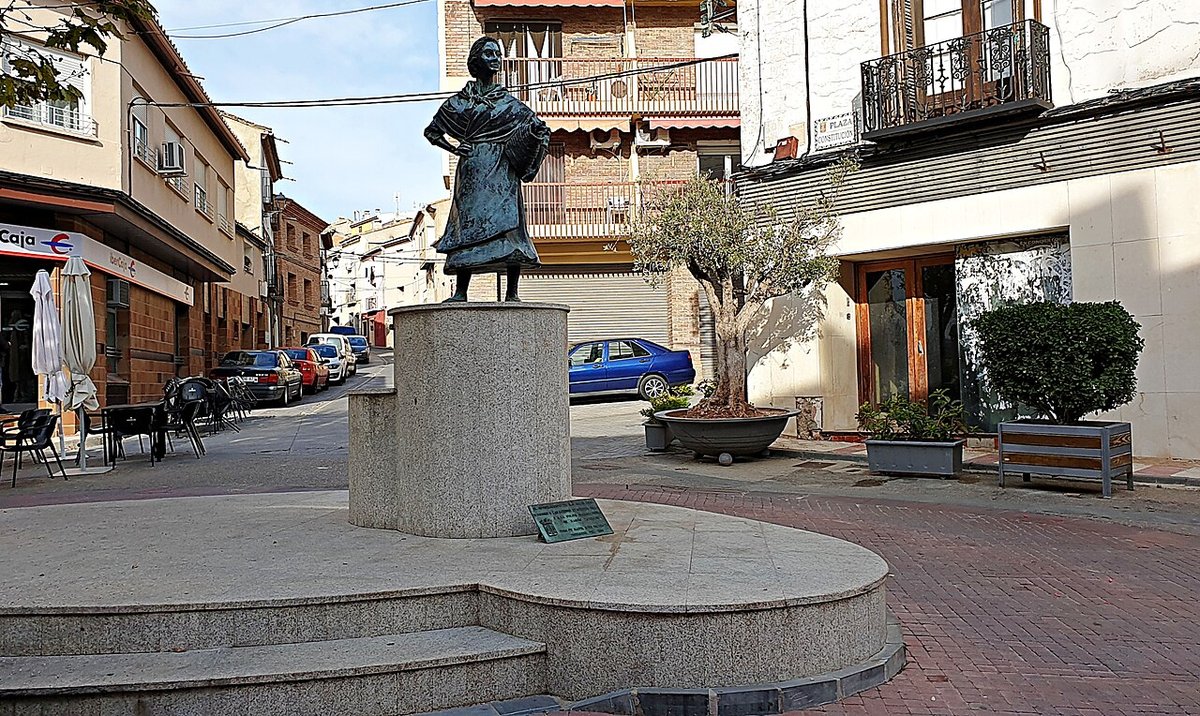
Start in Plaza España, the only square with benches that aren’t occupied by pigeons. The parish church of Santa María is usually locked—turn up for the Saturday-evening Mass if you want to see the fifteenth-century retablo without phoning the priest. The tower, however, is worth craning your neck at: brick and stone laid in alternating bands, the original builders working with whatever the Ebro carried downstream. Circle the block and you’ll pass half a dozen manor houses whose stone doorways still carry the coats of arms of wine-trading families. One has a balcony forged in 1743; the blacksmith’s stamp is still legible if you stand on tiptoe.
The grid of lanes is so compact you can’t get lost, though you can emerge suddenly at the edge of town where the tarmac turns to dirt and the vineyards begin. These plots are tiny—two hectares is considered a decent holding—so the landscape looks stitched together like a patchwork quilt. In late October the leaves flip from green to copper overnight; farmers call it “the week of gold” and plan their holidays around it.
Wine That Costs Less Than the Glass in London
Campo de Borja bottles punch above their price. A young garnacha, all blackberry and white pepper, sells in the village bar for €2 a glass; take-away bottles at the cooperative start at €4.50. Five minutes down the road, Bodegas Borsao runs English-language tastings if you book by email (€12 including three reserves and a plate of local cheese). Brits arriving with empty suitcases should note the duty-free limit is 18 litres—roughly two mixed cases—and the cooperative will bubble-wrap on request.
If you’d rather drink on site, Sunday lunchtime is the moment. Half the district rolls up in 4x4s, orders chuletón al estilo aragonés by the kilo, and settles in for the afternoon. The steak arrives on a plank, pre-sliced, still sizzling in its own fat; chips come separately, because no one trusts a chef not to overcook them. Vegetarians aren’t abandoned entirely—grilled piquillo peppers and a tomato salad dressed with local olive oil make a respectable plate—but this is resolutely carnivore country.
Flat Trails, Big Sky
The terrain may lack drama, yet the walking is oddly satisfying. A signed 7-kilometre loop, the Ruta de las Ermitas, heads south past two sixteenth-century shrines and returns through vineyards where the only sound is the wind in the trellis. There’s no shade; carry water between March and October. For something longer, the Camino Natural del Cid follows a dirt track west towards Gallur, skirting century-old olive groves whose trunks look like melted wax. Winter mornings can be icy—gloves are worth packing from December to February—but the reward is a horizon so wide you can watch weather systems stroll across the plain.
Cyclists find the same routes blissfully empty. Road bikes roll fast on the dead-straight county lanes; mountain bikers can weave along farm tracks graded “easy” by Spanish standards, meaning the only hazard is a sleepy dog outside a finca.
Timing is Everything
Come in spring and the temperature hovers around 22 °C, wild asparagus sprouts along the verges and the village smells of fennel. Autumn adds the perfume of crushed grapes and the chance to help at a traditional foot-treading—most bodegas welcome volunteers if you ask in the tourist office (bring clothes you never want to see again). Mid-summer is less kind: July and August regularly top 38 °C, the wind feels like a hair-dryer and even the sparrows hide at midday. Accommodation prices don’t budge—there simply isn’t enough demand—but café terraces shut between 14:00 and 17:00, so siesta planning is essential.
Winter is quiet to the point of hibernation. Bars keep Spanish hours (open at 07:00, again at 20:00) but shops may not bother if the farmer who runs them is still bringing in the olives. On the plus side, the church tower against a frosty peach sky makes a photograph no one back home will believe is Aragón.
Beds, Bottles and Bus Timetables
There is no hotel in Magallón itself. Nearest rooms are at Loteta Experience, three kilometres out—a converted farmhouse with solar panels, shepherd’s-hut décor and zero light pollution (doubles from €110 B&B, shut January). Reception will collect you if you arrive by train at nearby Mallén. Closer to the A-68, Hotel Castillo Bonavia in Pedrola offers 24-hour check-in, English-speaking staff and a menú del día for €14; handy for the Bilbao ferry dash. Otherwise, stay in Tarazona or Borja and tick Magallón off as a half-day detour.
Public transport exists only on school days: one early bus to Zaragoza, one back at lunch-time. Saturday service is a lottery, Sunday non-existent. A hire car is almost mandatory unless you fancy cycling 65 km from the airport. Fill the tank in Zaragoza—fuel on the autopista is cheaper than in the village, and there’s no petrol station after Borja.
Cash is equally scarce. The lone ATM disappeared when the bank branch closed in 2021. Bring euros; cards are accepted in the restaurant but not at the bakery, the market stall or for the €1.20 coffee that tastes better than most London flat-whites.
When the Bells Stop Ringing
Leave around 18:00 and the place folds in on itself. Metal shutters clatter down, the square empties and the wind takes over again. Magallón doesn’t court applause; it simply gets on with growing grapes, raising lambs and polishing its church bell. If that sounds underwhelming, remember the alternative: another hill-town queue for the same postcard view. Here, at least, the wine is honest, the steak is local and the silence costs nothing.