Full Article
about Malanquilla
Ocultar artículo Leer artículo completo
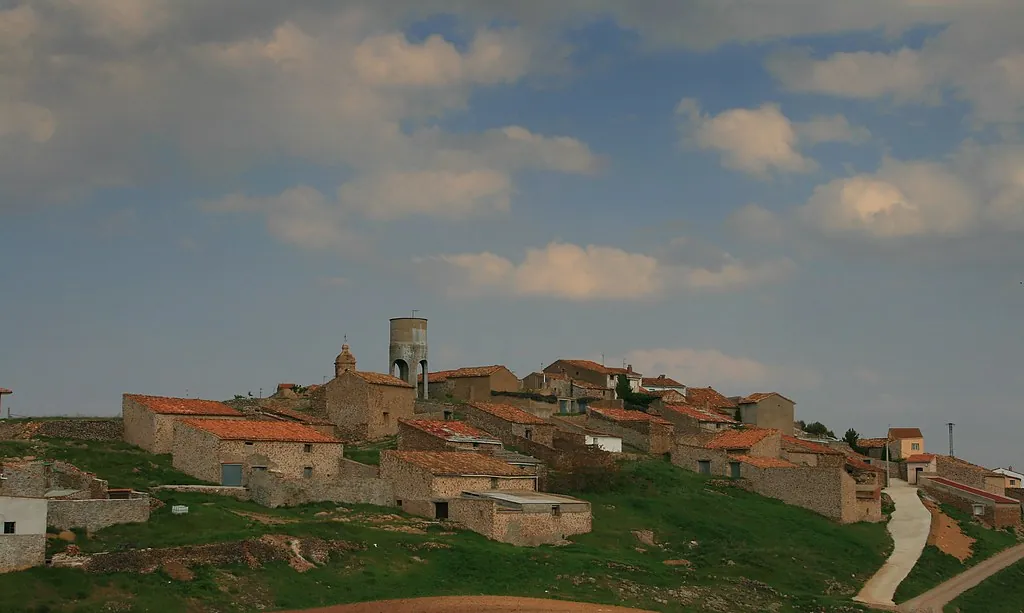
Ninety souls, one bar, and a church bell that still dictates meal times. Malanquilla perches at 1,020 m on a sun-baked ridge of the Sistema Ibérico, 90 km south-east of Zaragoza, and the first thing you notice is the hush – not the spooky sort, but the kind that makes a Londoner realise how much white noise a city produces. The second thing is the smell: warm thyme, sun-blasted stone, and, if the wind swings north, a faint whiff of pig from someone’s jamón curing in an upstairs room.
Stone that learned to breathe
The village was built for winters that can touch –12 °C and summers that brush 35 °C. Houses are glued to the slope like swallows’ nests, their 60 cm-thick walls quarried from the same grey limestone that ribs the surrounding hills. Roofs carry the classic Aragón tile – curved, orange, slightly uneven – so when the afternoon cierzo wind barrels up the Jalón valley the tiles rattle like loose crockery. Timber doors are small; heat retention trumped grand entrances here for five centuries. Look for the iron boot-scrapers still cemented beside thresholds: evidence of eras when roads were mud eight months a year.
There is no postcard square, no souvenir tat. Instead, lanes taper into shadow, then open suddenly to vistas of cereal terraces dropping toward the river. Mid-morning light turns the stone honey-coloured, an effect photographers call “the golden hour” but locals simply call “las once”, the time to stop gossiping and get the shopping done before the shop shuts at noon.
The 16th-century church tower doubles as orientation device: lose the narrow street maze, glance up, re-centre yourself. Inside, the single nave smells of beeswax and damp hymnbooks; outside, swifts stitch the sky above the bell-cote, unconcerned by human timetables.
Trails that expect you to think
Set out south-west on the dirt track signed “Fuente de la Teja” and within ten minutes the cereal plots finish, replaced by low kermes oak and, in May, a carpet of purple viper’s bugloss. The path is clear but unsigned after the first kilometre; locals advise downloading the free IGN 1:25,000 sheet before leaving Calatayud because phone reception is patchy behind the ridges. Expect 250 m of climb over 4 km – enough to make thighs complain if you’ve spent the morning sampling the bar’s robust red. Spring brings orchids and the odd griffon vulture riding thermals; October delivers scarlet rowan berries and mushrooms that can land you in A&E if you mis-identify. Rule of thumb: if the old boys aren’t picking it, neither should you.
Winter hikers need more than enthusiasm. Snow can arrive overnight from the Moncayo massif 60 km away, turning paths into slick boot-grinders. Micro-spikes live in most villagers’ 4x4 boots from December to March; follow their lead or face an undignified slide back to the road.
Food built for altitude
Malanquilla’s cuisine never heard of “light bite”. Lunch at the Bar-Restaurante del Pueblo (the only one) might be a clay dish of ternasco – milk-fed lamb roasted with potatoes and bay – for €14, or a bowl of migas de pastor: fried breadcrumbs laced with pancetta and grapes. Vegetarians can request pisto aragonés (a pepper-and-aubergine stew) but expect pitying looks; this is land where pigs outnumber people ten to one. House wine arrives in a plain glass, no tasting notes, yet it’s garnacha from vines 30 km away that see 300 days of sun: think blackberries and a slap of tannin that says “I’ll keep you warm, don’t worry”.
Thursday is cocido day: chickpeas stewed with morcilla and saffron. Arrive after 2 pm and it’s sold out; arrive at 1.55 pm and you’ll share a table with the village vet who’ll explain why every family still slaughters its own pig in February. If you’d rather cook, the tiny shop stocks tinned asparagus, local eggs and vacuum-packed trucha from the Pyrenees – enough for a serviceable supper in the one self-catering apartment above the bakery.
Beds under beams
Accommodation totals five legal keys, all inside restored stone houses. The stand-out is Hotel Boutique Malanquilla Inédita, three 14th-century cottages knocked into one, where underfloor heating hides beneath clay tiles and the terrace faces south-west for sunset G&Ts. Doubles from €90 incl. breakfast (fresh orange juice, Serrano ham, tomato-rubbed toast). British visitors note: Wi-Fi works in the lounge but bedrooms are thick-walled dead zones – consider it nature’s cure for doom-scrolling. Cheaper is Casa Rural La Fuente (€55, sleeps four) opposite the spring: simpler furniture, same stone walls, no breakfast but the bar is 90 seconds away if you can face migas twice in 24 hours.
Getting here without tears
From Zaragoza-Delicias bus station, two daily coaches run to Calatayud (1 hr 15 min, €7.80). Hire a car there: Avis and Europres have desks opposite the railway station. The final 28 km to Malanquilla takes 35 minutes on the A-1502, a road that coils like a dropped rope. Meet a tractor on one of the single-lane bends and someone must reverse; locals usually do, but don’t argue with a farmer whose boot is full of fencing staples. Petrol is sold only in Calatayud, so fill the tank even if the gauge says half. In winter carry snow chains – the pass at 1,100 m is shaded after 3 pm and ice forms fast.
No car? A taxi from Calatayud costs €45 if you phone Teletaxi ahead, but you’ll need the driver’s mobile to escape the village afterwards, so negotiate both legs. British visitors arriving from Teruel should allow extra time: the N-234 is breathtaking but engineers forgot to add overtaking lanes.
When to bail out
August weekends swell the population to perhaps 250 as Zaragozanos flee the furnace of the Ebro basin. The bar runs a barbecue in the street, prices edge up 10 %, and finding a parking slot resembles a Tesco car park on 23 December. Fine if you want atmosphere; hopeless if you came for silence. January can be brutal: daylight ends at 5.45 pm, the shop opens two mornings a week, and when the electric heaters in your rural house trip the 3 kW fuse you’ll understand why locals still burn oak in open grates. April-May and late September-October hit the sweet spot: 20 °C days, 8 °C nights, wildflowers or autumn colour, and a church bell that rings for no one but you.
Leave before you learn the villagers’ surnames by heart. Malanquilla is a pause, not a life sentence, and the road down the hill re-enters the 21st century faster than you expect. One bend past the last stone hut and 4G bars flicker back to life; by the time the Jalón river glints below, someone in London has already emailed. Yet the hush, the thyme-scented wind, and the memory of stone that actually breathes will follow you all the way to the airport – no postcard required.