Full Article
about Mesones de Isuela
Ocultar artículo Leer artículo completo
The church bell strikes two, the bakery blinds clatter down, and Mesones de Isuela slips into its daily siesta. By half past, the only sound is the metal sign outside Bar Alameda creaking in the breeze. For visitors fresh from the A-2 motorway, the sudden hush feels like driving onto a film set the moment the director yells “cut”.
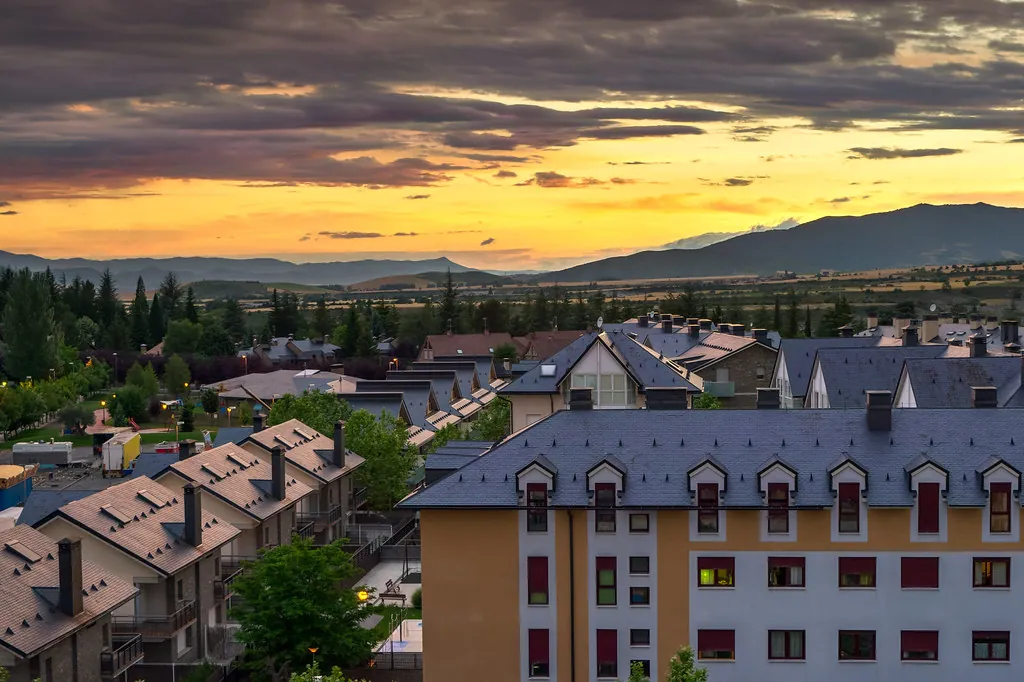
Altitude 513 m, population 272, wheat horizon in every direction: this is cereal-country Aragón distilled to a single street. Stone-and-brick houses line the one road that counts, their wooden eaves warped by decades of sun and harvest dust. Nothing here was laid on for tourists; the village simply never got round to changing.
A Fort that Never Grew Up
Five minutes uphill on a stony track, the fifteenth-century Castillo de Mesones juts out of the rock like a broken tooth. It was started during the reconquest skirmishes, then abandoned when the border shoved further south. What remains is a hollow rectangle open to the sky – no gift shop, no audio guide, just swifts dive-bombing through empty window slots. Ask inside the ayuntamiento (town hall) the day before and they’ll lend the key; fail to ask and you’ll stare at a locked gate. The climb takes ten minutes and gives the best view over the Isuela valley: a chessboard of green and gold that ripples with the wind.
Back in the village, the tower of San Miguel Arcángel does the same job with less effort. Brick laid in zig-zag patterns – Teruel’s Mudéjar signature shrunk to pocket size – rises only three storeys, yet it still pokes above the wheat. Inside, the nave is plain, but look for the sixteenth-century fresco fragment wedged behind the pulpit: faded blues and ox-blood reds that once blazed in candlelight.
Lunch Before the Shutters Fall
British stomachs need recalibrating. Kitchens close at 15:30 sharp; dinner won’t reappear until 21:00, and then only if you rang earlier to say you’re coming. Bar Alameda and Mesón de Isuela (yes, the village has an eponymous restaurant) both roast ternasco – milk-fed lamb – until the exterior crisps like pork crackling while the meat stays soft enough to cut with a fork. A half-kilo portion feeds two, costs about €22, and arrives with a pile of potatoes that have soaked up the dripping. If lamb feels too much at midday, order migas: fried breadcrumbs studded with streaky bacon and, if you’re lucky, a handful of grapes that burst against the salt. House wine from Somontano is poured from a tap behind the bar; lighter than Rioja, it won’t send you weaving back to the car.
Bring cash. The village has no ATM, cards are greeted with a polite shrug, and the nearest euro-dispenser is ten kilometres away in Illueca. Tuesday morning a white van pulls into the square and sells fruit at half-supermarket price; stock up if you’re self-catering.
Walking the Checkboard
Forget Ordnance Survey precision. Footpaths here are farm tracks bulldozed between fields, signposted only by the occasional cement post painted yellow. One easy loop heads south-east towards the hamlet of Romanos, 4 km away. You’ll share the track with the odd tractor and flocks of calandra larks that rise, trill, and drop back into the stubble. In late April the wheat is ankle-high and emerald; by July it turns the colour of a Hertfordshire wheat field photographed in August 1976 heatwave. Take water – shade is scarce and the only bar between villages shuts when the owner’s cousin goes on holiday.
Spring and autumn are the comfortable windows. Summer daytime temperatures flirt with 38 °C; winter brings a razor wind that sweeps down the valley and makes 5 °C feel like minus two. After heavy rain the castle track becomes a clay slide; normal cars should park at the bottom and walk.
Fiesta Time, Population Multiplied
For most of the year the place drowses, but fiestas yank the tally briefly above four figures. San Miguel, at the end of September, marks the grain harvest. A brass band marches down the main street, fireworks crackle at midday (Spanish timing never obeys darkness), and the plaza fills with long tables serving paella from a pan the diameter of a garden pond. The August summer fiesta is rowdier: foam cannon for children, football match between “those who left for Zaragoza” versus “those who stayed”, and an outdoor dance that finishes when the wine runs out. Visitors are welcome, but don’t expect bilingual announcements; if you can count to three in Spanish you can join the raffle.
Beds, Petrol and Practicalities
You can’t sleep in the village. The closest roof is Hotel Monasterio de Piedra, 20 minutes by car, where a twelfth-century Cistercian monastery comes with spa water once prescribed for “melancholy”. More modest digs hide in Calatayud, 35 km west, a town famous for its own crop of Mudéjar towers and a Sunday morning market that sells vegetables by the kilo and jamón by the leg.
Fill the hire-car before you arrive. The local garage opens “some mornings” and the next petrol station is 18 km towards Zaragoza. The airport itself is 75 minutes away on fast dual-carriageway; after leaving the A-2 the final 12 km snake across open plateau where you’re more likely to meet a combine harvester than another tourist.
When Silence is the Souvenir
Leave the souvenir hunt for Barcelona. What you take away from Mesones de Isuela is the quiet that settles after the bell tolls, the smell of wet earth when a sprinkler swings across the wheat, the sight of an elderly man polishing his tractor like a Bentley. It isn’t dramatic; it doesn’t photograph well at sunset. Yet for travellers who’ve wearied of Spain’s costas and cathedral cities, this fragment of Aragón offers a calibration point: a place where time is still measured in harvests rather than hashtags, and where lunch, if you miss it, really is gone for the day.