Full Article
about Moneva
Ocultar artículo Leer artículo completo
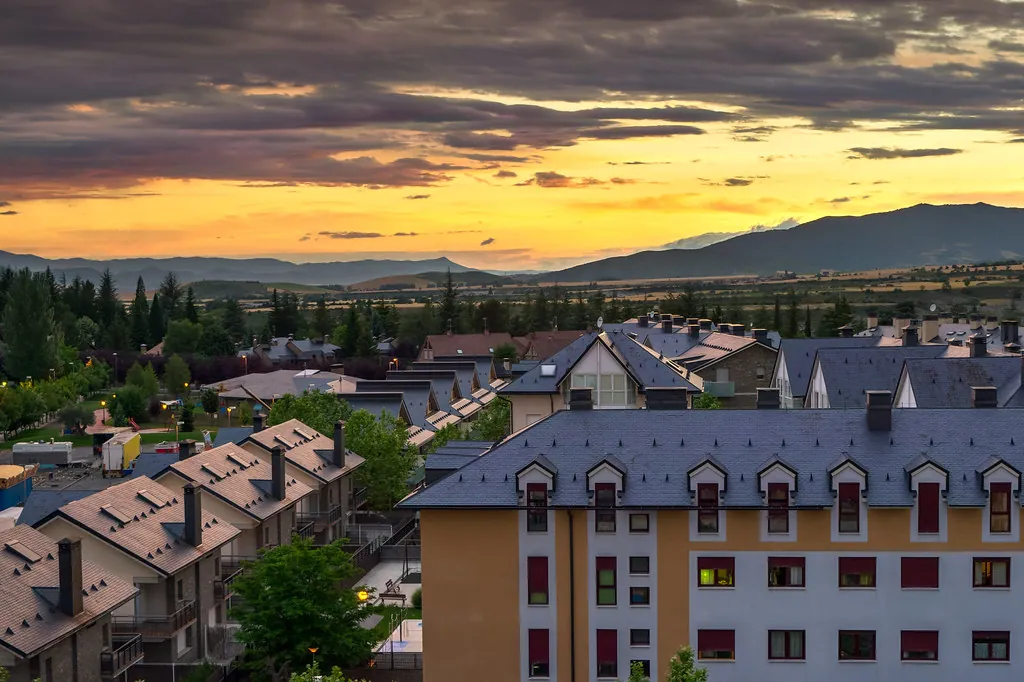
At 659 metres above sea-level, Moneva sits high enough for the air to carry a bite even in May. The village wakes to the sound of tractors rather than church bells, and the day’s rhythm follows what needs doing in the surrounding wheat fields, not what’s printed in any timetable. With barely 330 residents registered, it takes under ten minutes to walk from one end of the grid-pattern centre to the other, yet the horizon feels enormous. On three sides cereal plains roll away in stripes of young green or burnished gold depending on the month; to the north the ground lifts gently towards the Iberian System, a rumpled line of blue-grey you can make out when the afternoon light slants.
Stone, Brick and Working Corrals
Most visitors arrive having already seen the larger headline act next door: Fuendetodos, birthplace of painter Francisco de Goya, sits 18 km up the A-226. From there the tarmac narrows, cutting past almond orchards and the occasional concrete pig-shed. Moneva’s first sight is the squat tower of the parish church, the Asunción de Nuestra Señora, rising above terracotta roofs. The building is no cathedral: a patchwork of 16th-century masonry, 18th-century baroque touches and a 20th-century cement patch job where funds ran dry. Step inside and the temperature drops; the stone floor is worn smooth by generations of farm boots. There is no admission charge, but the door is locked outside of Mass times (11:00 Sundays, 19:30 weekdays) unless you ask for the key at the ayuntamiento across the square.
The streets around the church keep the anatomy of an old farm hub: irregular widths, houses bonded shoulder-to-shoulder, and parallel lanes just wide enough for a loaded donkey cart. Many façades mix ochre limestone with brick in Flemish bond; several still have the ground-floor stable door (puerta de cuadra) alongside the human-sized entrance. Poke your head into an open gateway and you will likely find a working corral: chickens, a diesel drum for feed, and maybe a rust-red Massey Ferguson parked under a lean-to. These are not museum pieces; smell of manure proves it.
Walking the Cereal Sea
There is no official tourism office, so maps are DIY. The town hall will print a basic leaflet titled Rutas de Moneva which shows three farm tracks radiating out: south-east to the abandoned balsa (water reservoir) of La Muela, west to the hillock of El Castillico with its scatter of Roman-age slag, and north to the seasonal lagoon of El Saladar, usually dry by June. None are way-marked beyond the first kilometre; downloading the tracks onto a phone before leaving Zaragoza is wise. Distances sound modest—5 km, 7 km, 9 km loops—but the plain is exposed, and July temperatures nudge 38 °C. Carry water; there are no fountains once you leave the village.
Spring is the most forgiving season. From late April the wheat turns from pale lime to deep emerald, poppies puncture the verges with red, and larks provide the soundtrack. Autumn brings stubble fields the colour of digestive biscuits and threshing dust that hangs in the air like flour. Winter can be raw: the cierzo, a wind that barrels down the Ebro valley, rips across open ground at 50 mph. Locals say the best photographs happen in either extreme—May greens or October ambers—when low sun throws long shadows from the hay bales.
Food Meant for Harvesters
Moneva keeps no boutique restaurants, just two bars that open erratically. The safer bet is to eat in nearby Belchite (15 km) where Casa Pardet does roast lamb for €18, but if the green shutters of Bar La Plaza are up, squeeze inside. The menu is handwritten on a chalkboard and rarely changes: migas aragonesas (fried breadcrumbs with grapes and bacon), ternera estofada (beef stew thick enough to stand a spoon in), and flao (a cheesecake crossed with crème caramel). House wine comes from the Cariñena cooperative 40 km west; it costs €2.20 a glass and tastes of blackberries and dust. Vegetarians will struggle—ask for espinacas con garbanzos and you will get a plate of chickpeas with a polite sprinkling of spinach.
If you are self-catering, stock up in Zaragoza. The village shop opens 09:00-13:00, sells UHT milk, tinned tuna and not much else. On Thursdays a mobile fish van parks by the church—hake from Vigo and the odd box of red prawns—cash only, queue early.
When the Village Swells
For fifty-one weeks of the year Moneva ticks over quietly. Then, around 15 August, the population quadruples. The Fiestas de la Asunción draw back adult children who left for Zaragoza or Barcelona, plus a handful of curious French campervans. The agenda is classic small-town Spain: Saturday evening verbena dance with a covers band, Sunday morning procession, communal paella for 300 served under a plastic canopy, and a bull-running event that uses heifers instead of proper toros—still risky, but insurance premiums are lower. Visitors are welcome to join the paella queue; tickets go on sale at the bar for €8 including wine. Book accommodation early: there are no hotels in Moneva itself, only three rooms above the bakery rented out through the regional tourist board website.
Getting There, Getting It Right
Zaragoza is the logical gateway. From Delicias bus station a twice-daily service run by Casañé heads south via Fuendetodos to Belchite; ask the driver to drop you at the Moneva crossroads, 1 km from the centre. Timetables shrink on weekends and disappear entirely on public holidays—check www.transportesaragonese.es the night before. Driving is simpler: take the A-23 south, exit 299 towards Fuendetodos, then follow the Z-226 for 28 km. The final approach is single-track; wheat brushes both wing mirrors in places. Petrol pumps are scarce—fill up in Zaragoza or at the Repsol in Belchite because the village has none.
Accommodation choices are binary: stay in Belchite’s Hostal La Jacetania (doubles €55, basic but clean) or rent one of the village houses the council has refurbished. They come with stone walls, beams, and inevitably, Wi-Fi that falters when the wind is in the wrong direction. Nightly rates hover around €70 for a two-bedroom house; book through the Oficina de Turismo del Campo de Belchite in Belchite old town. Camping is technically allowed on private land with the owner’s permission—ask at the bar and someone will ring their cousin.
The Honest Ledger
Moneva will not dazzle anyone chasing Spain’s greatest hits. There is no Gaudí architecture, no Michelin star, no dramatic gorge to post. What it offers instead is a calibration check: fields bigger than any urban park, a bar where the television stays off, and a night sky so dark you can spot the Andromeda Galaxy without binoculars. Come prepared for limitations. English is rarely spoken, cafés close when the owner feels like it, and August heat can feel punitive. Yet if you want to witness a place where agriculture still dictates the calendar, where neighbours recognise a stranger by the third pass, and where the loudest noise at 10 pm is a dog barking at a tractor headlight, Moneva delivers precisely that. Bring sturdy shoes, a downloaded map, and an appetite for stew. Adjust expectations to village speed. The wheat will still be growing long after you leave.