Full Article
about Mozota
Ocultar artículo Leer artículo completo
The wind arrives before anything else. It sweeps down from the Moncayo ridge, flattens the wheat stubble, and rattles the loose sash windows of the two-storey houses that line Calle Mayor. In Mozota, population 123, the cierzo is less a weather event than a resident. Ignore it and you’ll spend your visit wondering why every door has a brick propped behind it and why the village’s single bar keeps its plastic curtains drawn even at midday.
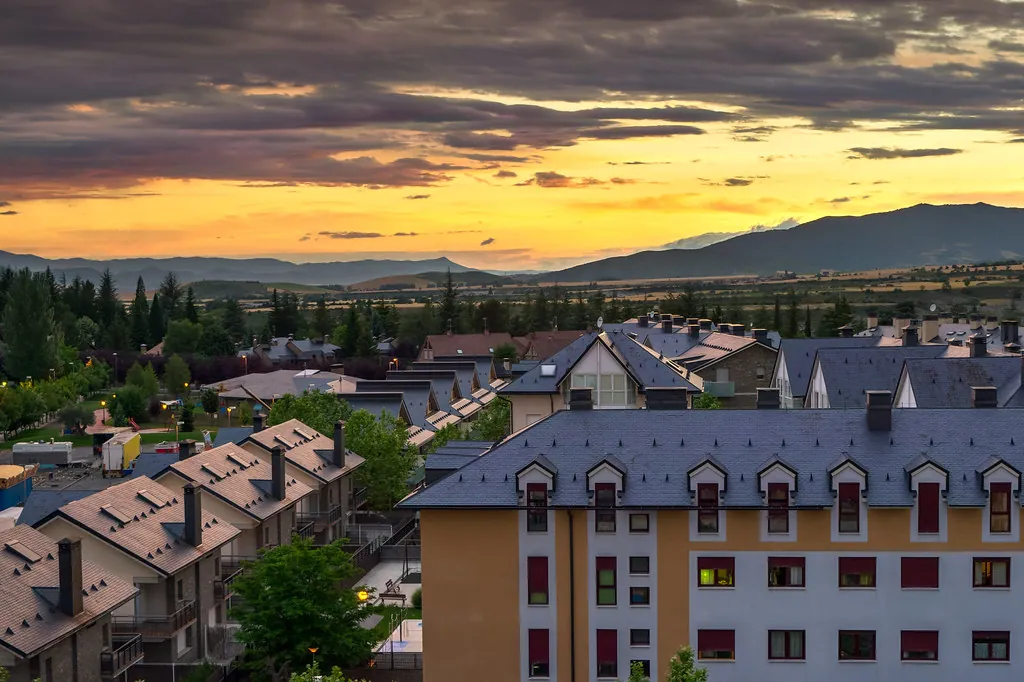
Twenty-five kilometres south-west of Zaragoza, the village sits at 396 m on the dry plateau that Spaniards call the meseta aragonesa. There is no dramatic gorge, no almond terraces clinging to cliffs, no Instagram-ready castle. Instead you get an almost perfect cross-section of rural Aragon: cereal fields that change from emerald to gold to ochre, bush-pruned vines that look like fists punching the sky, and a horizon so wide it makes the clouds seem slow. British visitors who arrive expecting hill-town romance usually leave disappointed; those who come prepared for big skies and the smell of warm thyme on dusty air tend to stay longer than they planned.
A Church, a Bakery, and What Passes for Traffic
Park by the ayuntamiento – there are no meters, no wardens, and rarely more than three cars. The village is laid out on a loose grid that takes exactly twelve minutes to walk from edge to edge. The parish church of San Esteban, locked except for Sunday mass at 11:00, is built of the same honey-coloured stone as the houses. Its bell tower doubles as the mobile-phone mast; look up and you’ll see Vodafone panels bolted to the 17th-century masonry. Inside, the nave is cool, whitewashed, and scented with beeswax. A laminated sheet taped to the pulpit lists the week’s deaths and harvest thanksgiving in equal measure.
Opposite the church, Panadería San Esteban opens at 07:30 and sells coca de alma – a feather-light puff pastry sprinkled with anise sugar – for €1.20. Buy two; the second will be gone before you reach the edge of the village. The bakery also functions as informal tourist office. Ask for walking directions and the owner will draw a map on the back of a till receipt, adding warnings about which farm dogs bark and which merely glare.
Flat Walks and Loud Birds
Mozota’s surroundings are tractor country, not boot country. That said, a 6 km loop heads south along a gravel pista to the ruins of a Roman villa whose floors still hold fragments of geometric mosaic. The path is level, unsigned, and shared with the occasional combine harvester; step aside and you’ll scatter crested larks and Calandra larks, both species that British birders normally need a telescope and a south-coast gale to encounter. In late April the fields are edged with crimson poppies and the air smells of feral fennel. By July the same earth is baked concrete-hard and the only movement is a distant sprinkler rotating like a slow lighthouse.
Cyclists can follow the Vía Verde that starts 8 km away in María de Huerva, but you’ll need to drive there first – the N-330 is technically cycleable but carries 44-tonne grain lorries that treat the hard shoulder as an overtaking lane.
What Aragón Actually Tastes Like
There is no tasting menu, no chef interpreting grandmothers. Instead you get grandmothers interpreting grandmothers. The bar–restaurant Casa Paco (open Thursday to Sunday, cash only) serves three-course menús del día for €14. Expect ajoarriero – salt-cod pounded with potato, garlic, and olive oil – followed by ternera al estilo; beef braised until it slumps, then sharpened with a splash of local Cariñena red. Pudding is usually cuajada, sheep’s-milk curd drizzled with honey that tastes of rosemary. Vegetarians can ask for borrajas (borage), a mucilaginous green that Aragonese cooks refuse to believe anyone dislikes. Wine comes in 500 ml carafes; asking for the list will mark you out as either a sommelier or a smart-arse.
If you’re self-catering, the Saturday market in nearby Villanueva de Gállego (15 min drive) sells rainbow chard, artichokes the size of cricket balls, and longaniza sausages that travel well if wrapped in newspaper and kept cool.
When to Come and When to Stay Away
April and May are the kindest months: daytime temperatures hover around 21 °C and the wheat is green enough to soften the light. September brings the grape harvest; trailers piled with Garnacha grapes rumble through the village at dawn and the air smells like fermenting Ribena. August is relentless: 38 °C by 11 a.m., shade scarce, and the cierzo on sabbatical so the heat simply hangs. In winter the plateau turns monochrome, the church heating works only on Sundays, and the surrounding tracks become axle-deep mud after the slightest rain. On grey February afternoons the place feels like a rehearsal for abandonment; doors stay shut and even the bakery shuts at 14:00.
Combine, Don’t Commute
Mozota alone will not fill a day. Pair it with:
- María de Huerva: 10 km east, home to a 15th-century palacio and a riverside walk shaded by plane trees.
- La Cartuja de Aula Dei: 18 km north, a monumental Carthusian monastery whose frescoed cloister is open by guided tour (€8, Spanish only, book 48 h ahead).
- Zaragoza itself: 25 km away, the Basilica–Fortress of Nuestra Señora del Pilar and the Roman walls provide the monumental fix Mozota refuses to supply.
Car hire is essential. There is no railway station; the twice-daily bus from Zaragoza’s Estación de Delicias stops at the junction of the N-330 and a farm track 2 km from the village. Walking that stretch in July heat is character-building in the way trench foot was character-building.
The Honest Verdict
Mozota offers the opposite of curated rustic charm. It is small, wind-battered, and indifferent to whether you visit or not. For some travellers that reads as bleak; for others it is a relief after the ceramic-pottery, donkey-sanctuary circuit. Come if you want to practise Spanish with people who have time to talk, if you like your landscapes horizontal, or if you need reminding that villages can still exist for their inhabitants rather than their guests. Don’t come expecting cosy pubs, gift shops, or evening entertainment beyond the clack of dominoes in Casa Paco. Bring binoculars, a windproof jacket, and a sense of scale. Leave before you run out of conversation – it won’t take long – and the cierzo will see you off, slamming your car door for you with impeccable Aragonese courtesy.