Full Article
about Palomar de Arroyos
Ocultar artículo Leer artículo completo
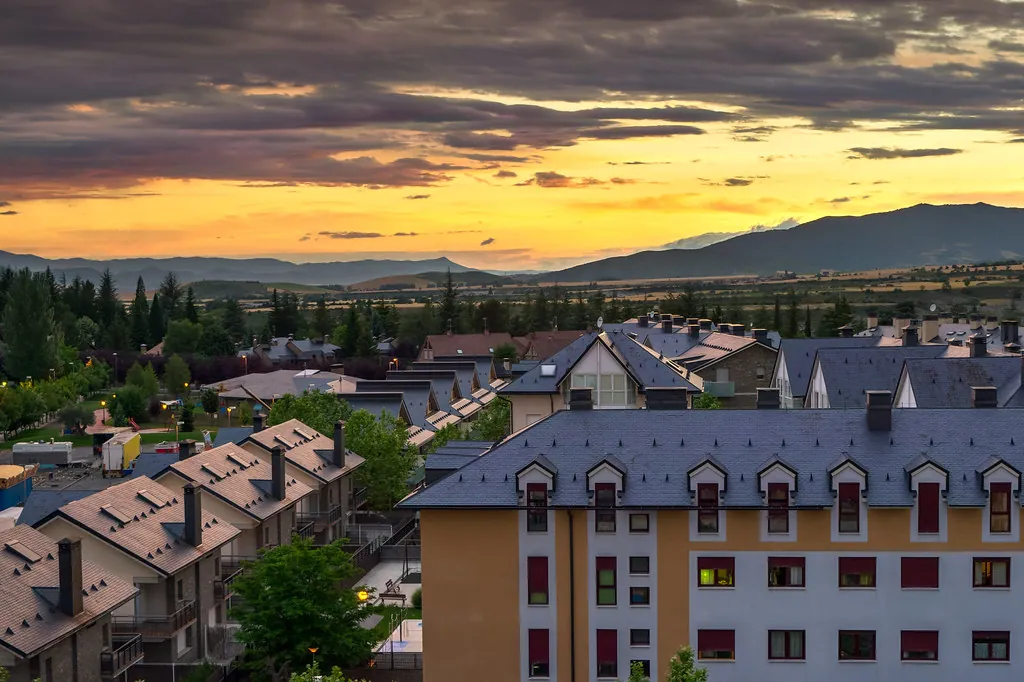
At 1,206 metres, the morning air carries a bite even in August. Palomar de Arroyos sits on a high plateau in the Cuencas Mineras, its stone houses huddled against a wind that has scoured the hills for centuries. With 172 permanent residents, the village feels less like a destination than a pause mid-breath—somewhere the maps acknowledge but sat-nav still struggles to pronounce.
The name translates roughly as “dovecote of streams,” a nod to the stone towers once built to house pigeons and the rivulets that flash-flood after autumn storms. Those towers are gone, yet the houses retain their thick walls, wooden balconies and Arab-tiled roofs, all designed to survive winters that can lock the village in snow for weeks. Summer brings relief, not crowds: daytime highs hover around 24 °C, cool enough that villagers keep their jackets hooked on door handles just in case.
A Village That Looks Inward
There is no grand plaza mayor, no arcade for tourist cafés. Instead, tiny squares open without warning between stone façades, each one equipped with a single bench and a view of someone’s carefully watered geraniums. The parish church, modest and whitewashed, stands at the widest point of the only street wide enough for a tractor to turn. Its bell rings the hours, though dogs and passing clouds tend to mark time just as reliably.
Walk slowly and you’ll notice details that rarely make the guidebooks: a bread oven built into a party wall, its iron door blackened by 150 years of use; a stone trough now planted with rosemary; a wooden granary on stilts that once kept rats from the wheat. Many houses still have the ground-floor stable door half open, revealing bicycles rather than mules. Planning rules forbid aluminium shutters and PVC gutters, so repairs are carried out the old way—lime mortar, hand-split tiles, timber beams that creak exactly like their predecessors.
Footpaths and Skyroads
Three marked footpaths leave the village, though “marked” here means a stripe of paint every half-kilometre and the occasional arrow carved into pine bark. The shortest circuit, 5 km, climbs gently through Scots pine and flowering broom to a sandstone ridge. From the top you can trace the road you arrived on as it snakes away towards Montalbán, 30 km distant, and beyond that the plain of Teruel looking strangely flat from this height. Griffon vultures wheel overhead; if you sit quietly they cruise past at eye level, wingspan the length of a single bed.
Longer routes drop into the Barranco de la Hoz, where red-billed choughs nest in cliff crevices and the stream still turns a medieval flour mill on lucky days. None of the trails are difficult, but the altitude can leave first-time visitors puffing sooner than expected. Stout shoes suffice; walking poles are overkill unless you plan to push on towards the abandoned mercury mine at Cañamares, a full day’s round trip.
Spring and autumn deliver the sharpest colours—acid-green wheat in April, rust-red oak leaves in late October—while winter hikes reward the brave with snow-laden branches and absolute silence. Summer evenings are best: start at 6 pm, reach the ridge by 8 pm, watch the plateau release its heat in shimmering layers while swifts cut silhouettes against a sky that stays light until ten.
What You’ll Eat and Who’ll Cook It
Palomar has no restaurant. Meals happen in kitchens that smell of wood smoke and slow-cooked beans. Visitors stay in one of four village houses rented out by owners who live in Zaragoza or Valencia at sea level. Expect thick crockery, patchwork quilts, Wi-Fi that flickers when the wind is in the north. Each kitchen comes with a note: “Supermarket in Montalbán, closes 2 pm Saturday, closed Sunday.” Plan accordingly.
If you ask two days ahead, María Jesús will deliver a clay pot of ternasco (milk-fed lamb) for four at €14 a head; she’ll also loan you the correct size plate so the stew fits the oven. Breakfast might be migas—fried breadcrumbs with garlic and scraps of bacon—eaten outside while the sun climbs over the pine ridge. Local wine arrives in unlabelled 75 cl bottles, garnacha from vines planted at 900 m that never see chemicals because the frosts do the pest control for free.
On 15 August the village swells to perhaps 400 souls. Families who left for Barcelona factories in the 1960s return, tents and mattresses balanced on roof racks. The fiesta begins with a procession behind a brass band that only knows four tunes, followed by paella for 200 cooked outdoors in a pan the size of a satellite dish. Visitors are welcome, though nobody will hand you a programme—just follow the smell of rabbit and rosemary at 2 pm sharp.
Getting There, Staying Warm
Teruel’s tiny airport receives exactly two flights a week from Madrid; otherwise fly to Valencia or Zaragoza and drive. From Teruel city, the CV-130 winds north-east through wheat fields that gradually tighten into pine forest. The final 12 km after Montalbán are narrow, tarmacked but with no centre line; meet a lorry and someone must reverse. In winter carry snow chains even if the sky is cobalt—weather arrives fast at this height. The last petrol pump closes at 8 pm; diesel is cheaper in the provincial capital, so fill up before you climb.
Accommodation runs €70–€90 per night for a two-bedroom house. Heating is by pellet stove; instructions are taped to the wall in Spanish and increasingly helpful diagrams. Nights drop below freezing from November to March; bring slippers because stone floors remember cold longer than walls remember heat. Phone signal is reliable on the ridge, patchy in the lanes—perfect for anyone who enjoys the polite fiction of being temporarily unreachable.
Leave Before You’re Ready
Stay three nights and you’ll recognise the same three dogs, the same elderly man walking to the bread van at 11 am, the same cloud formation that always builds over the Sierra de Albarracín after lunch. That is the point. Palomar de Arroyos offers no checklist, no selfie backdrop, no gift shop selling fridge magnets shaped like dovecotes. It gives you altitude, quiet, and the gradual realisation that daily life can operate on a much smaller dial.
Drive away in the cool dawn and the village will already be shrinking in the rear-view mirror, smoke from the first stove rising straight up in windless air. You will tell people back home about the vultures, the lamb, the night sky riddled with more stars than seemed strictly necessary. What you won’t explain so well is the sense of having borrowed someone else’s rhythm for a few days—and the faint suspicion that it suited you better than your own.