Full Article
about Pancrudo
Ocultar artículo Leer artículo completo
The morning flight from London to Zaragoza takes two hours and twenty minutes. From the airport, Pancrudo is another two hours by hire car, but the temperature drops a degree for every fifteen minutes you drive west. By the time the A-23 gives way to the TE-V-9013, the thermometer on the dashboard will read 8 °C cooler than it did on the tarmac – and the village hasn’t even come into view.
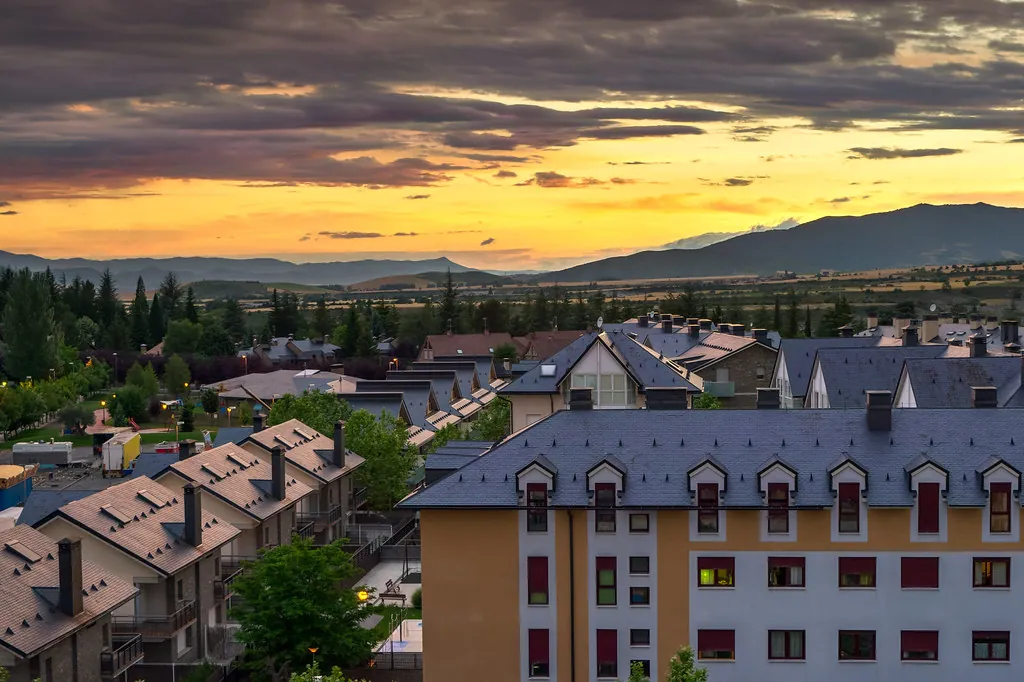
Then it does: a grey stone knot clinging to a ridge at 1,235 m, population 123, where the wind is less weather than atmosphere. In Pancrudo the air feels older – thin, scrubbed, faintly resinous from the surrounding pinewoods. Mobile signal flickers. A single tractor passes, its driver lifting one finger from the steering wheel in the Aragonese equivalent of a royal wave.
Stone, adobe and the sound of nothing much
There is no centre to speak of, just a shallow saddle where the parish church and the only bar watch each other across twenty metres of sloping tarmac. The church, dedicated to San Pedro, is built from the same honey-coloured rubble as the houses; its bell tolls the hour and, on feast days, half the night. Step inside and the temperature plummets another five degrees – medieval mortar is better insulation than anything the village has added since.
The houses are low, two-storey affairs, many still roofed with Arab tile and floored with compacted earth. Adobe walls two feet thick mean windows stay small; balconies, where they exist, face south-east to grab whatever warmth the winter sun allows. Restoration grants have arrived in dribs and drabs since 2010, so freshly pointed stone sits next to walls that still bulge like old sails. It is honest, uncurated decay – no boutique hotels, no gift shops, just the occasional lace curtain pressed against the glass like a reluctant witness.
Walking the streets takes twenty minutes if you dawdle. Calle de la Fuente narrows to the width of a single donkey before widening into a tiny plaza where a stone trough collects melt-water from the tap. The trough is dated 1894; someone has wedged a plastic Coke bottle underneath to stop the constant drip eroding the base. Practicality wins over prettiness every time here.
Forest tracks that punish the over-confident
North of the last street the ground tilts sharply into the Sierra de Pancrudo. Way-markers appear every kilometre or so, but the paint is sun-bleached and some posts have snapped at ankle height. The most straightforward loop – sendero SL-TE-80 – climbs 250 m through Scots pine and aromatic thyme before contouring back along an old charcoal burners’ track. Proper boots are sensible: the soil is decomposed slate, slippery as talc after rain, and the wind will push you sideways for the entire outward leg.
Longer routes exist for the stubborn. A ten-kilometre ridge walk reaches the ruins of a Civil-war lookout at 1,620 m; on clear days you can pick out the Moncayo massif, sixty kilometres north-east. Carry water – there is none en route – and don’t trust the forecast: cloud can barrel up the Jiloca valley in twenty minutes, dropping visibility to fifty metres and the wind-chill below freezing even in May.
Winter proper arrives in late November and rarely loosens its grip before Easter. The TE-V-9013 is salted but not lighted; drifts blow across the tarmac and can glaze it with black ice that the sun never reaches. Chains are obligatory kit, and the daily bus from Teruel stops running when snow hits twenty centimetres. If you’re thinking of a pre-Christmas escape, book a four-wheel-drive or prepare to be stuck for days.
Calories designed for altitude
Food is not why you come to Pancrudo, but it is why you stay warm. The only public dining option is the bar attached to the village social club, open Friday evening through Sunday lunch and whenever the key-holder feels like it. A hand-written board lists three dishes: migas (fried breadcrumbs laced with pancetta and grape), ternasco (milk-fed lamb shoulder slow-roasted with potatoes) and guiso de jabalí (wild-boar stew) when someone has shot one. Expect to pay €12–14 for a plate big enough to silence a teenager; wine from Calatayud arrives in a glass that costs €1.80 and holds a third of a bottle. Vegetarians get omelette or cheese; coeliacs should bring their own bread.
Outside opening hours, self-catering is the rule. The nearest supermarket is in Caminreal, 19 km east, so stock up before the final climb. Local houses for rent (there are three) come with wood-burning stoves and kitchens equipped at 1980s levels: one blunt knife, two aluminium pans, no kettle. Buy chuletón (beef rib) in Calamocha, plus tinned tomatoes and decent olive oil; everything else tastes better simply because the altitude sharpens hunger.
When the village remembers it’s alive
August changes the tempo. The fiestas patronales pull back anyone with family roots; population swells to maybe 400. A brass band marches through the streets at 07:00, dispensing pasodobles and hangovers in equal measure. There is a paella contest in the plaza, a correfoc (devil-run with fireworks) that terrifies the dogs, and a dance that finishes when the wine runs out – historically around 05:30. Accommodation within the village is booked six months ahead; the polite British approach of “we’ll just turn up” will leave you sleeping in the car.
Spring and autumn are kinder. In late April the surrounding campos flicker green after the cereal planting; by mid-October the stubble is golden and the air smells of damp earth and wood-smoke. These are the months when you can walk all day and meet nobody, when the night sky is so dark that the Milky Way throws a shadow, and when the bar owner has time to explain why the village well is 42 metres deep (because the limestone below is folded like pastry and the water table sits beneath a clay lid).
Getting there without the tantrum
No trains, no airport shuttles, no Uber. From the UK, fly to Zaragoza with Ryanair (Tuesday, Thursday, Saturday out of Stansted), pick up a hire car and head west on the A-23. After Calamocha take the N-234 towards Teruel, then turn off onto the TE-V-9013; the last 12 km twist through pine plantations and over a 1,450 m pass where stone blocks spell “PANCRUDO” in white letters visible only when the sun is low. Allow two and a half hours door to door, plus coffee stop – Spaniards still regard a 600 km drive as routine, but British legs stiffen faster.
Accommodation is limited. Casa Chaminera and Casa Roque are village houses restored by the same family; each sleeps four, costs €90 a night with a two-night minimum, and includes a basket of firewood that will last exactly one evening if the wind is blowing. Heating is extra and payable in cash – the meter eats €1 coins at an honest rate. Molino de Pancrudo, four kilometres down the valley, is a converted mill with thicker walls and under-floor heating, but you lose the soundtrack of church bells and barking dogs that defines the village after dark.
Leave the credit-card optimism at home. Pancrudo prefers cash, handshakes and the sort of patience that measures time in seasons, not screen-swipes. If that sounds like punishment, book the Costa instead. If it sounds like relief, bring walking boots, a down jacket and a willingness to let the wind reset your clock.