Full Article
about Paracuellos de la Ribera
Ocultar artículo Leer artículo completo
The weekday bus from Calatayud drops off its single passenger at 14:10. By 14:15, Paracuellos de la Ribera has returned to its default soundtrack: wheat stalks brushing against each other, a tractor grinding through lower gears, and the village's 129 residents finishing lunch behind ochre-coloured stone walls. This is not a place that competes for attention. It simply exists, 486 metres above sea level, while the surrounding sea of cereal fields changes uniform from spring emerald to summer gold.
Most British travellers who bed down here aren't really here at all. They've booked a room because Monasterio de Piedra, twenty minutes east by car, sells out of accommodation first. Paracuellos becomes the overflow car park for visitors who want next-morning access to the monastery's waterfall trail without the 150-euro price tag for its on-site hotel. That arrangement suits the village fine. It keeps the till ringing at Mesón de Dolores (opens 08:00 for coffee, shutters at 23:00) and it means you can still get a double room on a Saturday night for about sixty euros, breakfast included.
The Geography of Quiet
Valdejalón, the comarca that cradles the village, translates roughly as "wide valley of holm oaks," though oaks now share the territory with industrial wheat plots. Paracuellos sits on a gentle rise; walk ten minutes in any direction and you drop down into an ocean of grain that runs all the way to the horizon. There is no coast, no dramatic gorge, no Instagram-ready mesa—just an agricultural grid that turns colour like a well-worn mood ring. British visitors expecting Lake-District undulations will find the terrain closer to East Anglia, only sun-baked and 1,000 metres higher.
The altitude matters. Nights stay cool even in July, when Zaragoza swelters 45 kilometres east. Spring arrives late; by early May the surrounding hills are lime-green and the air smells of wet soil rather than sunscreen. Autumn brings mist that pools between the plough lines at dawn, and by late October you will want a jacket after four o'clock. Winter is crisp, often windy, and occasionally snow-dusted, but rarely blocked off—unlike Pyrenean villages further north, the A-2 motorway stays open year-round.
A Church, a Bar, and the Space Between
San Miguel Arcángel anchors the village at the top of the only paved hill. The church is no cathedral; its bell tower is more agricultural water-tank than campanile. Step inside and you get a crash course in Aragonese practicality: Romanesque bones, Gothic ribs, a Baroque altarpiece tacked on later when money allowed. The sacristy will open if you ask the caretaker, who lives three doors down and keeps the key in an old tobacco tin. Inside are two gilded panels that survived the 1936 fire by being stored in a wheat loft—an anecdote delivered in fast Castilian Spanish, but worth catching if your language stretches to past-tense verbs.
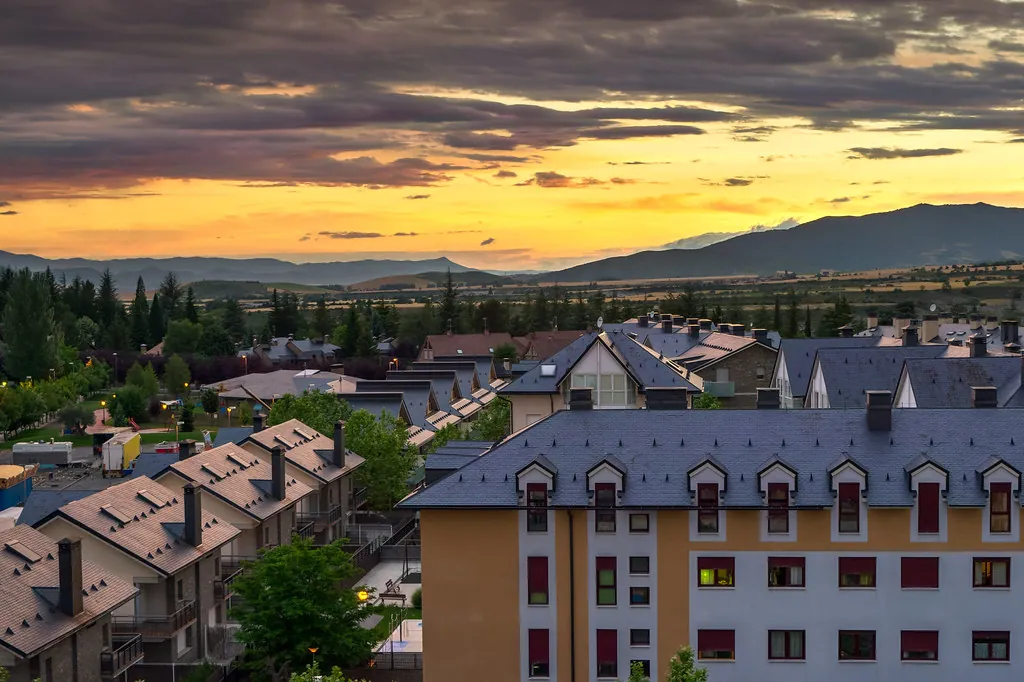
Below the church, the village obeys a simple layout: one main street, two cross lanes, and a circular farm track that doubles as a dog-walking circuit. Houses are built from locally quarried stone the colour of digestive biscuits, roofed with Arabic tiles that curl like dried bay leaves. Many still have the family name chiselled above the door—Gimeno, Bolea, Aznar—evidence that properties pass horizontally rather than vertically. Few façades are pristine; peeling paint and patched plaster are worn as badges of continuity rather than neglect. The overall effect is less "period drama" than "working diary," and that authenticity is what draws repeat visitors who have tired of whitewashed Andalusian pueblos rebuilt for the holiday-lett market.
Eating (and Drinking) on Agricultural Time
There is no restaurant in Paracuellos, only Mesón de Dolores, which functions as café, tapas bar, community centre, and informal tourist office depending on the hour. Prices feel stuck in the last decade: a coffee con leche costs €1.20, a caña of lager €1.50, and the three-course menú del día €12. Dishes arrive on school-canteen crockery but the ingredients are local—lamb from the abattoir in Ateca, peppers from greenhouses outside Calatayud, wine from the Monasterio cooperative down the road. If you want ternasco (milk-fed Aragonese lamb) you must order before 13:00 so Dolores can phone the butcher. Vegetarians can expect escalivada (roasted aubergine and pepper) or migas—fried breadcrumbs with garlic and grapes, stodgy but satisfying after a morning walk.
Shopping is similarly time-sensitive. The village grocery opens 09:30-13:00, then locks up until 17:30. Bread arrives from the regional bakery at 11:00; by 11:30 the crusty loaves are gone. No cash machine exists—last one is 12 km away in Ateca—so bring notes. Cards are tolerated at the mesón but frowned upon for a newspaper and packet of biscuits.
Walking Without Way-markers
Forget laminated route cards and colour-coded arrows. Footpaths here are farm tracks used by tractors and the occasional shepherd. A useful rule: if the path is wider than a combine harvester, you are on private land; if two wheel-ruts run parallel, you are probably fine. Head south past the cemetery and you drop into the Barranco de la Peña, a shallow ravine where bee-eaters nest in May and June. The circuit takes ninety minutes, requires no specialist footwear, and ends back at the church—ideal for an evening stretch before dinner.
Keener hikers can link to the GR-90 long-distance trail, which threads together Valdejalón's hilltop villages. Stage 4 starts 6 km away in Lucena de Jalón and finishes in Morata de Jalón after 18 km of undulating wheat fields and almond groves. Public transport to the start is non-existent; negotiate a taxi in advance (about €20) or sweet-talk the landlord at Mesón de Dolores, whose nephew will run you there for petrol money plus a six-pack of Estrella.
What You Gain, What You Give Up
Paracuellos trades spectacle for silence. There are no souvenir shops, no flamenco nights, no craft brewery with Edison bulbs. Sunday lunch is the social pinnacle; if you haven't booked by Saturday afternoon you will be eating crisps in your room. Mobile signal is patchy inside stone houses—step into the street for four bars of 4G. Rain can turn the farm access lanes to slurry; wellies live in car boots for a reason. And if you miss that 06:55 weekday bus, the next departure is 24 hours away, so have a Plan B (or a very patient Spanish friend).
Yet the payoff is considerable. Night skies are dark enough to pick out the Andromeda Galaxy with the naked eye. Locals still greet strangers because they recognise the number-plate, not because a guidebook told them to. And within half an hour you can be swimming under the Monasterio waterfalls, wondering why everyone else paid triple to lodge beside a cascade they could reach by car.
Leave before dawn in spring and you will hear skylarks rather than house alarms. Stay until autumn and you can help neighbours load sacks of grain onto a trailer in exchange for a bottle of homemade walnut wine. Neither experience fits neatly into a top-ten list, but both explain why some visitors abort the original itinerary and stay an extra night, trading ticks on a map for time measured in wheat height and church bells.