Full Article
about Peracense
Ocultar artículo Leer artículo completo
At 1,217 metres above sea level, where the air thins and the Iberian wind carries the scent of pine and thyme, Peracense castle appears less built than erupted—a fortress of rosy stone that emerges seamlessly from its crimson cliff. From the valley road it looks almost fragile, a paper-cut silhouette against the sky. Close-up, the walls are two metres thick, the masonry married so tightly to the natural rock that defenders once poured boiling oil through carved channels straight onto attackers below.
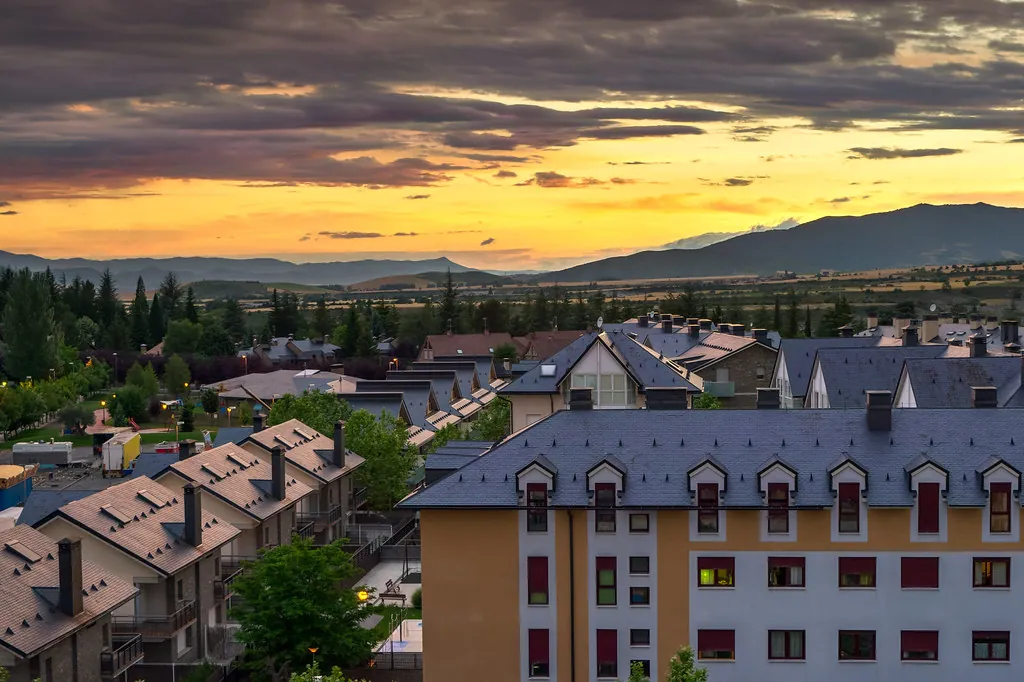
Seventy-eight souls live in the village huddled beneath this ridge, their stone houses the same blush-colour as the castle above. Many are weekend homes now; winter snow can cut the single access road for days and the nearest shop sits fifteen kilometres away in Monreal del Campo. Those who stay year-round keep sheep, tend almond groves, or commute to the Renault factory in nearby Calamocha. Visitors usually arrive between April and October, when the mountain road stays reliably clear and the thermometer hovers around 20 °C—ten degrees cooler than on the Teruel plain.
English-speaking staff member David meets cars at the castle gate, collects the €3.50 entrance, and launches into a concise briefing that covers everything from 12th-century Almohad foundations to 14th-century Christian extensions. He hands over a battered iron key the size of a torch for the Torre del Homenaje, warning that handrails are few and the spiral staircase is worn marble. The advice is practical rather than bureaucratic: good walking boots matter more here than in many so-called mountain sites, especially when the wind funnels through the battlements with enough force to snatch an unzipped jacket.
Inside, three concentric walls follow the spine of the ridge, each turn revealing a different geological chapter. The outer curtain is almost sandstone, soft enough to scratch; the inner keep flashes quartz in the sunlight. Arrow slits frame views across the Jiloca basin—patchwork cereal fields, abandoned hamlets, and the distant blue swell of the Montes Universales. On hazier days the horizon simply stops, giving the illusion that the castle floats above cloud. Bring binoculars: griffon vultures ride the thermals at eye level and, in May, you can watch shepherds move flocks along drove roads first charted by the Moors.
Back in the village, lanes barely wide enough for a donkey cart thread between stone houses topped with Arab tiles. Restoration has been careful but not twee: satellite dishes bloom beside 16th-century coats of arms, and someone’s laundry still flaps above a Gothic doorway. The single bar, Casa Ramón, opens only at weekends outside high summer; ring the bell and Ramón himself will fry migas—breadcrumbs sizzled with garlic, grapes and thick rashers of tocino—then pour a carafe of locally brewed beer strong enough to slow the pulse. There is no menu, no card machine, and little English spoken, yet the bill rarely tops €12 a head.
Walkers use Peracense as a launch pad for gentler versions of the long-distance GR-24 that circles the Sierra de Albarracín. The signed 7-kilometre Sendero de los Estrechos drops from the castle car park to the river Piedra, squeezing between sandstone walls the river has whittled into scoops and caves. The path is clear but ungraded; after rain the clay turns slick as soap and the final climb back to the village adds 250 m of elevation—enough to remind lungs they are above a thousand metres. Set off early: afternoon sun bakes the south-facing slope, and the only shade belongs to wild rosemary bushes humming with bees.
Evening brings the real reward. By 9 p.m. the day-trippers have rolled back to the A-23 motorway, leaving silence so complete you can hear pinions creak as the vultures settle on the ridge. The castle car park—flat, gravelled, and free—makes an unofficial overnight stop. Camper-vanners angle windscreens east, brew coffee on tailgates, and wait for the sky to shuffle through its spectrum: terracotta, bruised violet, ink. Light pollution registers zero on most star charts; the Milky Way unfurls like spilled sugar across the sky. A torch moving along the battlements is usually David locking up, giving a last nod to the handful of vehicles below.
Practicalities stay resolutely small-scale. The nearest petrol is 25 km away in Teruel; fill up before the mountain ascent. Mobile reception is patchy—Vodafone picks up one bar on the castle roof, nothing in the village. If the day turns wet, the fortress closes without ceremony; wet stone plus 40 km/h gusts equals insurance headaches. Winter visits are possible but check the Teruel province snow report: the final six kilometres are untreated and chains become compulsory with the first dusting.
Come mid-August the population swells to perhaps four hundred for the fiesta of San Roque. A sound system appears in the plaza, locals serve bowls of gazpacho de Teruel (a hearty meat stew, nothing to do with Andalucían soup), and teenage cousins who left for Zaragoza universities sleep on family floors. Outsiders are welcome but spare rooms are non-existent; the closest hotel is a twenty-minute drive in the manufacturing town of Andorra (no relation to the Pyrenean micro-state). Book early, or resign yourself to the car park and a sleeping bag.
Peracense will never tick the “bustling market town” box beloved of estate agents. It offers instead a tight knot of history, geology and silence that feels increasingly rare even in inland Spain. Stand on the battlements at dusk, when the stone glows ember-red in the last light and the only movement is a shepherd’s dog three valleys away, and the notion of frontier becomes tangible. This was once the edge of two medieval worlds; today it is simply the edge of modern noise, a place where the wind still carries more weight than Wi-Fi.