Full Article
about Pomer
Ocultar artículo Leer artículo completo
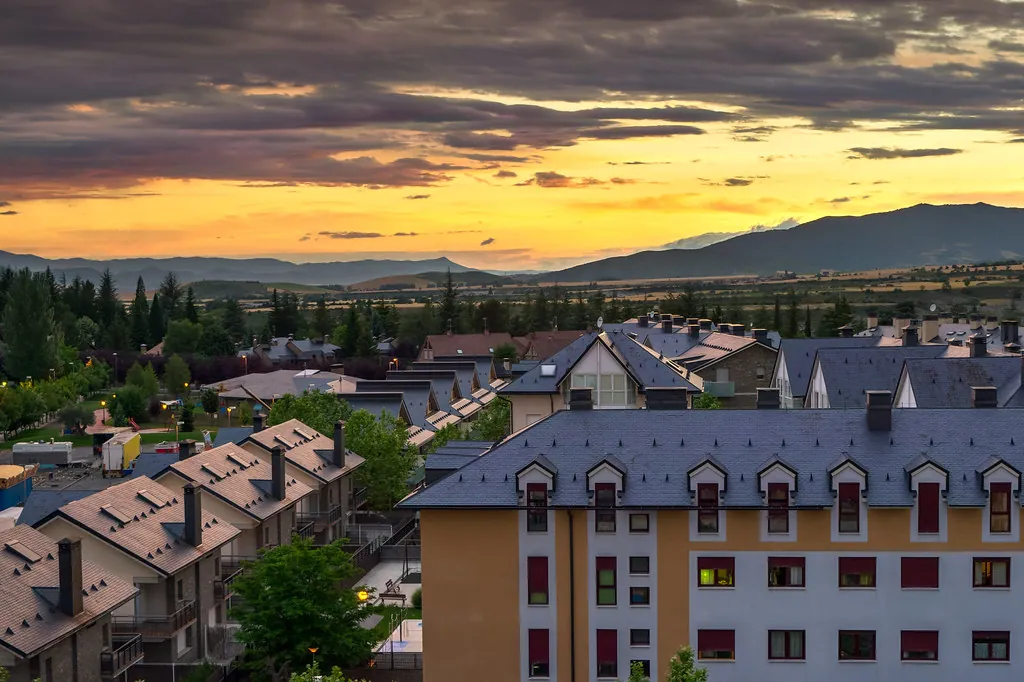
The only traffic jam in Pomer happens at 7am when three sheepdogs block the single lane while herding their flock towards the cereal fields. Stand still for thirty seconds and you'll hear the soft clink of a goat's bell somewhere below the ridge, the wind combing through thyme, and absolutely nothing else. At 1,100 metres on the southern edge of Aranda county, the village is high enough for the air to feel rinsed, thin enough to make every horizon look Photoshopped.
Twenty-six people are officially registered here, though on a weekday you might count fewer doorways with smoke curling from the chimney. Stone-and-adobe houses shoulder together along a single cobbled loop; most sit unlocked because keys were lost decades ago. One of the front doors still carries a hand-painted "Se vende" sign that faded to ghost letters sometime around 2008. Nobody has bothered to repaint it—there isn't much of a market for houses whose nearest supermarket is a 35-minute mountain drive.
What passes for a centre
The village pivots on its squat parish church, built in the 18th century after the earlier chapel collapsed in a winter storm. Step inside and the temperature drops another five degrees; the stone floor is worn into shallow bowls by centuries of work-boots. Services happen twice a month unless the priest is snowed in, in which case the octogenarian sacristan plays a crackling cassette of last month's sermon and everyone pretends it's live. Bell rings at noon, six o'clock and, inexplicably, at 4.15—nobody now remembers why.
Either side of the porch run two short streets wide enough for a mule but optimistic enough to label themselves Calle Mayor and Calle Nueva. The latter is only "new" because one house was re-roofed in 1962. Adobe walls bulge like well-proofed bread; wooden balconies, painted ox-blood red, sag with geraniums that survive on rainfall and disregard. Half-way along, an iron fountain trickles into a stone trough where village women once slapped laundry and gossip in equal measure. The water is still drinkable—cool, metallic, perfect for filling a bottle before you head out across the plateau.
Walking into the wind
The best map is the one sketched by the baker in Aranda when you buy a loaf the night before: follow the track past the last threshing circle, turn left at the abandoned corral, keep the electricity pylons on your right until they end, then simply walk towards the sky. The GR-90 long-distance footpath bisects Pomer but most hikers march straight through, ticking off kilometres. Stay still for ten minutes and the landscape repays the favour: a short-toed eagle circles overhead, a stone curlew scuttles between furrows camouflaged the exact colour of dried mud.
Spring arrives late and in a hurry. By late April the plateau flickers green, then gold, then green again as wind ripples the wheat. In June you can follow the old drove road south-east towards Retascón, a ruined hamlet whose population is now two retired teachers and a very confident cat. The round trip is 12km, almost flat, with vultures for company and zero phone signal—bring water because streams are seasonal and the bar in Pomer shuts if the owner nips down the mountain for feed.
Summer mornings are made for 6am starts; by midday thermometers flirt with 30°C, but the air remains dry enough for shirts to stiffen with salt. Afternoons sag under the cicadas' electric buzz; sensible locals close shutters and re-emerge at seven to tend vegetable plots irrigated by collected roof water. Autumn is the photographers' season: stubble fields roll like corduroy, skies rinse to Wedgwood blue, and the first frost polishes every cobble to marble. Winter travel is doable—daytime 8°C, nights minus 6°C—but snow can seal the access road for a day or two. Pack chains even if the forecast purrs.
The edible side of nowhere
Do not arrive expecting tapas trails or brunch menus. The closest restaurant is a 25-minute drive away in Torralba de los Frailes, open weekends only and fully booked by 9.30pm. What you will find is Mariano, who keeps the village grocery: one room, no aisles, stock listed mentally in his head. Ask politely and he'll sell you a hunk of local chorizo, a tetra-brick of gazpacho and a packet of those aniseed biscuits truckers chew to stay awake. Price list is scrawled on cardboard; he still totals purchases on the brown paper bag.
If someone invites you in, say yes. Hospitality is measured in coffee spoons thick enough to stand a fork upright and a slab of manteca—white pork fat—mashed into tomato on rough bread. Lunch might be ternasco, milk-fed lamb roasted in a wood-burning oven until the skin shatters like thin ice. Vegetarians can expect migas—fried breadcrumbs strewn with garlic and grapes—filling enough to keep you walking until dusk. Wine comes from a plastic bottle that once held motor oil, now rinsed and repurposed; it tastes of blackberries and the side of a mountain, costs about €2 a litre and is never refused.
When the village doubles in size
August 15th is the only date Pomer risks feeling crowded. Former residents return from Zaragoza, Barcelona, even Manchester, pitching tents in grandparents' courtyards. The population rockets to roughly 120 and the village smells of suncream and woodsmoke. A sound system appears—one speaker balanced on a wheelbarrow—playing 90s pop until the sacristan reminds the DJ that the church is directly opposite. At dusk everyone troops behind a brass band and a statue of the Virgin decked in plastic roses, Procession Lite compared with nearby Calatayud's week-long spectacular, but heartfelt enough to make visiting agnostics shuffle self-consciously.
Fireworks are modest: three rockets that echo off the plateau like someone slamming a giant biscuit tin. The real show is the sky after the generators shut down—no streetlights, no phones, just the Milky Way spilled across the horizon. Bring a jacket even in midsummer; altitude cools the night faster than you expect.
Getting here, and away again
From Zaragoza, take the A-2 west to Calatayud, then weave south on the A-1502 and a succession of lettered roads that shrink with every junction. The final 12km, signed simply "Pomer", corkscrews upward through wheat and almond terraces. Petrolheads enjoy the bends; everyone else concentrates on the guardrail-free drops. A small car is plenty; if you meet a tractor, reverse etiquette says whoever is closest to a passing bay yields. Buses? None. Taxi from Calatayud costs about €60—agree the fare first, and book a return because mobile coverage is patchy.
Accommodation is where Pomer admits its limitations. There are no hotels, hostels or official campsites. The village association lists three privately owned houses rented by the night (expect €60–€80, minimum two nights, bring your own towels). One has Wi-Fi that works when the wind blows from the east; none have televisions, all include a bottle of drinking water and directions to the compost bin. If every bed is full, the nearest rooms are 25km back down the mountain in Borja—perfectly pleasant, but you lose the dawn silence that justifies the climb.
Worth the effort?
Pomer will not suit travellers who need a souvenir shop or an itinerary. Come if you have a spare day, a full petrol tank and curiosity about what Spain looks like when souvenir fridges, selfie queues and Airbnb mood lighting are stripped away. Bring walking boots, a sense of acoustic space and the habit of greeting strangers—because every "Buenos días" is returned with interest and, quite often, a free coffee. Leave before you expect facilities to appear; they won't. What does appear, reliably, is a horizon wide enough to reset your sense of scale, and a bill for absolutely nothing except whatever you choose to put in Mariano's brown paper bag.