Full Article
about Pozuel del Campo
Ocultar artículo Leer artículo completo
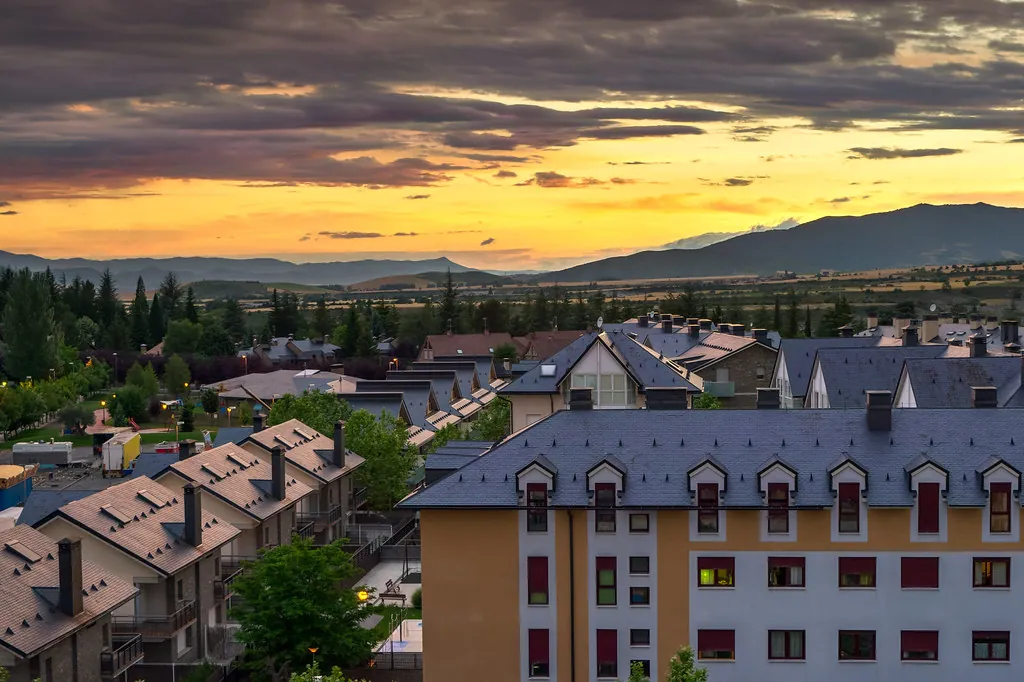
The thermometer on the car dashboard drops a full five degrees in the final twenty kilometres. It isn’t dramatic—no hair-pin bends, no guardrail drops—just the slow realisation that the cereal plains of Teruel have tilted upwards and the air has thinned out. At 1,100 m, Pozuel del Campo appears: a short skyline of stone walls and clay roofs, a church tower that still works as the only reference point for anyone coming across the fields on foot. Population: sixty on a good day. Mobile reception: patchy to fictional.
Summer Cool, Winter Cut-Off
Elevation matters here. Night-time temperatures in July can dip to 12 °C, so bring a jumper even if the forecast in Zaragoza promises 35 °C. The village sits on the southern edge of the Iberian high plateau; the wind arrives unfiltered and the sky feels oversized. In winter, snow closes the local road from Calamocha for a day or two most years. Chains aren’t legally required every day, but the Guardia Civil will turn you back if a fresh front blows through. Spring is the sweet spot—green wheat, flocks of migrating storks overhead, and mud that hasn’t yet baked into ankle-twisting ruts.
A Village that Refuses to Pose
There is no postcard plaza ringed with cafés. The single bar opens when the owner finishes her morning round of deliveries; if the lights are on, coffee is €1.20 and comes with a biscuit you didn’t order. Architecture is mixed: some houses restored with double-glazed windows, others quietly crumbling. Adobe walls bulge like well-used paperbacks; timber balconies sag but still carry geraniums. The effect is honest rather than quaint—no artisan ice-cream, no boutiques selling lavender honey. Instead, you notice details: a hand-forged iron hinge dated 1897, wheat sheaves painted either side of a doorway to advertise a former granary, the smell of firewood leaking from every chimney at dusk.
Walking the Mosaic of Plough and Sky
Pozuel works best as a base for short, map-optional walks. A farm track leaves the upper end of the village, passes an abandoned threshing floor, then splits: left towards Villarroya del Campo (5 km), right towards the ridge that separates the Jiloca and Jalón watersheds. Neither path is strenuous; gradients are gentle enough for walking shoes, though the surface is loose shale after rain. The real appeal is scale—hedgerows disappear, trees shrink to bonsai hawthorns, and the horizon becomes a length of string you could pluck. Birders bring binoculars: great bustards in winter, black-bellied sandgrouse in April, hen harriers quartering the stubble most months. Dawn and dusk deliver the activity; midday heat sends everything, including the larks, into siesta mode.
Food Meant for the Field
Menus don’t exist; you eat what the kitchen made that morning. Mid-week lunch at the bar might be ajoarriero—salt cod, potato and egg mashed into a terrine that shepherds could carry in a cloth—plus a quarter-litre of house wine for €2. Sundays see communal caldereta, a slow lamb stew thickened with bread and sweet paprika. Vegetarians get eggs: scrambled with garlic scapes in spring, with wild mushrooms if someone has foraged after rain. Expect to pay €10–12 for three courses and a sense that every spoon has done this job for a century. If you’re self-catering, the last decent supermarket is in Calamocha; Pozuel’s tiny shop keeps bread, tinned tuna and locally dried chickpeas that need an overnight soak.
When the Village Remembers How to Party
Fiestas patronales kick off on the third weekend of August. The population quadruples. Generations who left for Zaragoza or Valencia in the 1970s return, camp in ancestral houses and spend three nights arguing over dominoes. A brass band marches through streets too narrow for its own echo; at 2 a.m. fireworks bounce between stone walls like gun-shot pin-balls. The religious bit—procession of the Virgen del Rosario—starts at seven on Sunday evening, temperature still above 30 °C, hymn amplified by a single wheezing loudspeaker. Visitors are welcome, though accommodation inside the village is limited to one restored house on Airbnb (Casa Azafrán, sleeps four, €85 a night, garden with barbecue). Book early; the next nearest beds are 25 km away in Calamocha.
Getting Here without a Private Jet
No trains, no buses, no Uber. From the UK you fly to Zaragoza (direct from London-Stansted with Ryanair, twice weekly, £48 return in shoulder season), pick up a hire car, and head south-west on the A-23. After 75 minutes you leave at Calamocha, refill the tank—petrol stations thin out after this—and follow the TU-901 for 20 km. The last stretch is single-track, passing places every 400 m; meet a tractor and you’ll be reversing into a barley field. Allow two hours total from airport to village square. Winter drivers should request snow chains at the hire desk; the A-23 is cleared first, the local road last.
The Honest Verdict
Pozuel del Campo doesn’t sell itself. There is no glossy leaflet, no craft market, no selfie-frame. What you get is altitude silence, stone houses that have never heard the word boutique, and a landscape that looks better the farther you walk into it. Come if you want to lose signal, not to find yourself. Skip it if you need flat whites, yoga retreats, or anything open after ten. Either way, fill the tank before you leave Calamocha—because once the wheat fields turn gold and the sky switches to widescreen, you won’t want to turn around too soon.