Full Article
about Puente de Montanana
Ocultar artículo Leer artículo completo
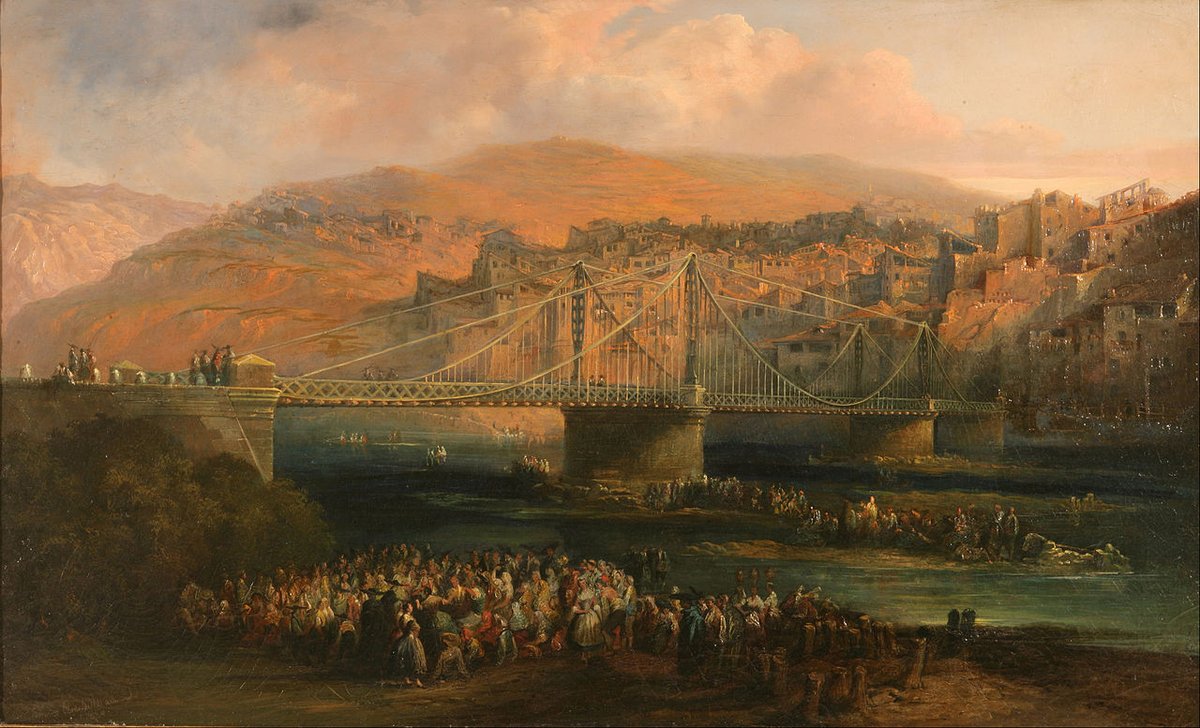
The medieval bridge appears first, stone arches spanning the Noguera Ribagorzana like something from a period drama. Then the village reveals itself—honey-coloured houses stacked against a limestone cliff, barely ninety souls calling this place home. Puente de Montañana isn't hiding; it's simply waiting for drivers willing to leave the A-22 artery and tackle twenty minutes of switchback roads.
At 650 metres above sea level, the village sits where proper mountains start thinking about becoming the Pyrenees. The air carries a clarity that makes distant ridges look close enough to touch, while the river below provides a constant soundtrack of rushing water over smooth stones. Summer temperatures hover five degrees cooler than Huesca's plains—perfect for walking, though winter brings genuine snow and roads that demand respect.
The Bridge That Built Everything
The 12th-century bridge isn't merely photogenic—it dictated the village's entire existence. Merchants, shepherds and modern hikers all follow the same stone path across the river, entering through an archway that once housed guards collecting tolls. Look closely at the eastern parapet: medieval masons carved deep grooves where countless ropes wore grooves into limestone while hauling goods uphill.
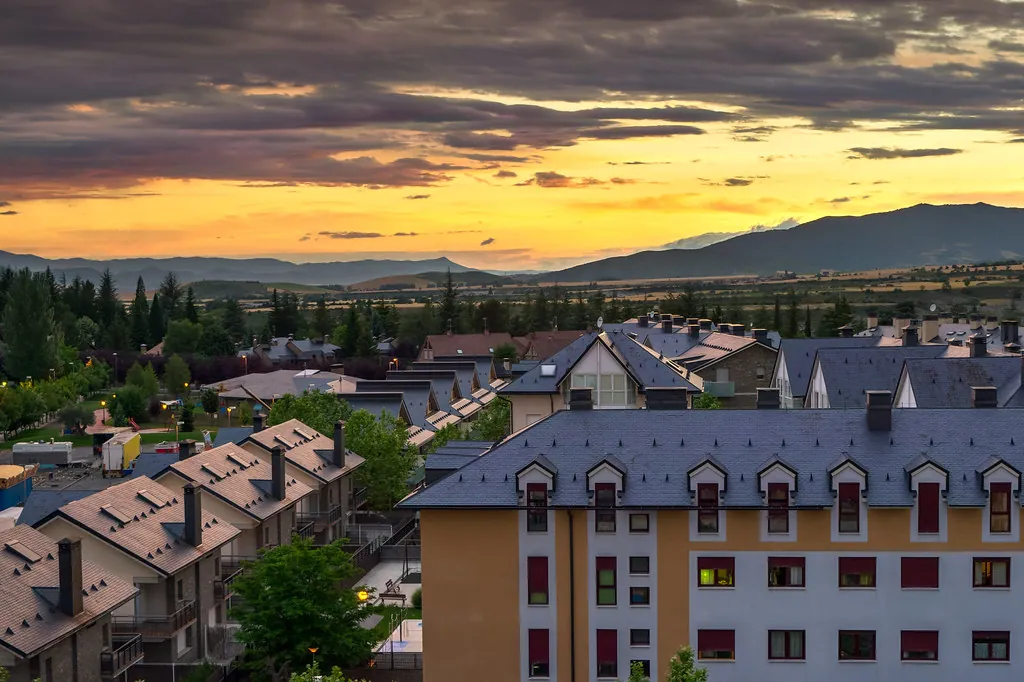
The village clusters on the south bank, houses built from the same honey-coloured stone as the cliffs behind. Narrow lanes climb steeply between buildings, some barely two metres wide. Windows face south, catching winter sun while summers stay cool behind thick walls. It's textbook Pyrenean architecture—practical, beautiful, unchanged for centuries.
Local legend claims the bridge survived Spain's Civil War because both sides needed it for supply lines. Whether true or not, bullet pockmarks on the upstream parapet suggest someone tested the theory. Today, lorries still rumble across, though weight limits mean anything heavier than 12 tonnes must find another route.
Walking Into Empty Countryside
Footpaths radiate from the village like spokes, following ancient routes between hamlets now mostly abandoned. The easiest follows the river downstream for three kilometres to L'Aulàs, where a ruined Romanesque church stands roofless among wildflowers. Allow ninety minutes return, though photographers should double that—the light changes constantly as clouds drift across the valley.
More serious walkers can tackle the GR-3.1, climbing 400 metres through holm oak and Scots pine to Coll de Basibé. The path starts behind the church, marked with red-and-white flashes that soon disappear among limestone scree. Proper boots essential; the descent follows a dry riverbed where every stone wants to twist an ankle. Views stretch across the Pre-Pyrenees, brown ridges folding into blue distance until the proper mountains appear—snow-capped peaks marking the French border forty kilometres north.
Wildlife requires patience. Golden eagles nest on nearby cliffs; their distinctive silhouette—wings held flat, not V-shaped like buzzards—appears most evenings. Wild boar root through vineyards at dusk, though you'll likely see only their trotter prints in muddy patches. More reliable are the butterflies: 42 species recorded along the riverbanks, including swallowtails the size of saucers in late June.
What Passes for Gastronomy
Food here means ingredients that can walk to market. Ternasco—milk-fed lamb roasted with potatoes and bay leaves—appears on every menu, priced around €16 at Hostal Isidro. The kitchen opens onto the dining room, so diners watch Alberto prepare menestra, a vegetable stew that changes with seasons: artichokes and peas in spring, wild mushrooms in autumn, always finished with a poached egg.
Vegetarians survive on tortilla and salads, though the local almond tart justifies the journey alone. Shortcrust pastry holds a filling of ground almonds, lemon zest and enough honey to make dentists wince. The bakery opens Sunday mornings only; arrive after 11am and you'll queue with locals buying twenty at a time.
Wine comes from Somontano, thirty kilometres south. Try the Moristel—light, almost Beaujolais-like, perfect with lamb. Bottles start at €12 in the village shop, though selection runs to three labels maximum. The owner, Maria, opens sporadically; if shuttered, the petrol station at Benabarre sells bread and terrible wine until 9pm.
When Silence Becomes Deafening
Evenings bring absolute quiet. The village bar closes at 10pm sharp—earlier if custom warrants. Night skies dazzle; light pollution registers zero on astronomical charts. The Milky Way appears so bright that first-time visitors often ask if clouds are rolling in. Bring binoculars for Andromeda Galaxy, visible to naked eyes on moonless nights.
Accommodation means Hostal Isidro or nothing. Eleven rooms above the restaurant, all with en-suite showers and views either to the bridge or up the limestone cliff. €55 buys clean sheets, breakfast of strong coffee and industrial pastries, plus unlimited hot water—luxury after a day's walking. Book directly; booking.com lists it but Maria rarely checks emails.
Winter changes everything. Snow arrives December through March, sometimes cutting road access for days. The village becomes a handful of locals and whatever visitors got trapped. Electricity fails regularly; rooms have candles and extra blankets for good reason. Yet January brings crystal-clear days when the surrounding peaks shine white against brilliant blue skies—photography heaven for those prepared.
Getting There, Getting Away
Fly Ryanair to Zaragoza from Stansted—currently Tuesdays and Saturdays, £38 return if booked early. Hire cars queue outside arrivals; ignore the hard sell on upgrades, you need something small for mountain roads. Drive north on the A-68, then A-22 towards Lleida. Leave at junction 22, following the N-123 through Benabarre. The final twelve kilometres twist through limestone gorges; allow forty minutes and don't attempt after dark first time.
Petrol stations disappear after Barbastro—fill up. Sat-nav lies about journey times; Google thinks twenty minutes for that final stretch, reality means thirty-five if you value your suspension. Meeting traffic on single-track sections requires reversing to passing places; locals know every bend and drive accordingly.
Barcelona airport offers more flight options, but the drive takes three hours versus ninety minutes from Zaragoza. Either way, Puente de Montañana works perfectly breaking journeys to Valencia or southern Spain. Stay overnight, walk the bridge at dawn before the day's traffic begins, then continue south refreshed.
The village offers no souvenirs beyond memories and perhaps Maria's almond tart recipe, reluctantly surrendered after two coffees and genuine interest in her grandmother's cooking. That's precisely the point. In an age of Instagram hotspots and tick-box tourism, Puente de Montañana remains what it always was—a working village where the bridge still matters more than the photographs taken upon it.