Full Article
about Purujosa
Ocultar artículo Leer artículo completo
The church bell tolls twice. No one stirs. From the stone threshold of the only open house, an elderly woman watches a red kite circle above the rooftops—its wings spread wide against a sky that feels bigger than the entire village below. This is Purujosa at midday: 27 permanent residents, 978 m above sea level, and a quiet so complete you can hear your own pulse in your ears.
A Village That Refuses to Shout
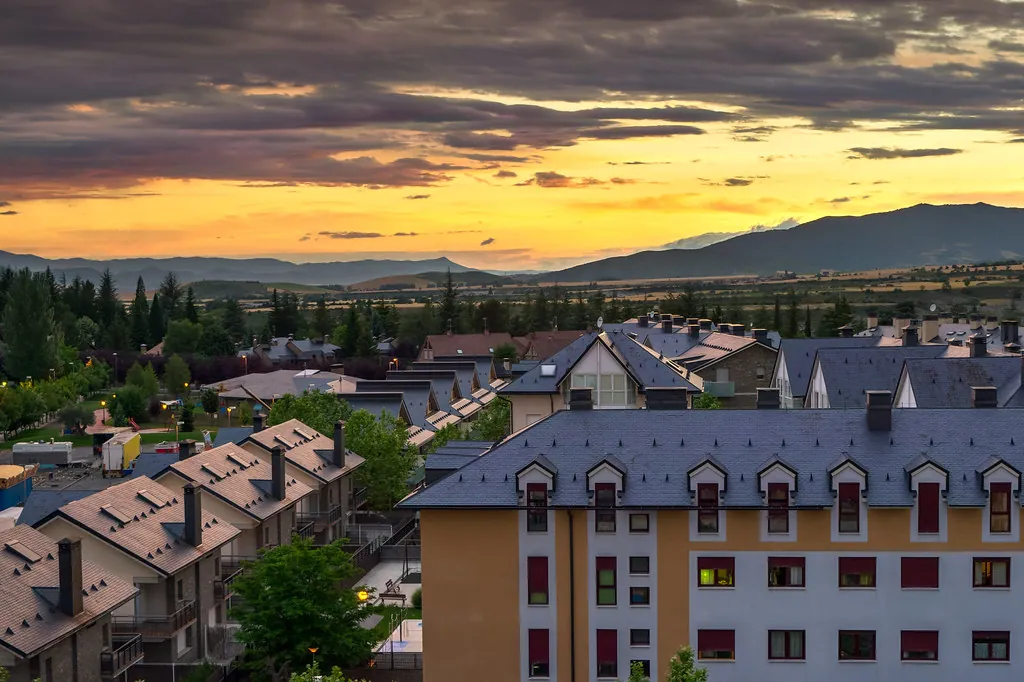
Purujosa doesn’t greet visitors with souvenir stalls or colour-coded way-markers. The road in—twelve kilometres of switchbacks from the main A-202—narrows to a single lane scratched into the hillside. Stone walls press against the wing mirrors; rosemary and white-thorn scrape the sills. Parking is wherever the gradient flattens enough for two wheels to rest safely. The reward is immediate: a panorama of the Aranda valley that stretches south until the land dissolves into summer haze.
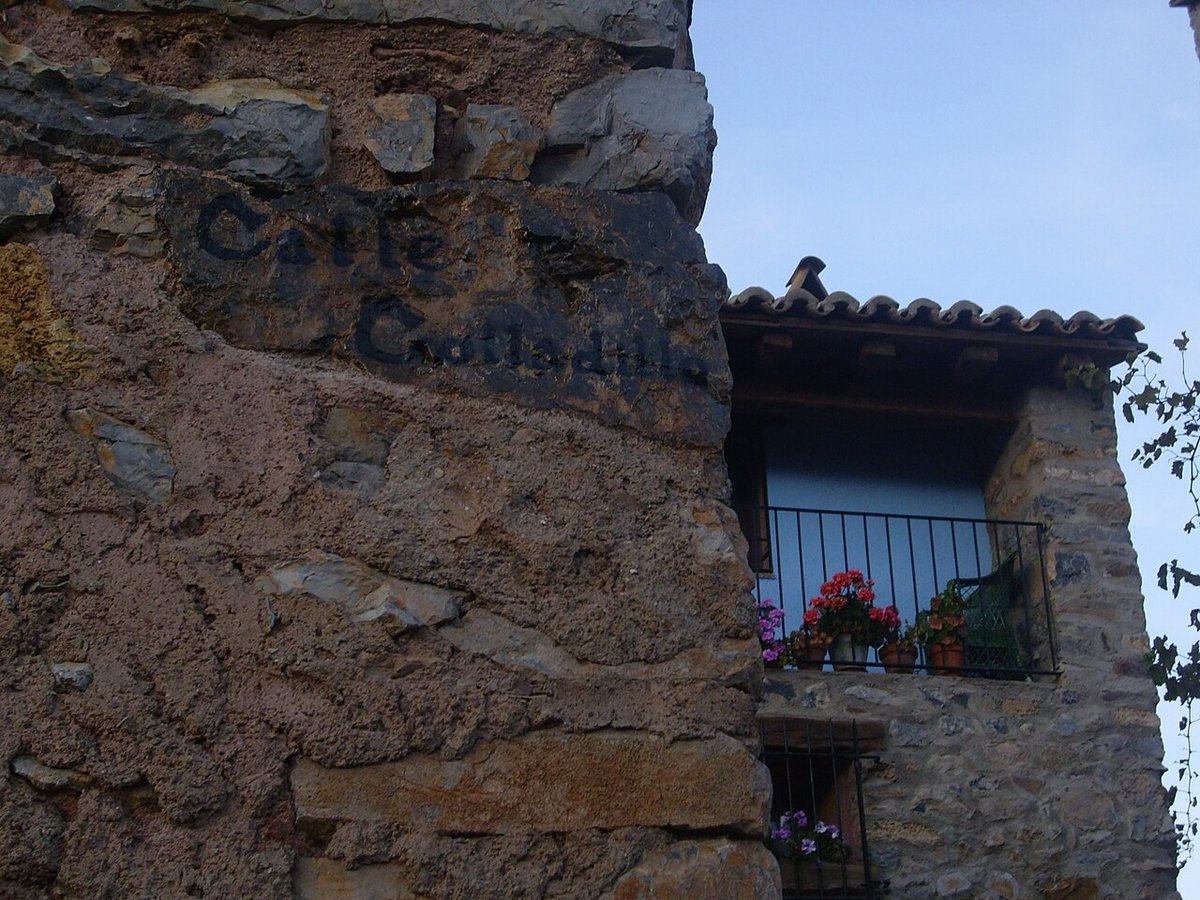
Houses are built shoulder-to-shoulder against the cold that sweeps down from the Moncayo massif each winter. Granite blocks, timber balconies, conical chimneys: every element answers to function first, beauty second. Roofs slope sharply so snow slides off; doors are painted ox-blood red so farmers could find them in a blizzard. Even the parish church keeps its ornamentation modest—a simple belfry, a weather-beaten sandstone arch, initials of long-dead masons chiselled above the portal.
Trails That Demand Respect
Leave the village by the upper track and within ten minutes the tarmac gives way to a stony path that corkscrews into an empty landscape of junipers and grey limestone. This is the Senda de la Umbría, a five-kilometre loop that locals still use to reach scattered almond groves. The climb is unrelenting; shade is theoretical. Carry more water than you think civilised—two litres in summer, one even in October when the Thermals can still touch 24 °C.
For something longer, follow the PR-Z 44 south-east towards the Barranco de la Mata. The route drops 400 m to the riverbed, then climbs back up the opposite wall via an old mule track paved by Roman legionaries. The round trip takes four hours, demands sure feet, and delivers vulture-level views of cliffs banded like Neapolitan ice cream. After heavy rain the descent turns into a slime chute; tackle it between May and mid-June when the thyme flowers and the stone is dry.
Maps: the 1:25,000 “Sierra de Moncayo” sheet from the Instituto Geográfico Nacional covers the area. Download the free Mapa MTN50 app before you lose signal at the village edge.
What Passes for Local Life
There is no shop. The last bakery closed when its owner turned ninety and decided kneading dough at altitude was no longer amusing. Fresh bread arrives on Thursday mornings in a white van that beeps its way through the lanes; catch it beside the stone trough at 11 a.m. or go without. The nearest proper supermarket is in Tarazona, 25 minutes down the hill—stock up on tomatoes, tinned tuna and anything green before you ascend.
Meals happen in two places. Casa Cipriano, the ground-floor front room of someone’s house, opens weekends by word of mouth. Call 976 64 00 78 the night before; if Cipriano’s wife answers, you’ll eat migas—fried breadcrumbs laced with garlic and grapes—followed by borrego al chilindrón, lamb stew sharp with paprika. Expect to pay €18 for three courses, water and a carafe of bulk-bought garnacha. The other option is to knock on the green shutter opposite the church and ask for “lo que haya” – whatever there is. Payment goes into an honesty box nailed to the doorframe.
The annual fiesta, held around the fifteenth of August, doubles the population for forty-eight hours. Former emigrants return from Zaragoza and Barcelona; a sound system appears on the tiny plaza; someone produces a foam machine that coats the cobbles in soap suds. At midnight the village shares a caldereta, a cauldron of goat and potatoes simmered since dawn. If you dislike amplified copla music, book elsewhere that weekend.
Weather That Forgets the Season
Altitude flattens the calendar. Even in July night temperatures can dip to 10 °C—bring a fleece. Spring arrives late: almond blossom peaks in mid-April, a full month behind the Ebro valley. Autumn is the sweet spot, crisp mornings giving way to 22 °C afternoons and a horizon wiped clean by the cierzo, the north wind that barrels through the Ebro gorge at 60 kph.
Winter is serious. Snow can cut the road for days; the council keeps a single plough for the entire comarca. Chains or 4×4 are compulsory from December to February. On the upside, the village is never prettier: slate roofs wearing white caps, silence thick enough to taste, and the chance that you’ll share the streets only with fox tracks.
Getting There Without Tears
From Zaragoza–Delicias bus station, take the Moncayo line to Tarazona (1 hr 45 min, €9.75). A taxi from Tarazona to Purujosa costs €30—book the day before on 976 64 02 02. If you’re driving, leave the A-2 at junction 257 (Calatayud), follow the N-122 towards Tudela, then turn off on the A-202 signed “Aranda/Moncayo”. The final 12 km are twisty but asphalted; meet oncoming grain lorries with patience and a reverse gear.
Accommodation is limited. Casa Camila sleeps four in a restored stone house (€90 per night, two-night minimum). Heating is by pellet stove; instructions are in Spanish only. Alternatively, the municipal albergue charges €12 for a bunk, but you must collect the key from the ayuntamiento in neighbouring Alcampa, open 9 a.m.–2 p.m. Camping is tolerated beside the threshing floor above the village; keep your tent low and leave no trace.
Parting Shots
Purujosa offers no postcards worth posting, no fridge magnets, no Wi-Fi. It gives instead the rare sensation of volume: empty space where thoughts can expand, rock under boot, the metallic taste of altitude after a stiff climb. Come prepared, tread lightly, and the village will repay you with a quiet so absolute you’ll hear the blood in your ears—twice, if the wind drops.