Full Article
about Rubielos de Cera
Ocultar artículo Leer artículo completo
A Village That Fits Between Four Streets
Thirty-two residents, four streets, one church tower. Rubielos de Cera doesn't overwhelm visitors with choice, and that's precisely the point. At 1,152 metres above sea level, this stone-and-adobe hamlet in Teruel's Jiloca comarca offers something increasingly rare in Europe: genuine quiet without an admission fee.
The arithmetic is brutal but honest. When the last school closed, when the bar shut its doors, when the young left for Zaragoza and Valencia, what remained was a village scaled to human proportions. Houses here aren't numbered in the thousands—they're counted on two hands, and half stand empty, their wooden shutters painted Mediterranean blues and greens that fade a little more each winter.
Walking the main street takes four minutes if you dawdle. Stone houses shoulder against each other, their walls thick enough to survive both summer heat and winter winds that sweep across the cereal plains. Some properties have been restored by weekenders from Madrid who've discovered that property prices here hover around what Londoners spend on a parking space. Others crumble gracefully, their rooflines sagging like elderly aristocrats who've refused to leave the ballroom.
The Geography of Absence
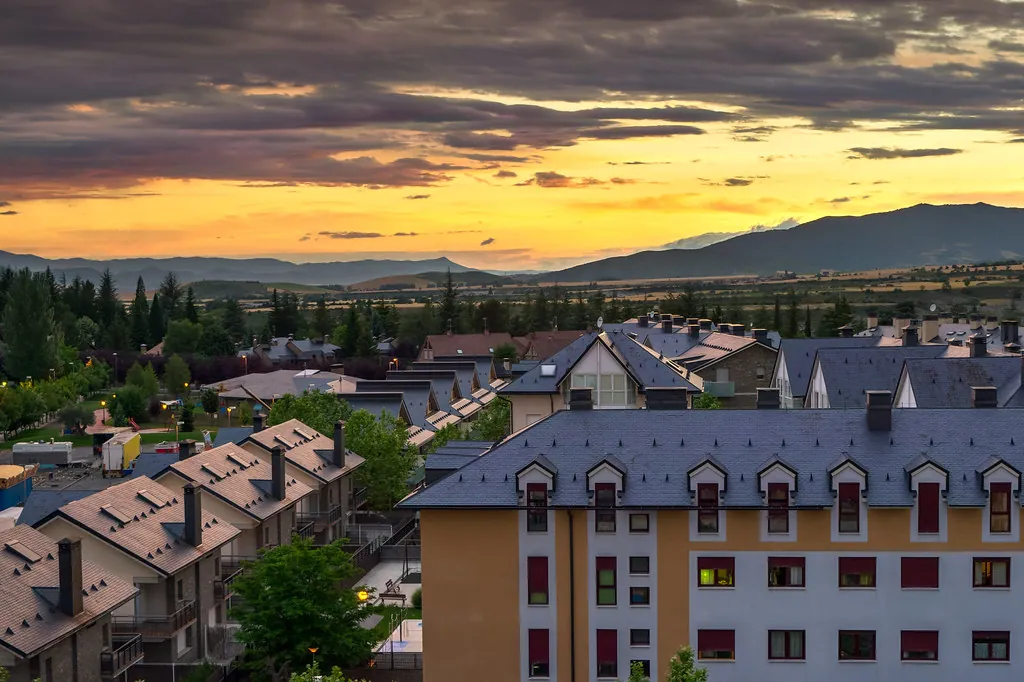
The landscape surrounding Rubielos de Cera operates on a different visual register than Spain's more celebrated corners. Instead of dramatic peaks or coastal cliffs, the terrain rolls in gentle swells that stretch to every horizon. Oak and juniper scrub punctuates fields of wheat and barley that shift from emerald in spring to burnished gold by late June. When storms approach, you can watch them develop for twenty minutes before the first drops hit—weather as theatre performed on a stage the size of several counties.
This isn't hiking country in the conventional sense. The paths leading from the village are farm tracks rather than marked trails, their destinations the neighbouring hamlets of Fonfría and Villar de los Navarros, each barely larger than Rubielos itself. Distances feel elastic here; a two-kilometre stroll to the next ridge reveals views that seem to encompass half of Aragón, the silhouettes of Albarracín's mountains appearing as ghostly presences sixty kilometres distant.
Birdwatchers armed with patience might spot booted eagles riding thermals above the cereal fields or hear the distinctive call of crested larks that have adapted to farming life. Spring brings bee-eaters in electric formation, while autumn sees passage migrants following routes their ancestors established millennia before the first stones of Rubielos were laid.
What Passes for Civilisation
Practical considerations intrude on the romantic narrative. There's nowhere to buy bread, nowhere to fill a water bottle, nowhere to spend money even if you wanted to. The last commercial venture, a bakery that operated from someone's front room, closed when its proprietor died at ninety-three. Visitors need to think like scouts: bring supplies, fill up in Calamocha twenty-five kilometres back, and don't assume that mobile coverage extends beyond the church square.
The church itself, dedicated to San Pedro, remains unlocked despite its minimal congregation. Inside, the temperature drops ten degrees, the stone walls thick enough to maintain their own microclimate. A nineteenth-century retablo dominates the single nave, its painted wooden saints bearing expressions of mild surprise at finding themselves in quite such reduced circumstances. Sunday mass happens monthly rather than weekly, the faithful arriving from neighbouring villages to create a congregation that might, on a good day, reach double figures.
Seasons of Solitude
Timing matters more here than in places where attractions operate year-round. Summer brings Spanish families who maintain ancestral houses for August holidays, temporarily boosting the population to perhaps eighty souls. Children who've grown up in Valencia and Barcelona discover grandparents' houses where television arrived in the 1980s and mobile coverage remains patchy. For two weeks, Rubielos echoes with voices before returning to its default setting of wind and birdsong.
Autumn delivers the year's most reliable spectacle. The surrounding oak woods shift through copper and bronze, while cereal stubble creates a patchwork of ochres that would bankrupt paint manufacturers trying to match the hues. Temperatures hover in the low twenties until late October, when the first frost arrives like an annual appointment. This is when photographers appear, tripods set up on the ridge road that offers views across five valleys, each ridge successively paler until the horizon dissolves into sky.
Winter arrives decisively. At this altitude, snow isn't decorative but functional, sometimes cutting road access for days. The handful of permanent residents stock up like Arctic explorers, wood piles growing against house walls in preparation for heating systems that predate insulation. Days shrink to their minimum, and the village's thirty-two souls become seventeen when summer residents retreat to city apartments.
Spring makes amends through excess. Wild asparagus appears in roadside ditches, almond blossoms transform abandoned orchards into temporary wedding venues for nobody in particular, and the cereal fields achieve that impossible green that looks artificial in photographs. Temperature swings of twenty degrees between dawn and midday keep wardrobe decisions interesting, while the wind that defines this region returns like a seasonal worker who never quite leaves.
The Honest Arithmetic
Rubielos de Cera won't suit everyone. Those seeking boutique hotels, craft breweries, or artisan cheese shops should probably aim for Teruel's provincial capital fifty kilometres away. The village offers instead something increasingly precious: the chance to experience rural Spain without the intermediate layers of tourism infrastructure that buffer most encounters with "authenticity."
What you get is access to a landscape that has sustained human settlement for eight centuries, even if that settlement now numbers in the dozens rather than hundreds. The views cost nothing, the silence comes free, and the stories—if you speak Spanish and ask the right questions—arrive without entrance fees or audio guides. Just remember to bring water, check your petrol gauge, and don't expect to buy anything more substantial than memories.