Full Article
about Salcedillo
Ocultar artículo Leer artículo completo
The church bell tower appears first. It rises above the limestone walls like a weathered finger pointing skyward, the only vertical interruption in a landscape that rolls and folds for miles. This is how Salcedillo announces itself—not with road signs or petrol stations, but with a silhouette that hasn't changed since the 18th century.
At 1,195 metres above sea level, this tiny Aragonese settlement distills rural Spain to its essence. Eleven permanent residents. One church. A cluster of stone houses huddled against the wind that sweeps across the Cuencas Mineras. The silence isn't just noticeable—it's physical, pressing against your eardrums after the white-noise rush of the A-23 from Teruel.
The Weight of Stones
Every building here speaks the same architectural language. Thick limestone walls, their surfaces mottled by decades of hard winters. Arabic tiles the colour of burnt umber. Windows set deep into the masonry, creating shadows that shift across the façades as the sun arcs overhead. These aren't restored showpieces maintained for weekenders—they're working houses, patched and repatched by families who've learned that stone outlives everything else.
The Church of Nuestra Señora de los Dolores anchors the village like a ship's keel. Its modest dimensions belie its importance; without this building, Salcedillo would be merely a collection of farmhouses. Inside, the air carries traces of incense and centuries of candle smoke. The altar's gold leaf has dulled to a warm bronze, and the wooden pews bear the polish of countless Sunday mornings. The bell tower's three bells still mark the hours—though in Salcedillo, time moves more like a suggestion than a rule.
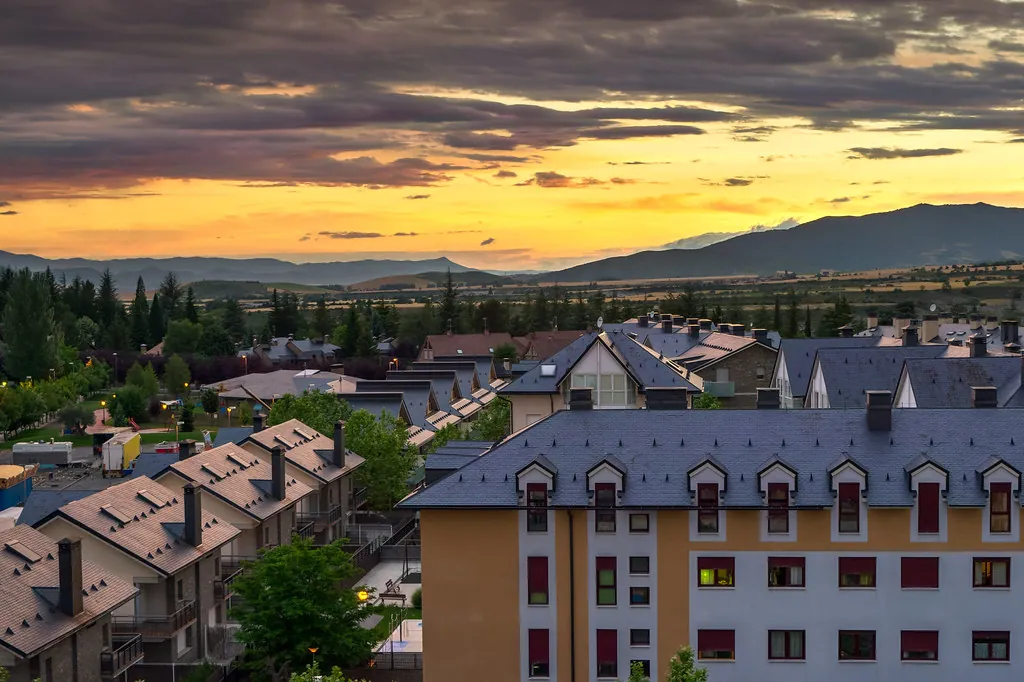
Walk the single street at dusk and you'll notice how the village folds in on itself. Doorways face south, away from the prevailing wind. Chimneys cluster together, creating a jagged skyline against the darkening sky. It's defensive architecture, evolved over generations who understood that survival at this altitude requires cooperation with both neighbours and nature.
Mining Shadows and Mountain Light
The surrounding hills bear scars from their industrial past. Iron and lead mines punctured these slopes throughout the 19th and early 20th centuries, their abandoned shafts now home to bats and legend. The landscape wears this history like an old coat—familiar, comfortable, slightly threadbare. You can follow the old mineral railway lines, now overgrown with thyme and rosemary, to discover stone bridges that once carried ore to the processing plants in Utrillas, 35 kilometres distant.
Spring transforms these hills into a mosaic of greens. Wild asparagus pushes through the red earth, and the air fills with the sound of skylarks. Summer brings brutal heat—temperatures regularly exceed 35°C despite the altitude—but also clarity. On clear days, you can see the Pyrenees shimmering like cut glass on the northern horizon. Autumn arrives early; by mid-September, the first frost silver-plates the grass, and the oak trees that cling to the northern slopes turn the colour of rusted iron.
Winter is when Salcedillo reveals its harsh heart. Snow can blanket the village for weeks, cutting off the already tenuous road connections. The residents—those who haven't migrated to coastal cities for the season—burn olive and almond wood in stoves that double as kitchen cookers. It's not unusual for temperatures to drop below -15°C, and the wind that howls across the plateau has driven more than one visitor back to the car long before they'd planned to leave.
What Grows Between the Stones
The eleven inhabitants form an accidental community, bound together by geography rather than choice. They maintain vegetable plots behind their houses—tiny rectangles of order in the chaotic beauty of the surrounding wilderness. Tomatoes, peppers, and beans dry on flat roofs, creating splashes of red and green against the stone. Chickens scratch in dusty yards, and the occasional goat peers over a wall with prehistoric suspicion.
Food here follows the rhythm of necessity rather than fashion. The winter matanza—pig slaughter—remains a communal event, with families sharing labour and meat according to unspoken agreements older than written contracts. Blood sausage, cured hams, and preserved lard fill pantries that stay cool naturally thanks to the thick stone walls. In spring, wild mushrooms appear after rain, and the knowledge of which to pick and which to avoid passes down through generations who've never needed Latin names for fungi.
Don't expect restaurants. The nearest bar stands eight kilometres away in the slightly larger village of Montalbán, population 120. Instead, knock on doors. The Spanish concept of "casas de comida"—private homes that feed travellers—survives here through necessity rather than tourism initiative. For €12-15, you'll eat whatever the family happens to be cooking. It might be migas—fried breadcrumbs with garlic and chorizo—or a lamb stew that's been simmering since dawn. Payment goes into a kitchen drawer, and gratitude is expressed through second helpings rather than TripAdvisor reviews.
Walking the Invisible Lines
The paths radiating from Salcedillo follow ancient rights of way, their routes dictated by water sources and the need to move livestock between winter and summer pastures. The GR 82 long-distance trail passes within two kilometres, though you'd never know it from the village itself. Walk south-east for ninety minutes and you'll reach the abandoned mining settlement of El Cabezo, where stone houses stand roofless against the sky and the only sound is the wind rattling through empty window frames.
Morning walks reveal the area's wildlife. Red kites circle overhead, their forked tails steering through thermals. Wild boar leave hoofprints in muddy sections, and if you're exceptionally lucky—or unlucky, depending on your perspective—you might spot a Spanish ibex negotiating a limestone crag with impossible grace. The Mediterranean vegetation clings to life with Mediterranean stubbornness: holm oaks whose roots split rock, juniper bushes that perfume the air after rain, and lavender that turns entire slopes purple in late June.
Evening brings different rewards. The altitude and distance from major cities creates darkness so complete that the Milky Way appears three-dimensional, a river of light flowing across the sky. Shooting stars aren't wishes here—they're regular occurrences that barely rate comment from locals who've seen thousands. The silence amplifies small sounds: a dog barking in a distant farm, the creak of a weather vane, your own breathing.
Practicalities in a Place That Wasn't Built for Visitors
Reaching Salcedillo requires commitment. From Teruel, take the A-23 north to the Montalbán exit, then follow the A-220 through increasingly smaller roads. The final 12 kilometres twist through landscape that seems designed to discourage casual visitors. Google Maps works sporadically; the village appears and disappears depending on satellite mood. Fill your tank in Montalbán—there are no petrol stations closer, and running out of fuel here means a very long walk.
Accommodation options are, to put it generously, limited. There's no hotel, guesthouse, or official rental. The nearest beds lie 25 kilometres away in the slightly larger town of Utrillas, where the Hotel Maza offers basic doubles for €45-60 per night including breakfast. Some villagers will rent rooms for €20-30 per night, but this requires Spanish and the confidence to negotiate through gesture and goodwill. Bring cash—cards are as useless as your mobile signal.
Visit between May and October unless you enjoy meteorological roulette. Spring brings wildflowers and bearable temperatures, though nights remain cold enough to require a proper jacket. Summer delivers reliable weather but also flies that appear to have evolved specifically to harass humans. Autumn offers the best compromise: warm days, cool nights, and the added drama of migrating birds using the thermal currents above the village as a highway south.
Salcedillo doesn't offer Instagram moments or bucket-list experiences. It provides something increasingly rare: a place that remains itself despite your presence. The village will continue its slow, stubborn existence whether you visit or not. That knowledge—that you're witnessing something that doesn't need you to justify its existence—might be the most valuable souvenir you'll carry away.