Full Article
about San Juan de Plan
Ocultar artículo Leer artículo completo
The church bell strikes seven and the valley answers back with silence. Down a single-track lane that corkscrews above the Cinqueta gorge, San Juan de Plan wakes slowly: one light in a slate roof, a dog barking somewhere below, the smell of oak smoke drifting uphill. At 1,120 m the air is thin enough to sharpen the first coffee of the day and to remind visitors that, whatever the sat-nav promised, this is no longer motorway Spain.
Stone, Slate and the Sound of No Cars
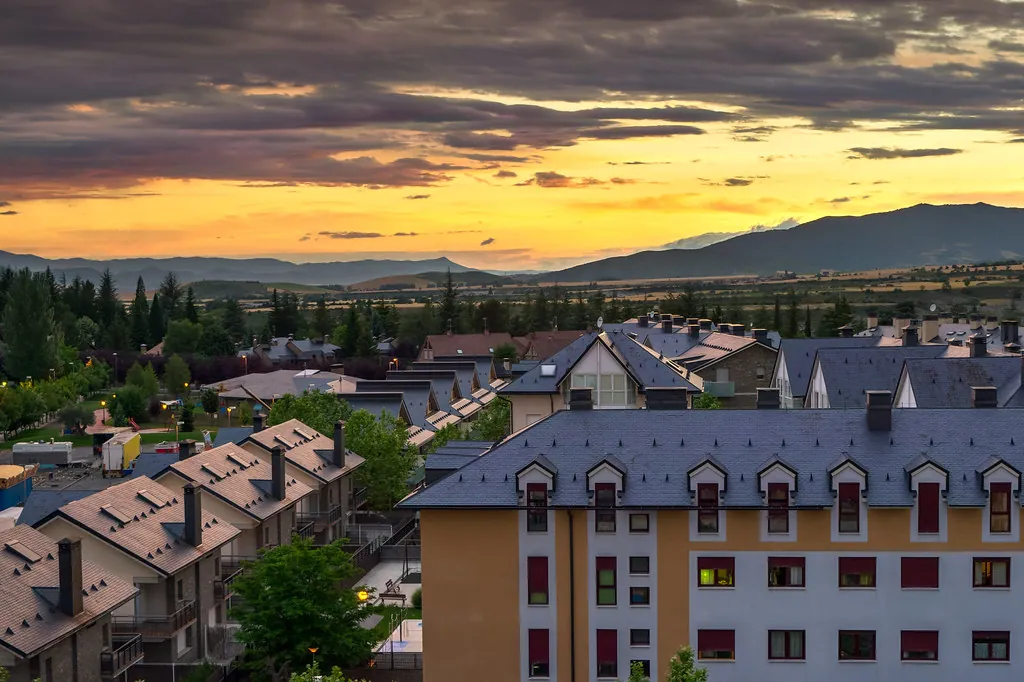
A hundred and fifty souls, plus the occasional returning emigrant, live in houses that seem to have grown out of the mountain itself. Local grey limestone is patched with timber the colour of weathered pine, and every roof carries the same heavy lid of schist that keeps the winter snow at bay. There is no high street, only a funnel of alleys that drop past barn doors dated 1783, past fountains whose water runs so cold it hurts the teeth, past the tiny panadería that opens when the baker feels like it and not a minute sooner.
Park at the top of the village; after that it is shanks’s pony. The reward for leaving the car is an hour of aimless wandering in which the loudest noise is your own boot soles. Peek into the threshing floors—stone circles like miniature amphitheatres where wheat was once trodden by oxen—and notice how the balconies widen toward the south-west, angled to catch the last scrap of sun before the mountains shoulder it away. Photographers call the place “a real-life postcard”; locals call it simply el pueblo, as if no other settlement need exist.
Walking Straight into the Sky
San Juan works best as a base camp rather than a spectacle in itself. From the last lamppost three waymarked footpaths fan out: one saunters twenty minutes to an abandoned hamlet and a picnic table, another climbs three hours through beech woods to the meadow of La Estiba, where marmots whistle across a glacial bowl. The third, properly serious, joins the GR-11 long-distance trail and will deliver you, after a stiff day, to the foot of Posets’ 3,375 m summit—one of the three-thousanders British peak-baggers tick off in preference to the more crowded Alps.
Maps are free from the tourist office in Aínsa, 38 km away, but the landlord of the village bar will sketch a better one on the back of a beer mat while you wait for his wife to grill trout. He will also warn you that the weather changes faster than you can swap fleece for T-shirt; in July hailstones the size of chickpeas are not unknown. Mobile coverage is patchy, so download the GPX before you set off and carry a whistle—sheep dogs are friendly but deaf.
What Passes for Nightlife
Evenings revolve around the single bar, Casa Félix, which doubles as grocer, post office and gossip exchange. The television above the wine rack shows Telediario on mute while the regulars debate the price of lambs. Order a caña and you will be handed a saucer of local sheep cheese that tastes like a tangier Wensleydale. Close-up, the cheese rind carries the imprint of the linen cloth it was squeezed in; taste carefully and you can picture the shepherd climbing the hill at dawn to milk by head-torch.
Supper choices are limited to two family-run guest-houses whose set menus hover round €18. Ternasco de Aragón, milk-fed lamb roasted until the skin shatters, arrives with proper chips thick enough to hold vinegar. The more adventurous might try chiretas, rice-and-offal sausages that resemble haggis without the oatmeal; ask for a squeeze of lemon to cut the richness. Wine comes from Somontano, an hour’s drive north, and at these altitudes one bottle feels like two—pace yourself if you plan to star-gaze later. Light pollution is nil; Orion seems close enough to snag on the church weathervane.
Seasons that Slam the Door
April brings dauphins-of-the-valley and the first swallows, but also the risk of a late snowfall that can isolate the village for 24 hours. May and June are golden: daytime 22 °C, nights cool enough for a jumper, wild orchids along the verges. Spanish weekenders arrive in August, their 4x4s squeezing past the stone fountains with millimetres to spare; book accommodation early or stay away. September turns the poplars the colour of burnt toffee and empties the paths again; October can be glorious right up to the moment the first storm strips the trees bare.
Winter is serious. The final 3 km approach lies in shadow from November onwards and ices over quickly; snow chains are compulsory kit. With a decent dump the valley becomes a venue for snow-shoeing straight from your door, but check the forecast before you come—blizzards have been known to trap visitors for three days, a charming prospect if you like your own company and the baker remembered to stock flour.
How to Get Here Without a White Knuckle
Most British visitors fly to Barcelona or Zaragoza and collect a hire car. From either airport allow three hours, the last sixty minutes on the A-138 and HU-631 where petrol stations are as rare as cash machines. Fill the tank in Aínsa; after that the only services are vultures. Drivers who dislike heights should approach from the south via Graus—the road is marginally less theatrical. Buses reach the valley on school days only; miss the 14:30 and you are sleeping on the bench.
There is no bank, no chemist, no Sunday shop. The village store opens 09:30-13:30 and 17:00-20:00, but if Señora María has gone to Jaca to see her grandchildren the door stays locked. Bring cash: many casas rurales refuse cards under €50 and the nearest ATM is 17 km back down the gorge. Wi-Fi exists, but at 3 Mb you will not be streaming Match of the Day—download box-sets before you leave home.
Leave the Hurry Behind
San Juan de Plan will never feature on a “Top Ten Pyrenean Hotspots” list, and that is precisely its appeal. What you get is a village that still lives by livestock bells and sunrise alarms, where strangers are welcomed because there is time to welcome them, and where the mountains, not the marketing department, decide what happens next. Come prepared for quiet nights, variable weather and the occasional logistical hiccup; leave with calf muscles, camera card and lungs full of air that tastes of pine and snow. If that sounds like hard work, the motorway back to Zaragoza is only three hours away—most of them downhill.