Full Article
about San Martin de la Virgen de Moncayo
Ocultar artículo Leer artículo completo
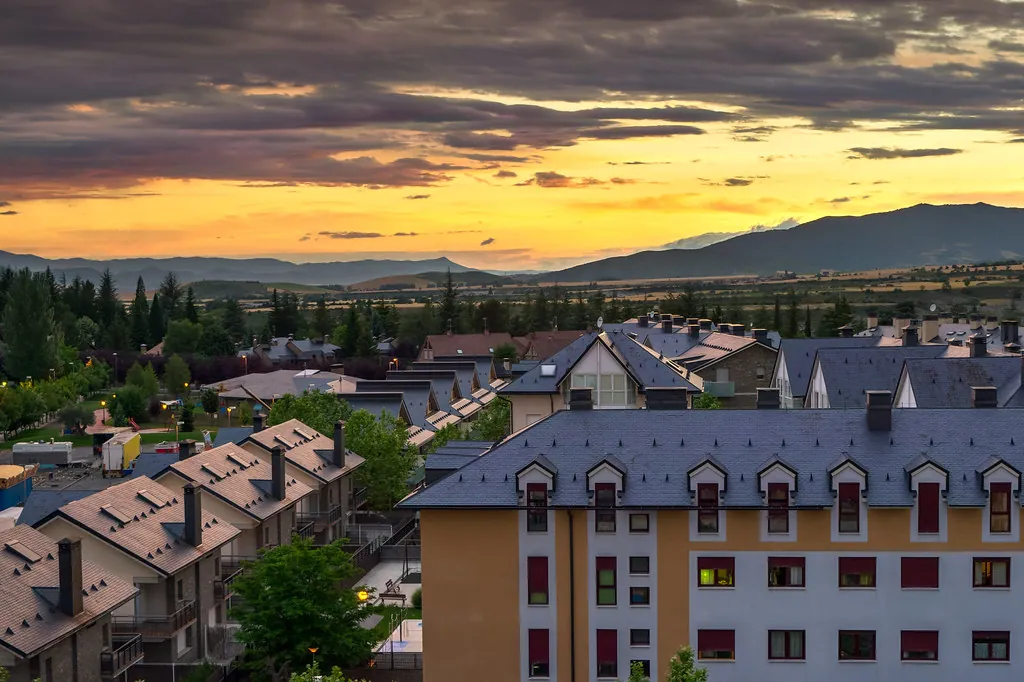
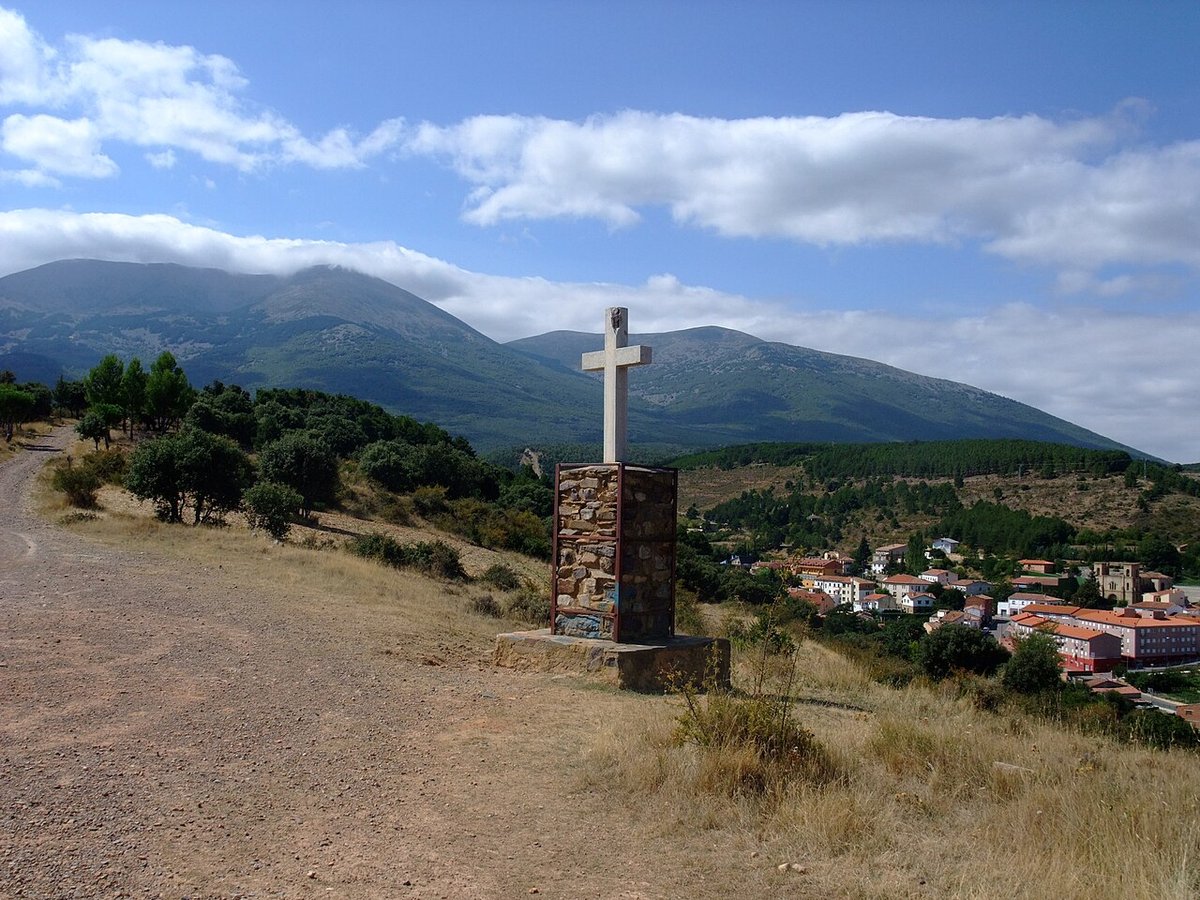
The church bell strikes midday and the only other sound is a tractor reversing somewhere below the main square. At 813 m above sea level, San Martín de la Virgen del Moncayo is literally the last village before the pine ridge rears up to the summit of Aragón’s highest peak. You can stand outside the stone parish church, turn through 180 degrees, and see the mountain fill half the sky. That view is the reason most drivers brake hard on the A-122 from Tarazona, photograph the ridge, then leave again twenty minutes later. Stay longer and you’ll discover the village is less a destination than a launch pad for people who prefer their walking routes unsigned by coach parties.
A grid of three streets and a mountain
The place map is refreshingly simple. One paved lane climbs past stone houses with wooden balconies, meets a second lane beside a stone cross, then drops to the tiny square where locals park at haphazard angles. There are no souvenir shops, no multilingual menus, no ticket office. The only commerce is El Fogón bar, half grocery, half tapas counter, where the owner keeps tabs on who owes what with a biro on a paper napkin. Order a coffee and you’ll probably share the counter with farmers discussing rainfall and mushroom forecasts in thick Aragonese accents; English isn’t spoken and no one apologises for it.
Houses are built from the same honey-coloured limestone that outcrops on the ridge, so the village appears to have grown out of the slope. Some façades are pristine, geraniums in wrought-iron holders; others have peeling paint and vegetable plots where a British front garden would be. It feels lived-in rather than curated, and that honesty is what persuades a handful of visitors to remain after the quick summit photo.
Forests you can reach on foot
San Martín sits inside the buffer zone of the Moncayo Natural Park, which means trails begin where the tarmac ends. The classic outing is the three-hour loop to the Santuario de la Virgen del Moncayo, a small hermitage wedged into the tree line at 1 592 m. The path starts 400 m beyond the church, signed only by a wooden board streaked with rain. You climb through holm-oak, then beech that turns gold in late October, and finally a last scramble on loose slate to a lookout that faces south across the Ebro valley. On weekdays you may have the summit cross to yourself; Sundays bring families from Tarazona and the cheerful clink of trekking poles.
More ambitious walkers sometimes assume the village is the gateway to the main 2 314 m peak. It isn’t. The standard route begins at San Juan del Moncayo, 20 km away by winding road. If you attempt the summit from San Martín you face a 1 500 m ascent and a very early start; cloud can roll in before lunch, dropping visibility to a few metres. Locals shrug: “The mountain was here before us, and it makes the weather it wants.”
Lamb, lentils and the house red
El Fogón opens at seven for breakfast and closes when the last customer leaves. The menu is short and seasonal: migas—fried breadcrumbs with chorizo and grapes—on winter weekends, river trout when the local cooperative has surplus, and year-round ternasco, the milk-fed lamb that Aragón markets with the same pride Kent gives to its lamb’s lettuce. A half-rack, char-grilled over vine cuttings, costs about €14 and arrives sizzling with nothing more than rock salt and a lemon wedge. The house wine, drawn from a barrel behind the bar, tastes like a lighter Rioja and costs €1.80 a glass; card payments sometimes work, sometimes don’t, so carry cash.
If you’re self-catering, the bakery van stops outside the church on Tuesday and Friday mornings. Bread sells out in fifteen minutes, after which the driver heads uphill to the scattered farmhouses beyond the village. Stock up in Tarazona beforehand: there is no supermarket, no filling station, no cash machine.
When to come, and when to stay away
April to mid-June the slopes are green, nights are cool enough for a jacket, and daylight lasts until nine. Beech and oak come into leaf sequentially, so the ridge changes colour week by week; orchids flower beside the track to the sanctuary and Griffon vultures circle on thermals above the cliffs. September repeats the trick with autumn tint and mushroom season; tread carefully—every local has a secret patch of níscalos (saffron milk-caps) and they guard GPS coordinates like banking PINs.
July and August turn the village into a natural air-conditioning unit for Zaragoza families who own second homes further down the lane. Even then, visitor numbers barely reach triple figures; the square fills with parked 4×4s at lunchtime and emptes again by four. In August fiestas you’ll share street dancing with shepherds who haven’t seen a dancefloor since the previous year; earplugs recommended if your rented cottage faces the plaza.
Winter is another proposition. The road from Tarazona is kept open, but a dusting of snow can become a 20 cm dump in the time it takes to finish lunch. Chains may be required above 1 000 m and daylight walking is reduced to six hours. On the plus side, the beech forest under snow is spectacular, and El Fogón lights a log fire so large you could roast an ox.
Beds, or the lack of them
There are no hotels inside the village limits. The closest beds are in Tarazona (20 min), a small cathedral city with Renaissance palaces and a parador that charges around €95 for a double. Rural houses scatter the valley: Casa Rural El Molino de la Aceña in nearby Vera de Moncayo has two doubles from €70, thick stone walls and a garden that ends at the river. Expect cockerels at dawn and the occasional cow leaning over the fence. Booking ahead is essential at weekends; Spanish walkers reserve months in advance for the mushroom window.
How to arrive without a bus pass
Public transport is theoretical. The last service from Zaragoza to Tarazona was axed in 2013, and the planned replacement minibus has yet to materialise. Fly to Zaragoza (Stansted–Zaragoza with Ryanair, 2 hrs), pick up a hire car, and follow the A-68 to Logroño. Leave at junction 20 for Tarazona, then take the N-122 towards Pamplona; after 11 km a left turn is signposted “San Martín del Moncayo 8 km”. The asphalt narrows, climbs through almond terraces, and delivers you to the square in fifteen minutes. Petrol in Tarazona is 10 c cheaper per litre than on the motorway—fill up.
If you insist on public transport, ride the high-speed train to Calatayud, then taxi the remaining 70 km (about €90). Most drivers will wait while you walk to the sanctuary and bring you back in the afternoon; agree a price before you set off.
Parting shot
San Martín will never feature on a “Top Ten Prettiest Spanish Villages” list; it’s too small, too quiet, too honest for the Instagram crowd. Come for the mountain vista, stay for the silence broken only by church bells and the clatter of storks on the ridge. Leave before nightfall and you’ll have seen a thumbnail of Aragón that package tourists never reach; linger overnight and you may find the pace so sedate that going home feels like re-entry from orbit. Either way, bring cash, sturdy boots and a weather forecast—because the Moncayo makes up its own meteorology, and the village has learnt not to argue.