Full Article
about Santa Cruz de Moncayo
Ocultar artículo Leer artículo completo
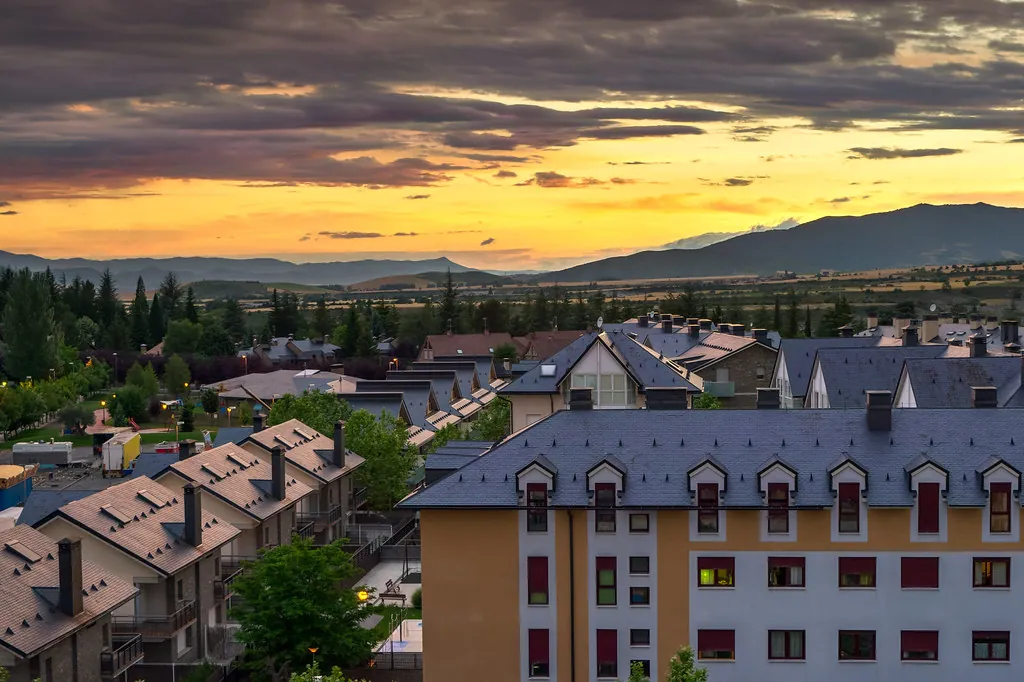
The church bell strikes noon and the only other sound is a tractor shifting gears on the road out of town. Santa Cruz de Moncayo has 125 residents, one bar with its door propped open, and a view that stretches across three provinces. At 629 metres above sea level, the village sits on the first ridge that the Moncayo massif throws towards the Ebro valley. From here the mountain rises another 1,600 metres to San Miguel peak; behind, the land drops away in wheat-coloured waves all the way to the river.
Stone houses shoulder together along lanes just wide enough for a small hatchback. Timber balconies sag under geraniums; every second doorway reveals a passage leading to a stable or a chicken coop. Nothing is restored beyond recognition – the village looks lived-in, which is precisely what most visitors find refreshing after the polish of nearby Tarazona. You can walk from one end to the other in seven minutes, yet the place keeps revealing corners: a 1746 datestone above a lintel, a Romanesque window re-set in a barn wall, a threshing circle now used as a dog-walking yard.
The Mountain that Owns the Horizon
Santa Cruz functions as a quiet headquarters for walkers who want the Moncayo without the Refugio de San Urbano crowds. Three way-marked footpaths leave directly from the upper edge of the village. The easiest, a 45-minute loop, climbs through almond terraces to an abandoned shepherd’s hut and returns via the cemetery. More demanding is the PR-Z 72 variant that joins the main ridge trail at the Fuente de la Teja; allow four hours to the summit and back, with 900 m of ascent and the possibility of snow patches well into May. In summer, start early: by 11 a.m. the thermometre on the stone fountain reads 32 °C and the only shade is inside the pine belt above 1,400 m.
Cyclists follow the same web of farm tracks. A popular 25-kilometre circuit heads south to Veruela Abbey, then swings back through olive groves and the hamlet of Trasmoz – useful if the afternoon wind is blowing from the north-west, giving a push home. Mountain-bike hire is not available in the village; bring your own or arrange delivery through the Tarazona shop, Ciclo Moncayo, the day before.
Food Meant for Field Workers
Bar Los Tejares opens at seven for coffee and churros, closes when the last customer leaves, and keeps the television volume low enough to hear the swallows in the eaves. The menu is written on a blackboard and rarely changes: migas fried with chorizo and grapes, a clay bowl of ternasco (milk-fed lamb) stew, and pears stewed in local Moscatel. Expect to pay €12–14 for a three-course menú del día; wine from the barrel is extra and comes in a glass rinsed with tap water – perfectly normal here, accept it or ask for bottled. Vegetarians survive on tortilla and salads; vegans should pack snacks.
Autumn brings the jornadas micológicas, two weekends when every kitchen competes to produce the best níscalos scramble. Permits are required for mushroom collecting: €5 per day from the Zaragoza provincial website, printable at the bar if you ask nicely. The forestry agent sometimes checks rucksacks on the way down the hill, so photograph your licence or face a €150 fine.
When the Village Closes Down
August fiestas triple the population. A cover band plays 1990s rock in the square until three, teenagers drink calimocho from plastic buckets, and the bakery runs out of bread by nine. Book Hostal Transilvania early – its eight rooms fill at €45 a night. The rest of the year the place empties. On weekdays outside school holidays you may count a dozen people in the streets; Tuesday afternoon the bar shuts, Wednesday the baker takes his day off. Winter can feel austere. The road from the A-68 is kept clear, but the final six kilometres include two hairpins that ice over in January. Carry chains or be prepared to leave the car at the junction and walk the last slope.
Mobile reception is patchy inside stone walls; Movistar works on the upper terraces, Vodafone only if you stand in the church porch. Wi-Fi exists in the hostal but slows to a crawl when more than three guests stream at once. Download your maps before arrival.
Getting Here Without a Car
No railway reaches the Moncayo foothills. From Zaragoza-Delicias ALSA runs twice daily to Tarazona (1 hr 45 min, €9.50). There, a local taxi covers the 18 km to Santa Cruz for about €25 – phone Taxi Tarazona the evening before because drivers live in the next town. The alternative is to hitch: farmers heading up for sheep feed usually stop if you stand past the Repsol garage on the N-122. Carry small notes; few villagers use cards and the nearest cash machine is back in Tarazona.
What You Will Not Find
There is no souvenir shop, no interpreted heritage trail, no artisan ice cream. The church is open only for Saturday evening mass; at other times the key hangs beside the bar, ring the bell and wait. If you need nightlife, drive 25 minutes to Tarazona where tapas are served on tables in the Renaissance square until midnight. Santa Cruz offers instead a front-row seat to weather rolling across the Iberian plateau: thunderstorms that split against the ridge, eagles lifting on the thermals, the first snow dusting the summit while almonds still flower below. Bring decent boots, a jacket for the wind that starts at four, and enough Spanish to order coffee without saying “por favor” in a French accent. The village asks for little, gives clear skies and silence, and forgets you the moment you turn the corner by the fountain – which, for some travellers, is exactly the right kind of goodbye.