Full Article
about Santa Liestra y San Quilez
Ocultar artículo Leer artículo completo
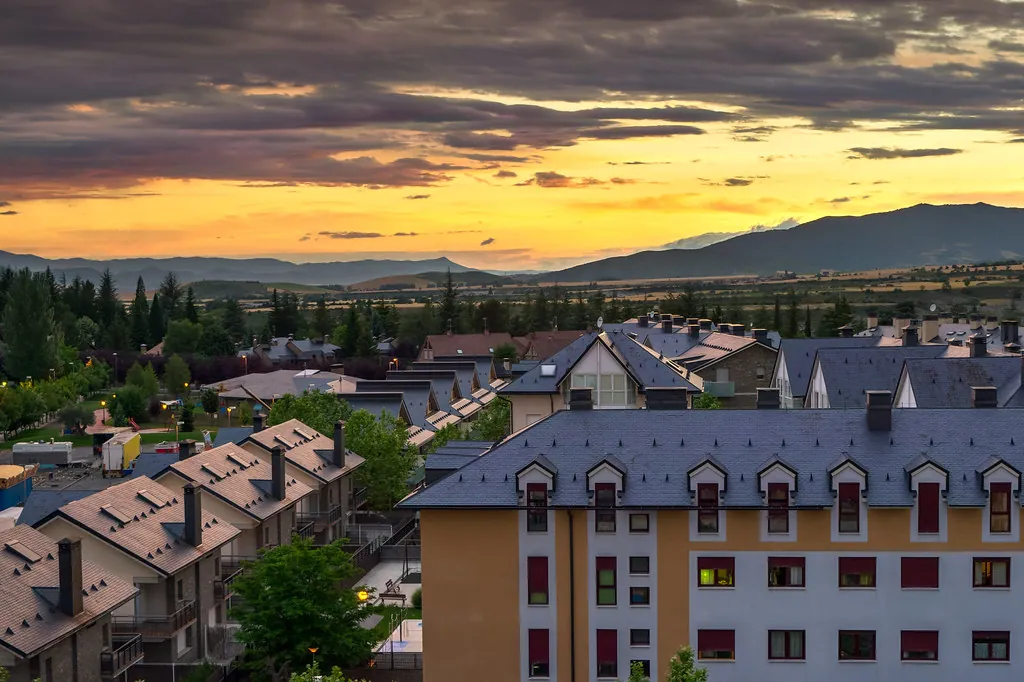
The morning mist lifts at 561 metres to reveal two stone hamlets separated by a five-minute drive and several centuries of Pyrenean pragmatism. Santa Liestra y San Quílez sits where proper mountains start thinking about becoming foothills, close enough to the valley floor for olives yet high enough for chestnuts to outnumber palms. At this altitude, the air carries a clarity that makes the Ésera river glint like polished pewter three kilometres below, and the difference between shade and sunlight feels like stepping through a doorway.
Seventy-seven residents remain year-round, though that figure doubles when August grandchildren arrive with footballs and mobile phones that struggle for signal. The mathematics here are simple: every departure to Huesca or Zaragoza equals another dark-windowed house, another threshing floor returning to weeds. Yet what sounds like decline feels more like selective survival. The village hasn't so much died as distilled itself into something defiantly functional.
Stone that Remembers
Walk either nucleus at siesta time and the silence has texture. Footsteps echo off limestone walls quarried from the same ridge that shadows the lanes, while timber balconies—repainted in the sanctioned greens and burgundies of Aragonese valley towns—throw geometric shadows across cobbles worn smooth by centuries of tractor tyres rather than tourist feet. The church at Santa Liestra squats like a grey bulldog, its Romanesque apsey bulk proof against the north wind that rattles down from the high peaks in January. San Quílez offers a smaller sibling across the parish boundary, bell turret patched so often the original stone resembles a patchwork quilt.
Between the two settlements, stone terracing climbs slopes that would have defeated lesser farmers. Almond roots force cracks into limestone ribs, and ancient irrigation channels—still cleared each spring by whoever draws the short straw—carry snowmelt to vegetable plots no larger than a London kitchen. The system works because it has to; there is no municipal backup when a sluice gate jams.
Winter brings the first real test. Roads from the A-139 become metallic ribbons at dawn where meltwater freezes, and the school bus chain-cables its way down to collect three children who will grow up bilingual in Spanish and mountain silence. Snow rarely stays long at this elevation—five hundred metres is neither lowland nor sky—but when it arrives, the hamlets contract to whatever distance a resident can walk without slipping. Power cuts last hours rather than days; locals keep candles beside the router because fibre optic has arrived, even if Deliveroo hasn't.
Maps that Crinkle
Summer opens the place up like a pop-up book. Temperatures hover five degrees below Barbastro on the plain, enough to make the village a refuge for cyclists grinding up the 12% gradients that link ridge farms. No gift shops sell fridge magnets, but the bar opens at seven for coffee and gossip, its terrace shaded by a plane tree planted the year the peseta died. Hiking options start literally from doorstep to doorstep: a two-hour loop through holm oak and fallow fields brings you back in time for second breakfast, while the more ambitious can follow sheep tracks west until the Mediterranean appears as a silver coin on the horizon.
Signposting remains politely Spanish—intermittent, weather-beaten, occasionally philosophical about distance. A yellow dash on a gatepost might mark the start of a GR route, or it might simply be where someone stopped painting. The safest strategy is to download an offline map and trust contour lines; valleys always lead eventually to a track, and tracks to a farmhouse where dogs bark first and owners ask questions later.
Spring and autumn deliver the visual dividends. April brings red poppies stitched across wheat stubble, while October sets chestnut woods on fire so comprehensively that photographers forget to check battery levels. These are also the seasons when you might share a path with a shepherd moving 200 Aragonese sheep to lower pasture, the animals flowing around walkers like a woollen river. Stand still and the bell-wearing leader will pass within centimetres, breath warm and weedy.
Calories and Carburettors
Food follows elevation. At 561 metres, the cooking sits halfway between mountain broth and lowland oil. Expect migas fried with chorizo from a pig that had a name until November, followed by peaches that taste of actual sunshine because freight to Zaragoca takes longer than ripening on the tree. The village itself has no restaurant, but ten minutes down the valley in Esplús, the Hotel del Ésera serves a three-course menú del día for €18 that includes wine and the sort of rabbit stew your grandmother claimed she could make but never did.
Self-caterers should shop before arrival. The last proper supermarket lies 25 twisting kilometres south in Barbastro; the local mini-mart stocks tinned tuna, bar soap, and whatever vegetables survived yesterday's van from Huesca. Bring coffee if you dislike the soluble variety, and definitely bring engine oil if your car drinks it—the nearest garage mechanic regards British number plates as an invitation to practise his English on technical terms neither party quite masters.
Access remains the price of admission. From the UK, the straightforward route flies to Barcelona, then drives west for two and a half hours on AP-2 toll road (£25 each way) before swinging north on the A-139. The final 12 kilometres narrow to single-track tarmac that clings to limestone like a reluctant limpet. Meeting a tractor round a blind bend teaches theology: whoever reverses faces a 200-metre gearbox test, whoever continues demonstrates faith. Hire cars should be insured down to alloy level; stone walls have been practising their role as tyre assassins since Roman times.
Silence that Follows You Home
Stay overnight and darkness arrives with a completeness that startles urban senses. No streetlights means the Milky Way becomes a civic amenity; satellites cross the sky like polite commuters, while owls trade insults across the ravine. Night-time temperatures even in July can drop to 12°C—pack a fleece alongside the swimsuit you optimistically threw in for "Spanish summer".
Leave early enough and you'll meet the bread van tooting its horn at 8 a.m., a mobile bakery that tours hill villages while baguettes are still warm. Buy two, because the motorway services outside Lleida will seem like culinary exile after three days here. As the car descends towards the Ebro plain, the engine note changes: cooler air, richer fuel mix, the mountains shrinking in the rear-view mirror until they resemble the postcard you decided not to send.
Santa Liestra y San Quílez offers no souvenir beyond the quiet that lingers in your ears like tinnitus in reverse. Whether that justifies the detour depends on your need for narrative. Some places confirm what you already suspected—that Europe still contains ordinary lives lived at odd angles to convenience—and having confirmed it, they return to hedging their bets against the next winter, the next departure, the next silence that follows a car engine into the distance.