Full Article
about Santaliestra y San Quilez
Ocultar artículo Leer artículo completo
The church bell strikes midday, yet nobody checks their watch. A farmer props his bicycle against the stone wall of the Hotel del Esera, orders a caña, and stays for twenty minutes without glancing at a phone. This is Santaliestra y San Quílez, a village so relaxed that even the river Ésera seems to dawdle on its way to the Mediterranean seventy kilometres downstream.
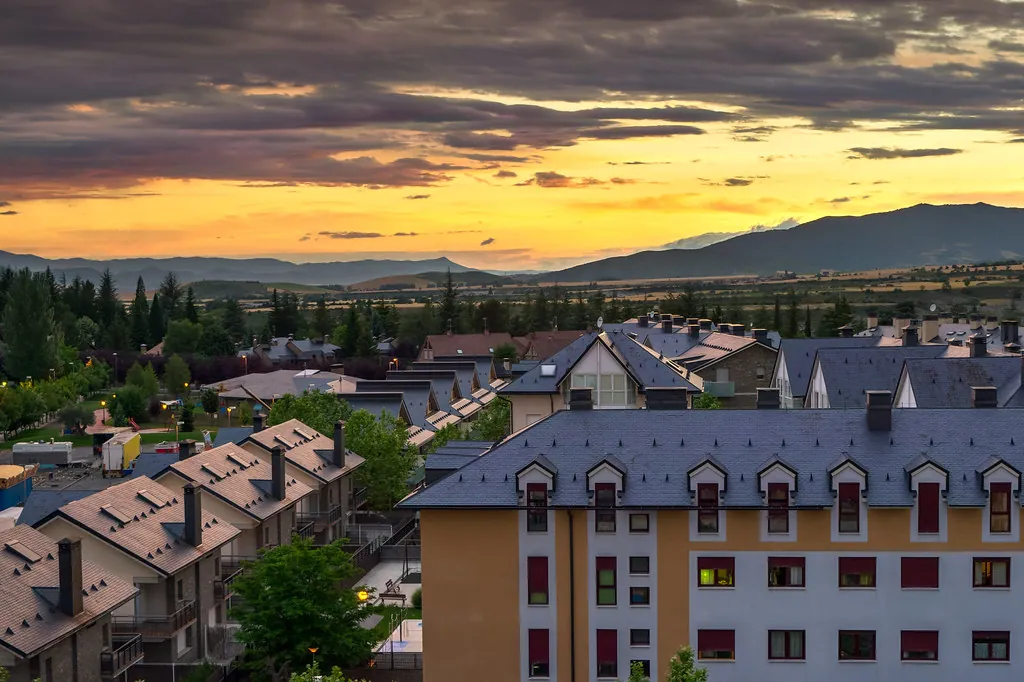
With 77 permanent residents spread across two hamlets, the municipality sits at 561 metres in the lower folds of the Ribagorza, halfway between the market town of Graus and the hair-pin road that climbs towards the Benasque valley. It is not high Pyrenees – snow is a novelty rather than a guarantee – but high enough for summer evenings to carry a cool breeze that smells of rosemary and irrigated alfalfa.
British visitors usually arrive by accident: a satellite-navigation glitch sends them off the A-22, or they are killing time before a walking holiday in Ordesa. What they find is a working agricultural settlement rather than a manicured heritage site. Stone barns still store hay, chickens wander the lanes, and the loudest noise after dark is often the irrigation channel that gurgles behind the houses. There is no postcard square, no gift shop, no ice-cream parlour with multilingual menus. Instead you get a village that functions for its own inhabitants first and tourists second – a rarity in modern Spain.
A church, a bridge, and a hilltop hermitage
The Romanesque church of San Quílez stands at the top of a short, cobbled ramp. Its weather-worn portal shows the tooling of 12th-century masons, though later additions have given it a squat, fortified look. Inside, the air smells of beeswax and damp stone; the priest visits twice a month, so the door is kept unlocked and visitors are trusted to switch off the lights on the way out.
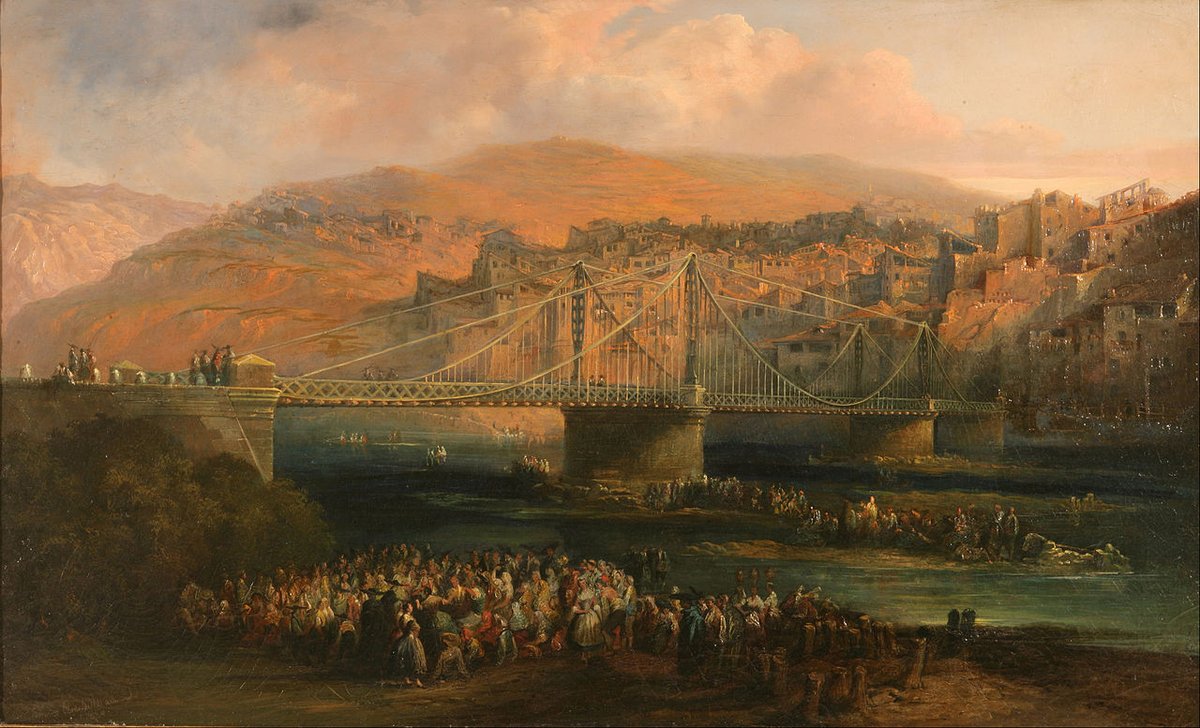
Below the church the Ésera slides under a single-lane bridge built in 1953 to replace one washed away in floods. Stand here at dusk and you may see kingfishers flash upstream while grey herons stalk the reeds. A five-kilometre loop path sets off from the far side, climbing through almond terraces to the Ermita de la Piedad. The gradient is gentle enough for children, and the summit gives a horseshoe view of the valley: red roofs on the left, poplar plantations on the right, and the first limestone ridges of the Pyrenees straight ahead. On weekdays you are unlikely to meet more than two other walkers; bring water, as there is no café at the top.
Back in the village, the only other monument is a disused lime kiln on the road to Graus, now overgrown with fig trees. It is not spectacular, yet it explains why the houses are the colour of old parchment: the stone was burnt and mixed with sand to make mortar, a local recipe that turns honey-gold at sunset.
Where to sleep, what to eat, how to pay
Accommodation is limited to the family-run Hotel del Esera, twelve rooms above a bar that doubles as the village social club. British guests praise the owners’ patience with phrase-book Spanish and the set-menu dinner that costs €16 if you book before 7 p.m. Expect roast lamb or pork shoulder, chips that are actually crisp, and a bottle of Somontano wine that disappears faster than intended. Fussy eaters can ask for trout simply grilled with lemon when local anglers bring a catch; vegetarians get a plate of roasted piquillo peppers and goat’s cheese. Breakfast is coffee, juice and a croissant the size of a house brick – enough fuel for a morning hike.
There is no cash machine in the village; the nearest is ten kilometres away in Graus. The small supermarket opens at 9 a.m. but shuts for lunch at 1 p.m. sharp, and all day Sunday. If you arrive after hours the hotel bar will sell you water, beer and tinned tuna at supermarket prices, a kindness that keeps walkers from going thirsty.
Phone signal inside the stone houses is patchy; step outside and 4G appears immediately. This frustrates teenagers but delights parents who want an excuse to ignore work e-mails.
Using the village as a base
Santaliestra works best as a quiet dormitory for touring western Aragon. Within thirty minutes you can reach the medieval cathedral at Roda de Isábena, the cliff-top hermitage of Montañana, or the Saturday market in Graus where farmers sell peaches the size of cricket balls. Allow forty-five minutes for the twisting road to Aínsa, whose Plaza Mayor has enough tapas bars to satisfy the thirstiest hen party, then return to silence and starlight.
Serious walkers treat the village as a low-cost alternative to the national-parik hotels. The GR-15 long-distance path passes the outskirts, linking to day routes that climb into the Sierra de Chía. Spring brings orchids along the banks; autumn turns the poplars gold and releases the scent of wild mushrooms. In July the temperature can reach 34 °C, so start early and finish with a swim in the Ésera’s deeper pools – cold enough to make a Devon river feel tropical.
Winter is mild by British standards – daytime 10 °C, night-time frost – but daylight is short and the valley traps fog. Snow rarely settles for more than a day, so winter tyres are unnecessary unless you plan to drive on to the Benasque ski resorts. January and February suit travellers who want to read by the hotel fire and eat stewed lentils while the church bell counts the hours.
What can go wrong
Sat-navs occasionally confuse Santaliestra with Santillana del Mar on the north coast; double-check the postcode 22469 before you set off. The single daily bus from Barbastro arrives at 2 p.m. and leaves at 6 a.m.; miss it and a taxi costs €40, more than the car hire for a day. Midges rise from the river in May and June – pack repellent or dine inside. Finally, do not expect nightlife: last orders at the bar are taken around 10 p.m., and on Tuesdays the terrace closes when the owners drive to Graus for supplies.
Leaving in low gear
Checkout time is 11 a.m., but nobody rushes you. The hotel cat will inspect your luggage while you finish coffee. Drive south and the valley widens, almond groves giving way to peach orchards and then the vineyards of Somontano. In the rear-view mirror the Pyrenees hover like a pale cardboard cut-out, and you realise the village has given you what the coast and the cities cannot: a Spanish afternoon that refuses to be scheduled.