Full Article
about Sestrica
Ocultar artículo Leer artículo completo
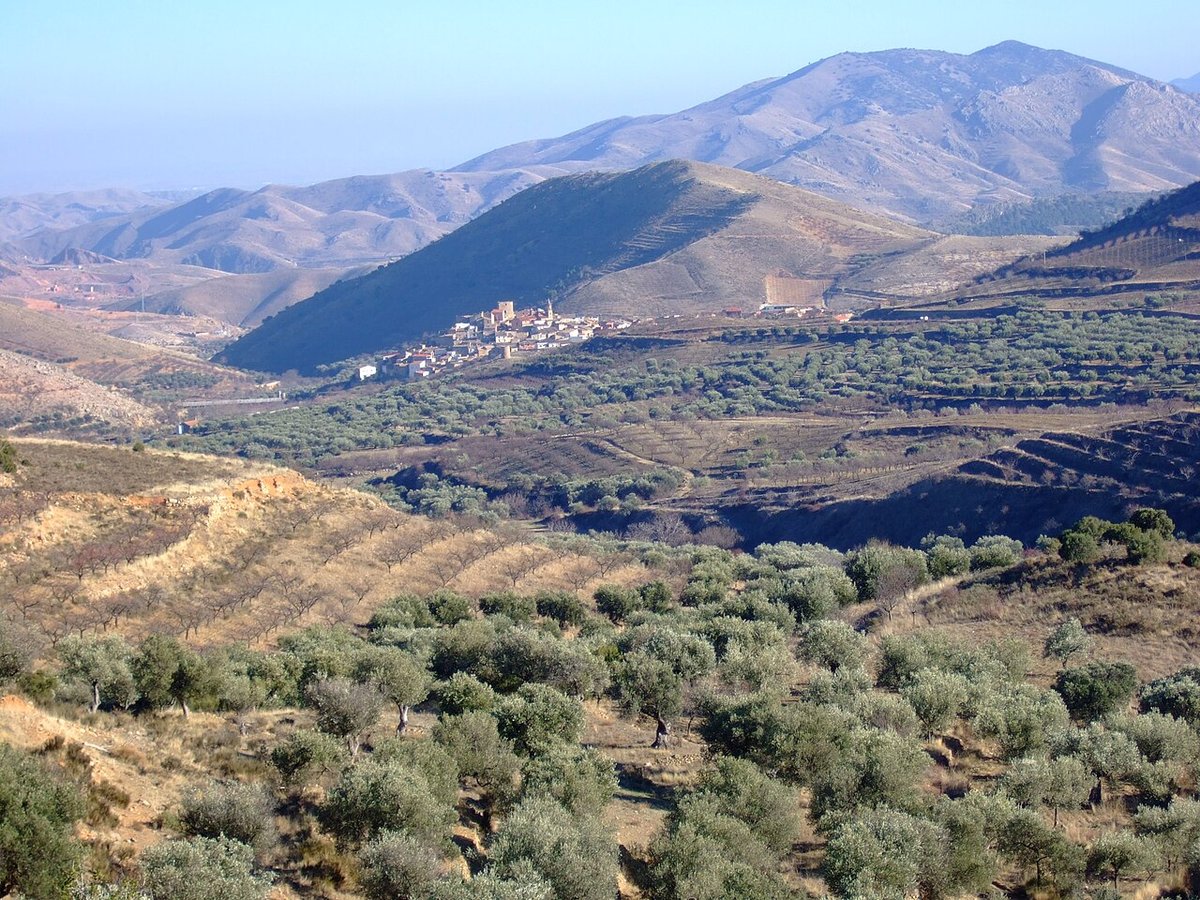
The wheat fields stretch so wide around Sestrica that the village seems to float above them, a stone ship adrift on an ocean of grain. At 572 metres, this scatter of terracotta roofs and weather-beaten churches sits just high enough for the afternoon breeze to carry the smell of dry straw and sun-baked earth through its narrow lanes. There are no grand squares, no castle keeps—just 349 souls, a single bar that opens when it feels like it, and a landscape that has dictated the rhythm of life since the Romans first scratched furrows into the calcareous soil.
The Geometry of Dryland Farming
Arrive in late June and the view from the cemetery hill is a study in gold: wheat, barley and oats rippling like water under the Zaragoza sun. The patchwork is not accidental. Each plot follows medieval boundaries still marked by knee-high dry-stone walls and the occasional twisted olive whose roots have split the rocks apart. Walk the farm tracks at dawn and you will meet the last of the traditional segadores, sickles in hand, cutting the outer rows because the combine harvester cannot reach. They work silently, bending and slicing in a motion older than the Reconquista, leaving bundles that look like sleeping figures across the stubble.
Outside harvest, the fields revert to a quieter palette. By October the stubble has been burnt off, leaving charcoal smudges that eventually green over with winter barley. In February the land is bare again, a tan canvas waiting for rain. It is this seasonal undressing that makes Sestrica absorbing for anyone interested in how food actually reaches the table; there is no hiding the process behind hedgerows or plastic poly-tunnels. The village is literally surrounded by its own larder, and the smell of fresh bread drifting from the bakery on Calle Mayor comes from grain that may have grown within sight of the oven.
Stone, Adobe and the Winter Wind
Houses here are built from whatever the ground yields. Lower walls are limestone chunked out of neighbouring quarries; above, adobe bricks sun-dried in summer stacks absorb the midday heat and release it after sunset, a primitive storage heater that keeps January nights tolerable. Roof tiles are fired clay, thick as a forearm and the colour of burnt toast, laid so they overlap like dragon scales. Peek through an open gateway and you will see the traditional double door: a wide entrance for the mule cart, a smaller one for people, both reinforced with black iron studs that once deterred roaming livestock more than burglars.
The Church of San Miguel Arcángel squats at the top of the single main street, its tower slightly off-plumb after four centuries of tramontana wind. Inside, the altarpiece is provincial Baroque gone rustic—gilded columns painted directly onto pine planks, cherubs with farm-boy faces. Mass is sung only twice a month now, but the building stays unlocked; villagers leave the key on a nail by the sacristy because, as one elderly parishioner explains, “the priest is 40 kilometres away and the door warps if we keep it shut.” Light a candle and you will be asked for 50 cents to cover the electricity—there is no collection plate, just an honesty box scuffed by decades of coins.
Where the Menu Depends on Who Got Up First
Food is not theatre here; it is whatever was walking around yesterday. The weekday set lunch at Bar La Plaza—if proprietor Marisol has decided to open—runs to three courses, water and a carafe of bulk Calatayud wine for €11. Expect roast lamb shoulder that falls off the bone at the touch of a fork, or migas made with yesterday’s bread fried in pork fat and scattered with tiny, fierce local grapes. Vegetarians can usually negotiate a plate of pisto, the Aragonese ratatouille, but advance warning helps because the freezer is small and the shop 12 km away in Torralba de Ribota.
Thursday is killing day at the municipal abattoir 3 km out of town; by Friday lunchtime the blackboard lists chorizo fresh enough to still feel warm. If you prefer your meat anonymised, drive the 25 minutes to Calatayud where supermarket rules apply. Otherwise, accept that the pink sausages glistening behind the bar came from a pig you may have heard snuffling behind a nearby wall last week. Fish appears only frozen—Sestrica is 350 m above sea-level and the nearest port is four hours away—so stick to the terroir and you will eat better.
Walking Lines Older Than Any Map
Three footpaths radiate from the village like spokes, each following drove roads that shepherds used to move flocks between winter pastures along the Jalón and summer grazing on the Moncayo. The shortest loop, 7 km, heads south to the ruined cortijo of Los Llanos, a stone shelter whose roof collapsed during the 1936 siege of nearby Belchite. Swallows now nest between the rafters, and the interior walls still carry charcoal graffiti: regiment numbers, a woman’s name, a crude Republican slogan half-erased by rain.
Take binoculars. The cereal steppe harbours pin-tailed sandgrouse that fly in from North Africa each spring, and at dusk you may hear the mechanical purr of a Eurasian stone-curlew hidden among the clods. Summer walking demands an early start; by 11 a.m. the thermometer kisses 38 °C and shade is theoretical. In winter the same landscape flips: the wind barrels uninterrupted across the plateau, and locals wear the traditional cheruga, a sheepskin jacket that smells unmistakably of its original owner. The paths stay passable—clay, not mud—but daylight is short and the bar closes at six.
Timing Your Arrival, Managing Your Exit
Sestrica does not do boutique accommodation. There are two village houses signed up for rural tourism: Casa Chaminé and Casa la Era, both refurbished by families who left for Zaragoza in the 1980s and returned with city pensions and IKEA catalogues. Expect Wi-Fi that falters whenever the wind shifts, electric showers that deliver one temperature—tepid—and heating powered by bottled butane that you may have to change yourself. Prices hover round €70 a night for the whole house, plummeting to €45 outside fiesta weekends. Book through the municipal website; the part-time tourist office answers emails on Tuesdays and Thursdays.
The practical window is narrow. Come in May when the wheat is knee-high and luminous green, or during the last two weeks of September when combines crawl across the fields and the air smells of grain dust and diesel. The patronal fiesta around 29 September fills the streets with roast-lamb smoke and brings back every emigrant within a 200-km radius; accommodation fills up, but you will witness the village at full volume. August is hot, empty and a little eerie—most locals shut their houses and head for the coast, leaving only the elderly and the heat-tolerant British hiker who thought Spain would be “quiet”.
Drive time from Zaragoza is 75 minutes via the A-2 and a final 20 km of country road shared with tractors that hog the centre line. Public transport is theoretical: one bus on Tuesdays and Fridays, departing Calatayud at 14:00 and returning at 06:30 next day. Miss it and you are looking at a €35 taxi. Car hire is almost mandatory unless your idea of adventure includes hitch-hiking with grain lorries.
Leave before sunset on your last evening and the sinking light will set the stone walls glowing like hot coals. From the ridge you can see the whole village—every roof, every threshing circle, every kilometre of the fields that keep it alive. There is no souvenir shop, no fridge-magnet version of this view. Just the smell of straw on the wind and the certainty that, when the harvest starts again next summer, someone will still be here to cut the corners the machines cannot reach.