Full Article
about Sisamon
Ocultar artículo Leer artículo completo
The church bell strikes twelve and nobody stirs. At 1,051 m above sea level, the sound carries clean across the stone roofs of Sisamón, ricochets off the south-facing slope and drifts down into the valley until even the last echo has nowhere left to go. Thirty-five registered neighbours, one baker who drives in twice a week, and a bar that opens when the owner feels like it—this is the arithmetic of a village most Spaniards would struggle to place on a map.
A village that refuses to speed up
Calatayud lies 35 minutes to the north-east along the A-1512, a road that narrows to single-track each time a lorry meets a tractor. From the turn-off it is another 9 km of hairpins before Sisamón appears, clinging to a ridge like a row of swallows’ nests. The first thing visible is the blunt tower of the parish church; the second is the sheer drop behind it. Parking is wherever the verge widens enough to let two wheels settle on the gravel—free, unmarked and, outside fiesta week, never full.
Stone houses line lanes barely wider than a donkey cart. Walls are built from the same ochre limestone the hill offers up, so the village looks less built than quarried. Timber balconies sag under geraniums; stable doors stand ajar, revealing haylofts now used to store firewood for stoves that burn through winter snow. There is no interpretation centre, no ticket booth, no gift shop selling fridge magnets shaped like bulls. The only soundtrack is wind funnelled between chimney stacks and, occasionally, a tractor coughing awake.
Walking without way-marks
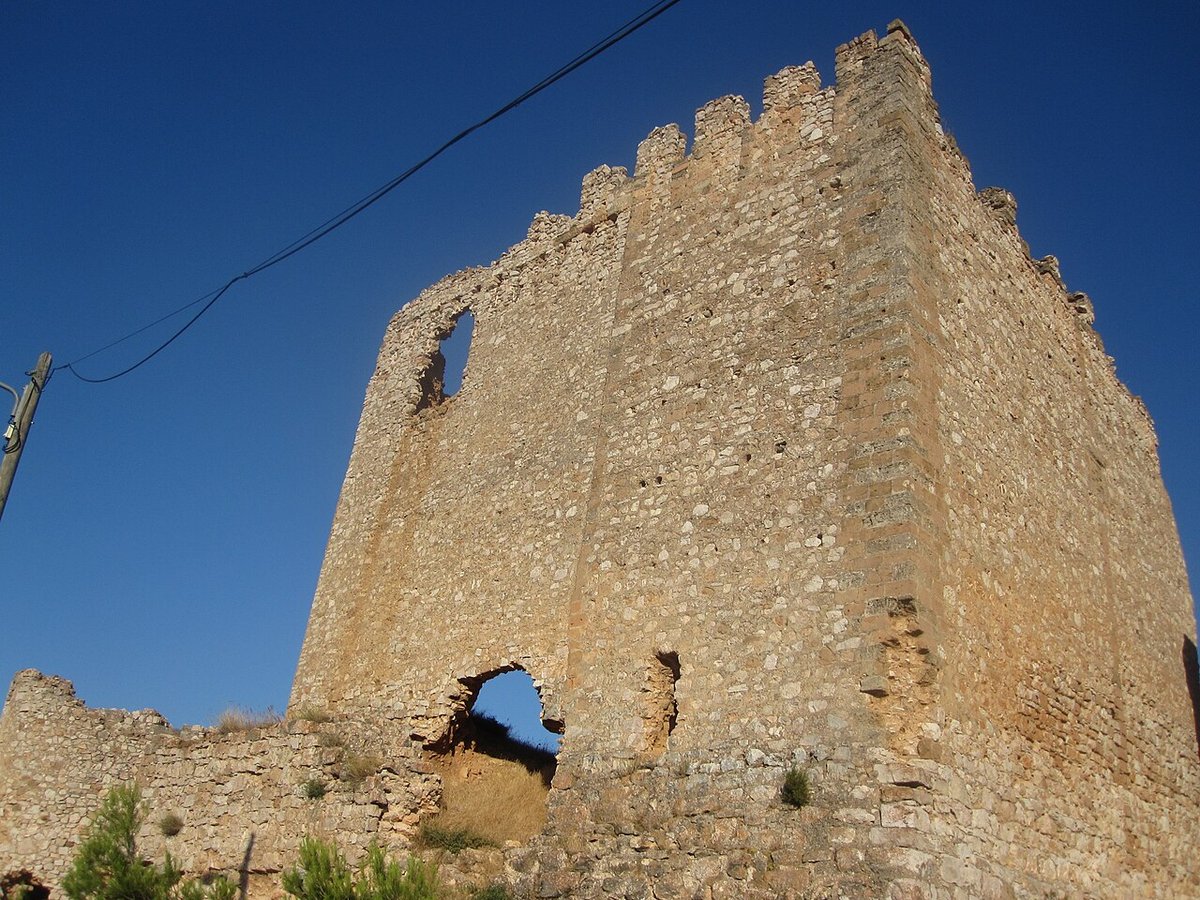
Sisamón sits on the southern lip of the Iberian System, a maze of rounded summits that rarely top 1,400 m but still feel mountainous because the land falls away so sharply. A lattice of old mule trails radiates outwards—north to the abandoned hamlet of Los Cortados, east to the cherry orchards around Valdehorna, south along the ridge to the ruined watchtower of El Castillejo. None are sign-posted in English; none appear on the glossy “Rutas de Aragón” leaflets handed out in Zaragoza tourist office. What you get is a scrap of photocopied map if you ask in the village, plus the advice: “Keep the village in sight until you know the way back.”
Spring brings the best walking. Temperatures hover around 15 °C, wild rosemary scents the air and the only mud is in the bottom of the barrancos. By mid-July the thermometer can touch 32 °C before noon; walkers leave at dawn and are back for the siesta hours when even the lizards hide. Autumn is brief—ochre to chestnut in ten days—then the first snow can arrive as early as late October. When that happens the A-1512 is gritted once a day, chain-fitters in Calatayud do a roaring trade, and the village switches to a timetable dictated by daylight and firewood supply.
Food that follows the church calendar
There is no restaurant. Eating means either bringing supplies or knowing someone. The winter matanza still takes place in back-yard sheds: families slaughter a single pig, divide the meat and spend three days making morcilla, chorizo and jamón serrano that will last the year. If you rent one of the two village houses offering visitor stays (around €70 a night, minimum two nights), the owner may sell you a plate of migas—fried breadcrumbs with garlic, grapes and thin strands of pancetta—followed by poached pears in mountain honey. Ingredients arrive on the table in the same sequence they arrive on the land: asparagus in April, cherries in June, game in October. Ask for a menu and you will be met with blank incomprehension; ask what day the baker comes and you will be told “Tuesday, unless the van breaks down.”
When the population doubles
For fifty weeks of the year Sisamón is a place where conversations happen across rooftops and nobody locks a door. Then, during the fiestas patronales around 15 August, the head-count swells to roughly a hundred. Returning emigrants pitch tents in vegetable gardens, a sound system appears in the plaza, and the bar imports extra crates of Estrella Galicia. Events follow a script unchanged since the 1960s: mass at noon, paella for fifty cooked in a pan the size of a satellite dish, children’s sack race, adults’ sack race with wine, then an all-night verbena that finishes only when the generator runs out of petrol. By the 18th the rubbish lorry has hauled away the empties, the priest has gone back to Calatayud, and the village exhales into its default hush.
Getting there—and away
Public transport is a myth. The nearest railway station is Calatayud, 45 km distant, served by AVE high-speed trains from Madrid (1 h 15 min, about €35 off-peak). From the station forecourt a regional bus trundles towards Munébrega on schooldays only; after that you are hitching or calling a taxi (pre-book, €50 flat rate). Car hire is more sensible: expect twisting roads, sheep around blind bends and the sudden appearance of a shepherd on a mule who has every right to be in the middle of the tarmac. Petrol stations close at 20:00; Sundays mean a 40 km detour to the A-2 autopista.
Accommodation inside the village is limited to the two self-catering houses mentioned—both restored with under-floor heating, Wi-Fi that falters when it snows and roofs thick enough to muffle the church bell. Book through the regional tourism board website; confirmation arrives by text from a number that starts with the owner’s name followed by “de Sisamón”. Alternative beds are 18 km away in Paracuellos de la Ribera, a former spa town whose grand hotel now rents rooms for €55, breakfast €7 extra, dinner menu del día €14.
The honest verdict
Sisamón will not change your life. It offers no souvenir to prove you were there, no sunrise so extraordinary it justifies the journey on its own. What it does offer is a yardstick against which to measure everything faster, louder and more connected. Stand on the ridge at dusk, mobile signal gone, lights of Calatayud flickering 25 km across the dark, and the silence feels almost aggressive—like a room cleared of furniture you did not realise had been cluttering the space. Some visitors last two hours before driving back to the motorway. Others unpack slowly, discover they can live without clickbait or lattes, and stay long enough to learn the baker’s first name. Either reaction is acceptable; the village itself remains indifferent.