Full Article
about Talamantes
Ocultar artículo Leer artículo completo
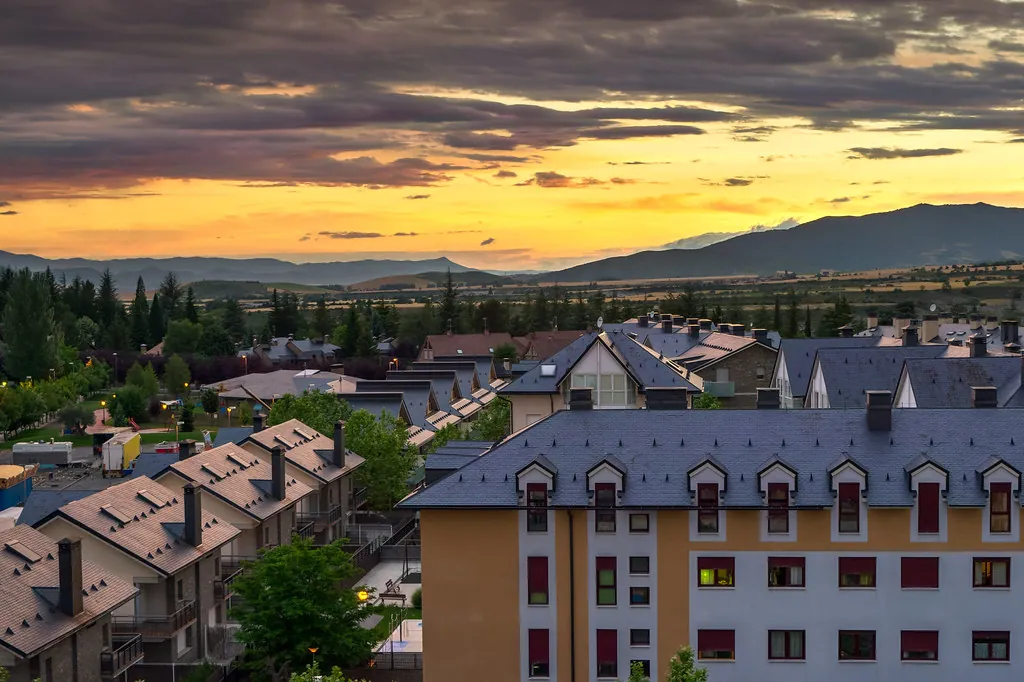
The church bell still rings at noon, though only sixty-four people remain to hear it. Talamantes clings to a limestone ridge above the Campo de Borja, its stone houses arranged like mismatched teeth along a single ridge-top road. At this altitude the air thins and the Sierra del Moncayo floats on the horizon like a bruised cloud. Most drivers flash past on the N-122, bound for Soria or Logroño, never noticing the turn-off that zig-zags three kilometres uphill to a place that has quietly opted out of the twenty-first century.
What the map doesn’t mention
There is no petrol station, no cash machine, no souvenir shop. The only commerce is a social-bar whose metal shutter lifts on Saturday evenings if the owner isn’t needed at his vines. Visitors are advised to fill the tank in Borja and buy groceries in Tarazona before the final climb. Mobile reception flickers in and out; download offline maps while you still have 4G on the A-2. None of this is a flaw – it is the reason the village survives. Talamantes has never learned to sell itself, which means it has not yet been sold.
The architecture is coherent rather than grand: thick masonry walls the colour of weathered parchment, timber balconies painted ox-blood red, Romanesque doorways recycled into later centuries when the stone was easier to re-carve than to quarry fresh. The parish church stands at the highest point, its Baroque tower patched with brick after a lightning strike in 1897. Inside, the air smells of candle wax and damp sandstone; the priest arrives once a fortnight, travelling from Borja. Services are announced on a hand-written card Blu-tacked to the door.
Walking into silence
Footpaths leave the village as confidently as if crowds were waiting. The signed loop to Cerro Morrón is 7.5 kilometres and gains 350 metres – enough to make lungs work, never punishing. Mid-week you will meet no-one except the occasional shepherd on a quad bike. From the summit the view stretches across a patchwork of cereal plots, olive groves and garnacha vineyards that belong to the Campo de Borja D.O. On clear days the Pyrenees glint white behind the ridge of the Moncayo, 60 kilometres west. Spring brings purple rosemary flowers and the metallic song of Dartford warblers; autumn smells of distilling grapes and wood-smoke from cottage chimneys.
For something gentler, follow the farm track south-east towards the abandoned hamlet of Las Cuerlas. The path dips through almond terraces and emerges on a shelf where stone terraces once fed families now gone to Zaragoza or Barcelona. A single intact threshing circle remains, its perimeter stones smooth as church steps. Take a jacket even in June: the wind at this height has teeth.
Food that doesn’t need advertising
Talamantes itself offers no restaurants, yet eating well is simple. The weekend bar serves borage-wrapped croquettes – the leaf tastes like mild spinach and shields the palate from hot béchamel. Order a plate and the barman will pull a cork from something labelled “garnacha viejas 2018” poured from an unlabelled jug; the wine is soft, almost juicy, and costs €2.50 a glass. If you are staying overnight, pre-order a cordero al chilindrón from Casa Rural Casta Álvarez: shoulder of local lamb slow-baked with tomatoes and sweet Choricero peppers. The owners leave the casserole in your kitchen; you heat it when hunger strikes.
Shopping happens before arrival. In Borja, the cooperative olive mill sells five-litre casks of Arbequina oil pressed within the month; the flavour is grassy, peppery at the back of the throat, nothing like the bland supermarket bottles shipped to Britain. Pair it with crusty bread and a wedge of Tronchón cheese – the same semi-firm goat-and-sheep mix that Cervantes mentioned four centuries ago.
When the village remembers it can party
For fifty weekends a year Talamantes murmurs. Then, on the last Saturday of September, the fiesta of San Miguel triples the population. Emigrants return from Zaragoza, Madrid, even Munich; cousins sleep on sofa-beds and children who have never met play chase through the arcades. A sound system appears in the plaza, balanced on beer crates; at midnight fireworks bounce off the surrounding cliffs like artillery practice. Sunday begins with chocolate con churros served from a steel drum, ends with a paella cooked over vine prunings in a pan wide enough to bathe a toddler. By Monday the village exhales, shutters close, and the ridge reverts to wind and stone.
Winter is a different proposition. The road can glaze with ice in January; if snow drifts across the Moncayo the access lane is chained off until a farmer clears it with his tractor. Those who do arrive find a monochrome world where the only colour is the orange glow of cottage windows at dusk. Nights drop to –5 °C; most rural houses rely on pellet stoves that tick like metronomes. It is beautiful, austere, and not for anyone who expects Uber and room service.
How to do it (without swearing at Google Maps)
Driving: Fly Ryanair or BA direct from Stansted to Zaragoza (2 h 10 m). Hire cars queue outside the terminal; take the A-2 west for 70 km, exit at junction 295 for the N-122 towards Soria. After 25 km turn right at the brown sign for Talamantes – the final 3 km climb is single-track with passing places. Total journey: under 90 minutes.
Public transport: Trains from Barcelona or Madrid reach Zaragoza-Delicias; ALSA coaches continue to Tarazona (55 min). Pre-book a taxi from Radio Taxi Tarazona (+34 976 64 00 00) for the last 17 km – budget €25 each way and agree the return pickup time before the driver leaves, or you may spend the night on a bench.
Accommodation: options are limited. Casa Rural Casta Álvarez sleeps ten in five bedrooms (minimum three-night stay mid-week, €140 per night for the house). Lock-box check-in means no reception desk; towels are provided, heating is metered extra in winter. Alternative: Cuevas de Bárbola, a converted cave-house in Maluenda 15 minutes away, stays cool in July and warm in January.
Leave the adjectives at home
Talamantes will not flatter you with postcard perfection. Roof tiles slip, dogs bark at shadows, and the Saturday bar closes early if the Manchester United match is on television. What it offers instead is an unfiltered dose of rural Aragón: the smell of wet earth after rain, the sound of your own footsteps echoing off stone, wine poured from a jug whose label never mattered. Come prepared, tread quietly, and the village might – briefly – remember your face the next time you climb the hill.