Full Article
about Tierga
Ocultar artículo Leer artículo completo
The Village That Refuses to Become a Museum
The tractor arrives at seven-thirty sharp. Every morning, without fail, it rattles through Tierga's narrow main street, past the stone houses with their wooden balconies, past the church whose bell tower has seen better centuries, past the single bar where three old men sit playing cards. This is not performance. This is simply Tuesday—or any day, really—in a village where 179 souls maintain a way of life that tourism brochures claim disappeared decades ago.
At 630 metres above sea level, Tierga sits where the Ebro Depression begins its gentle rise towards the Iberian System. The altitude matters more than you might think. Summer temperatures here run several degrees cooler than Zaragoza, 65 kilometres to the east, and winter brings proper frost that cracks the earth and sends villagers hunting for their one proper coat. The air carries the scent of cereal fields and thyme, punctuated by diesel exhaust when someone's ancient Peugeot struggles up the hill towards the church.
Stone, Sun and the Business of Survival
The parish church anchors Tierga like a ship's keel, its architecture a palimpsest of Aragonese rural building. Romanesque bones wear Gothic additions; Baroque flourishes compete with nineteenth-century practicality. Inside, the cool darkness offers relief from sun that beats down with medieval intensity. The stone floors slope noticeably—centuries of feet have worn channels where processions passed, where farmers stamped mud from their boots, where children chased each other between pews.
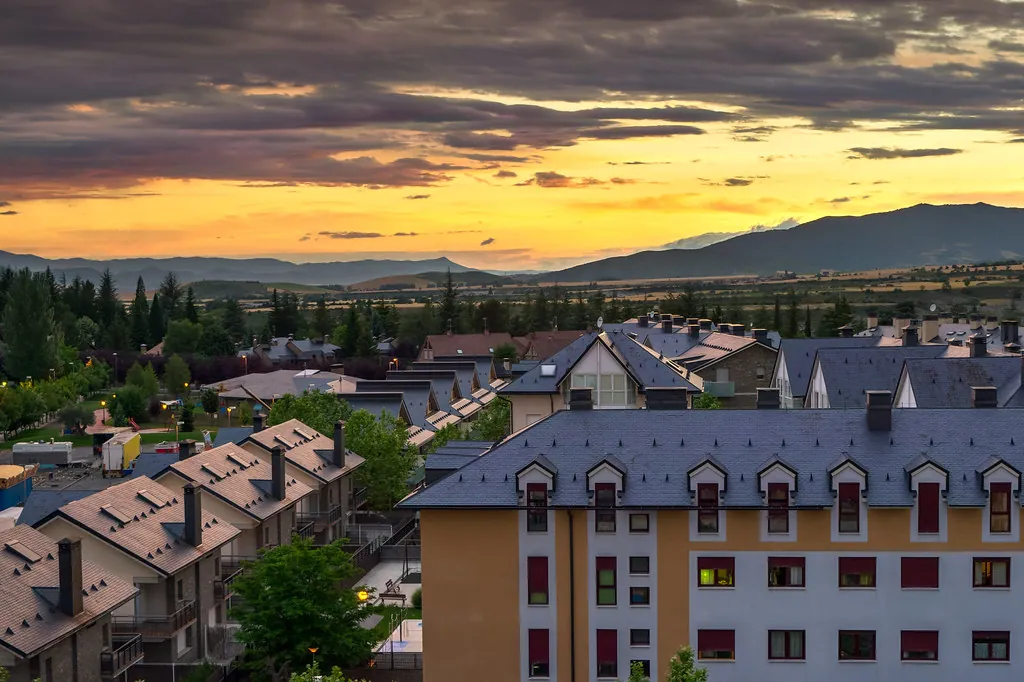
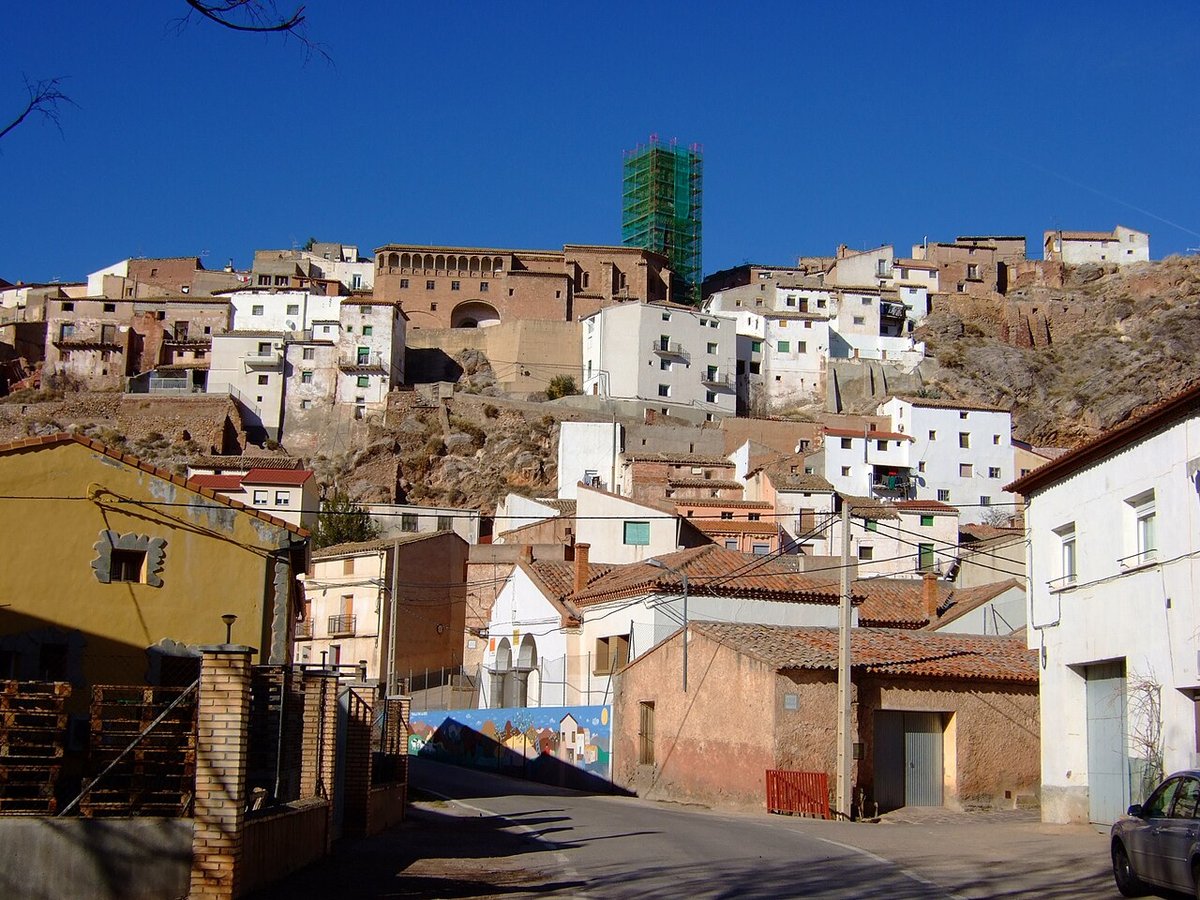
Walk the streets slowly. This isn't a place for ticking off sights. Notice how the stone houses grow from the earth itself, their colours shifting from honey to grey depending on which local quarry provided the building material. Some stand empty, their windows blind with plywood, their roofs gradually surrendering to rain and neglect. Others display recent restoration work—new tiles, fresh mortar, the tell-tale signs of weekenders from Zaragoza or Barcelona who've bought into rural fantasy. The village accommodates both realities with equanimity.
The traditional fountain still flows, though now it's decorative rather than essential. Women once gathered here to wash clothes and exchange gossip while their hands turned red with cold water and harsh soap. The lavadero beside it—stone basins arranged like a miniature amphitheatre—stands dry, its purpose obsolete since indoor plumbing arrived in the 1970s. Sit here at dusk and you might catch the village's real soundtrack: swallows diving between buildings, a television through an open window, someone practising trumpet scales badly.
Walking Through Layers of Aragon
Tierga rewards those who arrive with decent walking shoes and realistic expectations. The network of rural tracks—caminos—radiates outward through cereal fields that shift from emerald green in spring to burnished gold by July. These aren't manicured footpaths with signposts and picnic areas. They're working routes used by farmers, their surfaces graded by tractors rather than park services. Distances feel longer under the Spanish sun; carry more water than you think necessary.
The landscape reveals itself gradually. To the north, the Moncayo massif dominates the horizon, its bulk influencing local weather patterns. Southward, the land flattens towards the Ebro Valley, Spain's agricultural heartland. This transitional zone supports a mosaic of habitats: almond groves on south-facing slopes, pine plantations on poorer soils, vineyards that produce robust reds sold cheaply in local co-operatives. Birdwatchers should pack binoculars: hoopoes flash black-and-white wings from telegraph wires, while booted eagles ride thermals above the fields.
Autumn brings the most activity. Harvest tractors kick up dust clouds visible for miles. The smell of crushed grapes hangs heavy when the local cooperative begins processing. This is when you're most likely to witness traditional practices—not staged for visitors, but because this is simply how things are done. An old man might show you his personal wine press, its wooden screw mechanism dating from Franco's time, if you ask politely and speak reasonable Spanish. Don't expect Instagram moments. Expect practicality worn smooth by generations.
The Gastronomy of Making Do
Tierga's culinary scene makes Borough Market look like Disneyland. There isn't one, not really, and this honesty proves refreshing. The single bar serves basic coffee and might rustle up a tortilla if you're lucky and they're not busy. Instead, food here follows the rhythm of domestic life and occasional fiestas. The village women (and it is mostly women) who maintain these traditions cook from economic necessity rather than lifestyle choice.
Their migas—fried breadcrumbs with garlic and pancetta—originated as a way to use stale bread. The local lamb, roasted until it collapses from the bone, reflects smallholdings where families might keep two or three animals. During fiestas, everyone eats from communal pots, paying what they can afford. The wine comes from just down the road, sold in unlabelled bottles for three euros. It's rough, honest, and tastes like the earth it grew in.
Visit during August's fiestas patronales and you'll find the village population swells to perhaps four hundred. Former residents return from Zaragoza, Barcelona, even London, cramming into grandparents' houses that smell of mothballs and memories. Temporary bars appear in the square. Someone's cousin brings speakers from the city. For three days, Tierga parties like it's 1975, before settling back into its quieter routine.
Getting There, Getting By, Getting Real
The drive from Zaragoza takes ninety minutes via the A-2 motorway, then the N-234 through countryside that grows progressively emptier. Public transport exists in theory—a twice-daily bus from Calatayud, itself reached by regional train from Zaragoza—but requires patience and flexibility. Rental cars prove essential for exploring properly, though the final approach involves narrow roads where meeting agricultural machinery requires reversing skills.
Accommodation options remain limited. There's no hotel, no boutique guesthouse with exposed beams and artisanal breakfast. The nearest beds lie in neighbouring villages or back in Calatayud, twenty-five minutes away. Some villagers rent rooms informally—ask at the bar, where the proprietor knows everyone's business and might phone around on your behalf. Expect basic facilities, shared bathrooms, and prices that reflect rural economics rather than urban expectations.
Tierga won't change your life. It offers no epiphanies, sells no souvenirs, runs no guided tours. What it provides instead is rarer: a village that continues being itself despite everything tourism claims about "authentic Spain." Come prepared for heat and silence, for conversations that require effort, for beauty that reveals itself slowly. The tractor will still pass at seven-thirty tomorrow. Some things, mercifully, remain beyond the reach of marketing departments.