Full Article
about Tormon
Ocultar artículo Leer artículo completo
The church bell strikes noon and the only other sound is a truck door slamming shut. Twenty-six souls live in Tormón, scattered across stone houses that grip a ridge 1,100 m up in the Sierra de Albarracín. If you arrive looking for souvenir stalls or a menu in English, keep driving; the road south drops straight into pine forest and silence.
What the village does offer is altitude without pretension. The air is thinner, cleaner, and in winter sharp enough to make your ears ache. Summers are warm in the sun but the nights dip to 12 °C even in July—bring a fleece whatever the month. That coolness once lured timber merchants and shepherds; today it attracts a trickle of hikers who prefer empty trails to the busier circuits around nearby Albarracín, 35 km away.
Stone, Wood and the Smell of Pine
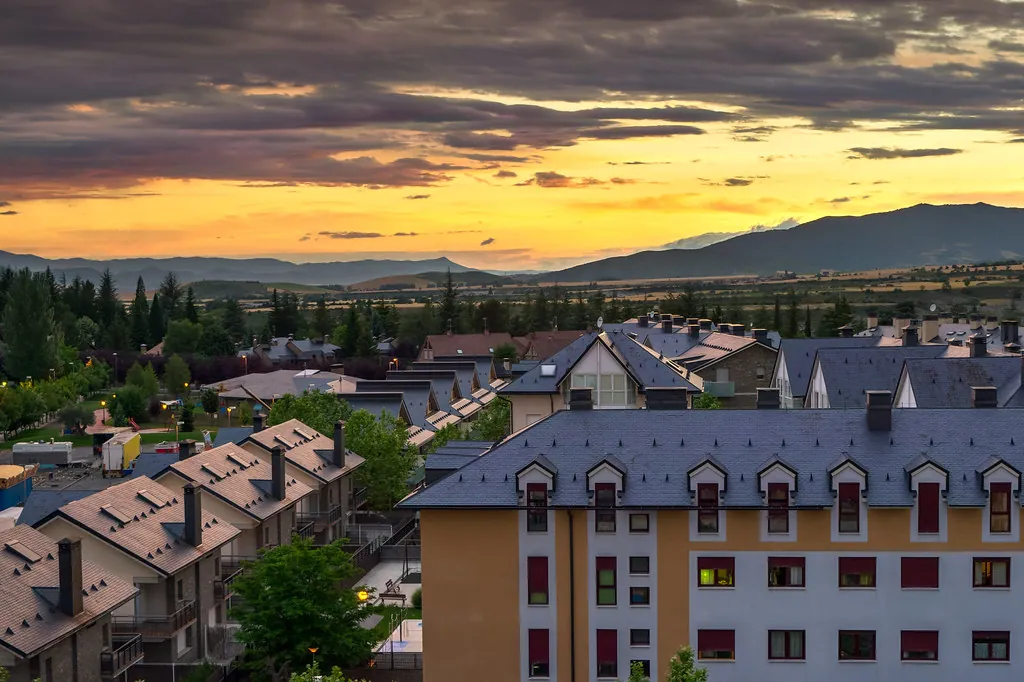
Tormón’s streets take six minutes to walk end to end. Houses are built from the ridge itself: limestone walls the colour of weathered bone, roofed with curved Arab tiles that clang like bells when hail comes. Wooden balconies, painted ox-blood red or left to silver, jut over the narrow lanes. Most have been restored, but a few still sag, their lintels dated 1892 in fading blue paint. There is no architectural uniformity, only the repeated use of what lay to hand—stone, pine beams, red clay. The effect is coherence born of scarcity.
The church of San Pedro sits at the highest point, its squat tower more watchtower than campanile. Inside, the air smells of candle wax and mountain damp; the altar frontal is 18th-century but the roof beams are recent replacements after a 1950s storm dropped a pine through the vault. Nothing is roped off, no entry fee is demanded. Drop a euro in the box if you feel guilty for using the porch as a windbreak.
Walking the Red Earth
Footpaths strike out from the upper edge of the village, way-marked with yellow-and-white stripes that soon disappear among the pines. The shortest loop, the 4 km Ruta del Rodeno, circles a plateau of red sandstone carved into mushroom shapes. The rock is soft enough to dent with a fingernail; climbers chip pockets for their fingers on weekends, but on weekdays you get it to yourself. For something longer, the PR-TE-54 trundles 14 km to neighbouring Griegos, dropping into the Guadalaviar valley and back up 400 m of ascent. The track is stone and dust, passable in trainers outside the wet season, but carry water—there is no bar midway and the only spring marked on the map ran dry in 2022.
Wildlife signs are subtle: a hoof-print in the path edge, a scatter of pine-cone scales where a crossbill has fed. Wild boar root beyond the first ridge; you will smell them before you see them, a sweet musk like turned earth. Dawn and dusk are the honest times to be out. Midday in August the trails shimmer with heat even at this height; walkers retreat to the village plaza where a single fig tree throws shade across the stone bench.
What Passes for Gastronomy
There is no restaurant in Tormón. The nearest bar is in El Vallecillo, 7 km down the valley, open Thursday to Sunday and only if the owner feels like it. Self-catering is the default. The village shop is a room in somebody’s house: tinned tomatoes, UHT milk, local honey at €8 a jar. Bread arrives Tuesday and Friday in a white van that toots its horn; buy early or make do with crackers.
Game stews appear at fiesta time: jabalí en salsa, rich with bay and clove, served on paper plates in the street. The August patronal feast doubles the population for forty-eight hours; ex-villagers roll up with cool-boxes and anecdotes. A brass band plays until 3 a.m. then everyone vanishes, leaving only the scent of fennel and gunpowder from the midnight fireworks that frightened the village dogs into a chorus.
Winter Comes Early
October turns the pine plantations brassy and the first frost crusts the puddles. By December the access road is shaded at every bend; ice lingers until midday. Snow is patchy but when it arrives the council grades the asphalt once, then leaves you to it. Chains are sensible from November onwards; without them you may spend the night in Teruel, 40 km away, waiting for the sun to do its work. Electricity lines run above ground and fall with predictable regularity—pack a torch and a book you don’t mind re-reading.
Yet winter has its own etiquette. Chimneys exhale a sweet smoke of pine and oak. Some owners rent their houses as casas rurales by the week: stone floors, wood-burning stoves, Wi-Fi that flickers when the wind is in the north. At €90 a night for two bedrooms it is cheaper than Albarracín, but check arrival details twice; the default instruction is “ring María, she has the key,” and María may be in Teruel for the afternoon.
Getting There, Getting Away
No bus reaches Tormón. The nearest railway halt is in Teruel, served by a slow train from Zaragoza (2 h 15 min) or Valencia (3 h 30 min with a change). Car hire is essential; allow 55 min from Teruel on the A-1512, then the A-2411. Fuel up first—the last 24-hour station is in Gea de Albarracín, 20 km short. Mobile coverage is Vodafone-only in the village centre; other networks appear if you stand on the picnic table by the church.
Leave time for the drive out. The road east to Sarrión winds through forests of Scots pine and sudden limestone bluffs; pull-over bays let you scan the valley for griffon vultures riding the thermals. Sunset stains the rock orange, then blood, then bruise-purple. By the time the lights of Teruel appear on the plain below, Tormón has already shrunk to a single amber window, blinking against the slope like a candle someone forgot to blow out.