Full Article
about Torralba de los Sisones
Ocultar artículo Leer artículo completo
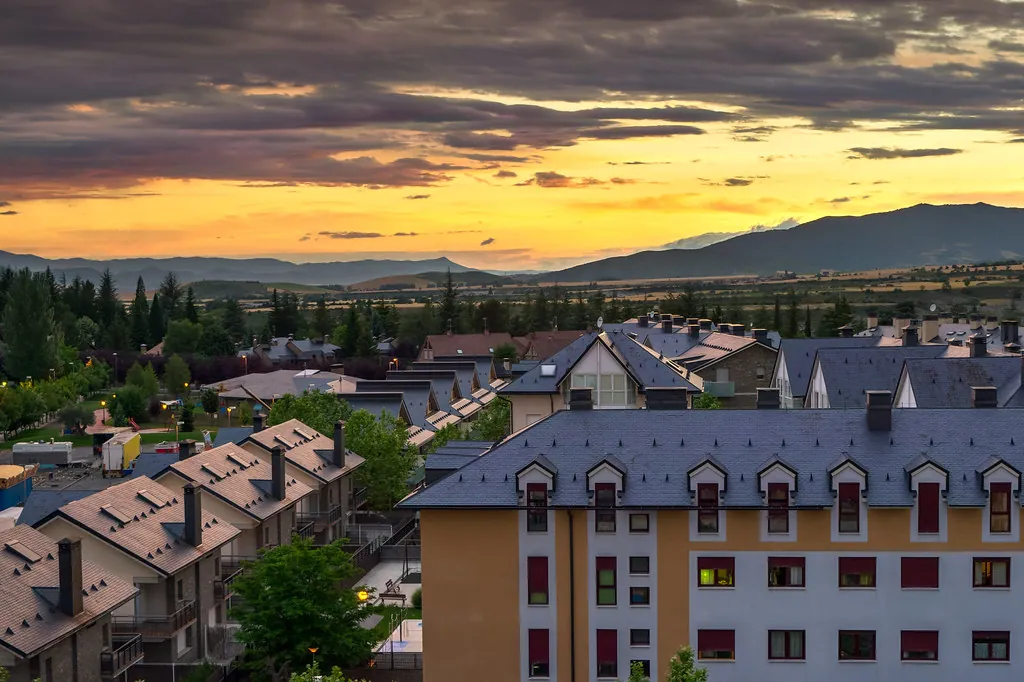
At 1,041 metres the air thins just enough to sharpen every scent: thyme crushed under boot, wood-smoke curling from a chimney, rain that has travelled eighty kilometres without bumping into anything bigger than a hamlet. Torralba de los Sisones sits on its own small plateau above the Jiloca valley, a scatter of stone roofs and mud-coloured walls that look as if they were pressed into the earth rather than built upon it. From the edge of the village the land rolls away in every direction, a pale ocean of wheat stubble and almond terraces that makes the 500 inhabitants feel temporarily outnumbered by sky.
This is not postcard Spain. There are no ochre palaces or umbrella pines, and the nearest beach is a two-hour dash to Valencia. Instead you get space, silence and a thermometer that can swing fifteen degrees between noon and midnight. In July that means T-shirt weather at midday and a fleece for the walk home from the bar; in January it means carrying on with life when the thermometer reads minus eight and the TE-V-8001 is white all the way to Calamocha. The road, a narrow ribbon that corkscrews up from the A-23, is the village’s only reliable artery. When snow drifts across it, Torralba becomes an island.
Most visitors arrive by accident: a night’s stopover on the drive south, a booking made when Gallocanta’s flamingos were late and the lake hotel full. They pull into the single street, notice the shuttered façades and wonder if the place has shut for good. Then someone emerges from the bar-hostal, keys jangle, and the evening begins to organise itself. The hostal’s eight rooms sit squarely above the only public drinking spot for twenty kilometres. Check-in is therefore a two-stage affair: sign the register, then decide whether to eat at the only table not yet taken by farmers discussing barley prices. Monday arrivals need a plan B; the shutters close at 14:00 and reopen twenty-four hours later. Stock up in Calamocha first, or you’ll be making sandwiches with the emergency tin of sardines left by previous guests.
The menu is short and seasonal. Mountain rice arrives in a pan big enough for two, its liquor stained dark by mushrooms and a scrap of hare. Veal stew tastes like something your grandmother might have produced if she had grown up among almond groves: carrots, bay, a splash of Spanish brandy, nothing to frighten the chilli-averse. Gluten-free bread appears without drama, a courtesy still rare enough in rural Aragón to warrant a quiet nod of gratitude. Wine is from Cariñena, twenty-five kilometres north, and costs less than a London single-ride bus ticket.
Food finished, the village belongs to walkers. A five-minute stroll takes you past the sixteenth-century church of Nuestra Señora de la Asunción, locked except for Saturday evening mass, and out onto the camino that circles the cereal fields. The path is unsigned but obvious: two ruts made by tractors, a stripe of paler earth between the wheat. In April the edges glow purple with viper’s bugloss; by late June everything has turned the colour of digestive biscuits. Keep walking and you’ll reach a low ridge where the stone threshing floors lie exposed like giant millstones. From here the village shrinks to a dark comma on the plain, its television aerials the tallest objects in view.
Serious hikers can string together a half-day loop south-east towards the Sierra de Cucalón, but come prepared: there is no tree cover, the wind scours without warning, and in summer the sun reflects off the limestone as fiercely as off water. A hat is not negotiable. The reward is an hour or two when the only sound is the rasp of crickets and, if you rise early enough, the soft whistle of pin-tailed sandgrouse heading to drink at Gallocanta. The lake, ten minutes away by car, is one of Europe’s largest natural salt pans and hosts up to 60,000 cranes between October and February. Dawn there is spectacular, but you will need to set the alarm for 06:00 and accept that your binoculars may steam up in the chill.
Back in the village the afternoon shuts down completely. Post-lunch streets are empty except for the occasional dog. This is the hour to notice details: the way every house has walls a metre thick, windows the size of hankies, and chimneys angled to deflect the north wind; how the older roofs still carry their original Arabic tiles, curved like upside-down smiles. Someone has stencilled “Harina La Roda 1958” on a warehouse gable, the paint now the same rust colour as the surrounding stone. Close your eyes and you can almost hear the mules clopping in from the fields, though the last working mule here died decades ago.
Evening brings a slow re-animation. Lights click on one by one, the bar’s television starts its nightly debate on tractor prices, and the smell of charcoal drifts from a chimney. If you are staying upstairs you will hear every word of the conversation below, but the accents are gentle and the laughter unforced. By ten-thirty the street is silent again; at altitude the body tires quickly. Step outside and the Milky Way is a bright smear across the sky, unobstructed by street-lamps or neon. The temperature will have dropped another five degrees while you brushed your teeth.
Practicalities are straightforward once you accept the scale. The nearest cash machine is fifteen kilometres away in Calamocha, the nearest doctor too. Petrol is cheaper there, and the supermarket stays open until 21:30, which feels metropolitan after a week in Torralba. Mobile coverage is patchy inside the houses but reliable outside; 4G appears on the ridge if you really must post that panorama. Trains from Zaragoza stop at Calamocha twice daily; a pre-booked taxi from the station costs around €30 and saves a wait that can stretch to the next ice age. Fly into Zaragoza from London-Stansted or Manchester between March and October, collect a hire car, and you can be sipping coffee on the village’s only pavement table in under two hours.
Leave again before checkout time and you will probably share the road with a shepherd in a white van, two dogs on the back seat and a roll of fencing wire. He will lift one finger from the steering wheel in salute, the universal country code for “I see you, stranger, and I wish you no harm.” It is a small courtesy, but in a place where the horizon is always wider than the population it counts for a lot.