Full Article
about Torralba de Ribota
Ocultar artículo Leer artículo completo
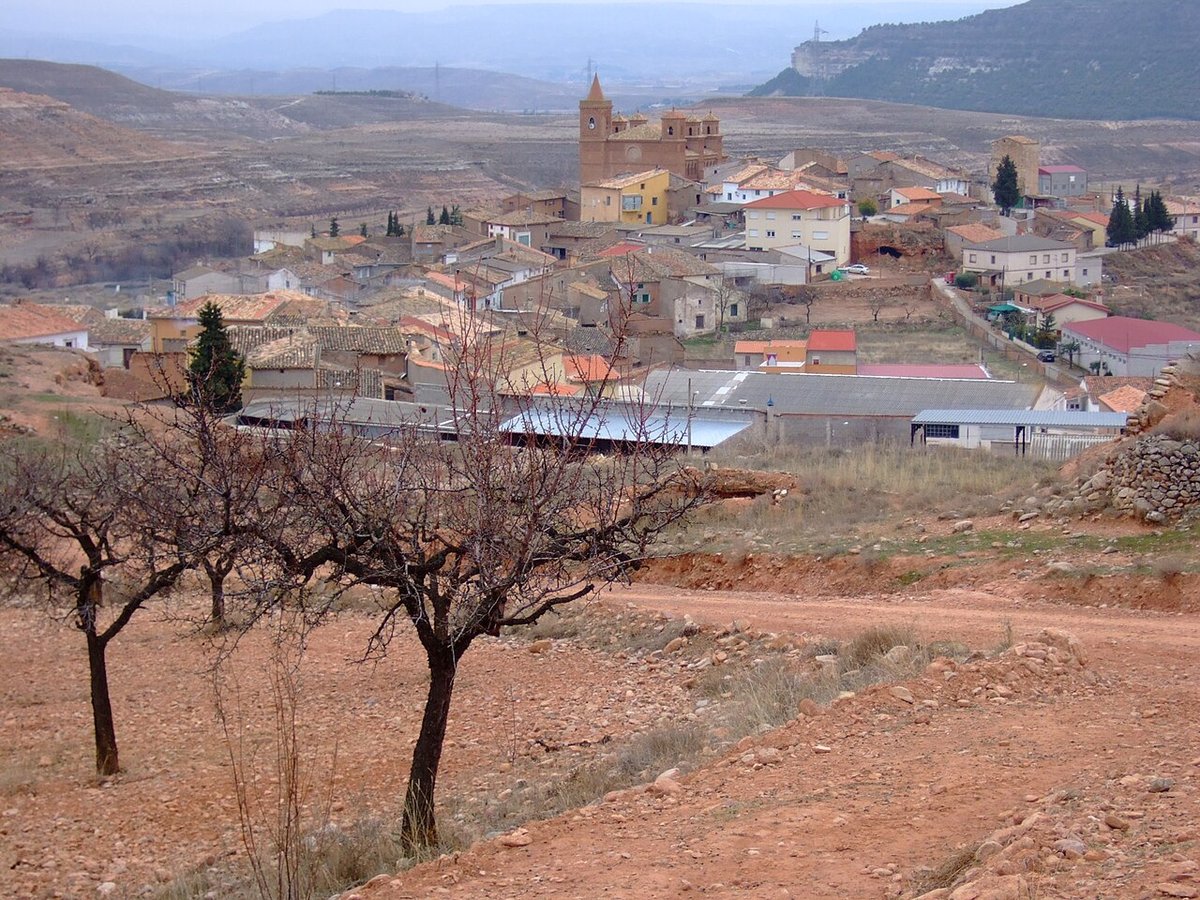
The road from Calatayud narrows to a single track just past the last filling station. Wheat fields press against the tarmac, and the only traffic sign reads "Torralba de Ribota 8 km" in peeling paint. Keep driving. When the asphalt gives way to packed earth and the village reveals itself—one street, forty-odd houses and a 15th-century church tower—you'll have arrived somewhere that geography textbooks forgot to mention.
San Félix stands at the high point of the ridge, its brick-and-tile tower visible for miles across the Ribota valley. Technically it's Mudéjar architecture, a UNESCO-listed style that survived the Reconquista, but what matters is the acoustic trick: stand beneath the tower at midday and your footsteps echo back as if someone's following you. The door is usually open; if not, cross to the bar opposite and ask Concha for the key. She'll finish drying the coffee cups first—no rush exists here.
Inside, the church is cooler than outside by a good seven degrees, a natural air-conditioning that explains why locals once stored grain behind the altar. The interior is spare: a single nave, wooden beams blackened by four centuries of candle smoke, and a retablo whose gold leaf was stripped during the Civil War. Look up and you'll see why photographers bother: the ribs of the ceiling form a perfect geometry, each joint pinned with wooden pegs instead of nails. Bring a wide-angle lens or you'll miss half of it.
Back outside, the village measures five minutes end to end. Houses are built from the same ochre stone as the hillside, giving the impression that Torralba grew out of the ground rather than being planted by human design. Many still have the original wooden balconies—tiny, barely large enough for a flowerpot, yet strong enough to support drying peppers and maize cobs each autumn. You'll notice doors painted the same indigo blue; it's a leftover tradition from when families used the cheapest pigment available—leftover railway paint shipped from Zaragoza.
There is no souvenir shop. There is no cash machine. The nearest supermarket is an eight-kilometre drive to Calatayud, so the village economy runs on IOUs and the Saturday morning market stall that sells cherries from a folding table. Prices are written on a paper plate: three euros a kilo, late June only. Leave coins in the tin; nobody watches the table.
What Torralba does have is horizon. Walk fifty metres past the last house and the land drops away into a fold of olive groves and almond terraces. From February to April the almond blossom turns the slopes white, and the scent carries on wind that has crossed three hundred kilometres of Castilian plateau. Photographers arrive for golden hour, but even they rarely stay longer than a coffee. The silence is so complete you can hear your own pulse.
For a longer outing, follow the dirt track signed "Cervera 4 km". It's an old grain-mule path, level enough for walking shoes but too stony for road bikes. Halfway along you'll pass an abandoned lime kiln, its stone mouth blackened by nineteenth-century fires. Beyond that the path dips into a ravine where bee-eaters nest in the clay banks—bright turquoise flashes against rust-red earth. Cervera appears suddenly: another tower, another handful of houses, another locked church. Turn round or keep walking; the sierra beyond is empty until lunchtime.
Summer heat can top forty degrees; visit in May or late September when the thermometers stick to a civilised twenty-five. Even then carry water—there are no fountains after the village edge. Winter brings the opposite problem: the 900-metre altitude lets snow sweep in overnight, and nobody clears the side roads. If the forecast mentions "cierzo", the notorious Aragonese wind, bring goggles; the dust it lifts stings like sand.
Food options are limited to Bar Torralba, open 07:00–15:00 and 19:00–22:00, closed Tuesday. Order a bocadillo de lomo (pork-loin baguette, €3.50) and they'll ask if you want it "con tomate". Say yes; the tomato is grated fresh, the bread rubbed with garlic, the meat grilled while you wait. Beer comes in 200 ml bottles called "quintos"—a size that made sense when farmhands had to drive tractors straight after lunch. If you need vegetables, the owner's mother keeps a vegetable patch behind the bar; she'll sell you a kilo of tomatoes for a euro, provided you accept the dirt still on them.
Accommodation doesn't exist within the village limits. Most visitors base themselves in Calatayud where the three-star Hotel Calatayud has underground parking and rooms for €65 a night. The smarter choice is the Parador de Alcañiz, forty minutes east, a converted 12th-century castle built by the Knights Templar. Either way, treat Torralba as a half-day detour rather than a destination; the pleasure lies in realising how little you need to see to feel you've left the known world.
Leave before nightfall unless you've arranged to stay—street lighting is a single row of sodium lamps that flicker like faulty pub signs. As you drive back towards the A-2, check the rear-view mirror: the tower of San Félix recedes slowly, a brick exclamation mark against an empty sky. Five minutes later it's gone, and the map shows nothing ahead but Madrid, two hours west. The effect is deliberate; Spain has plenty of grand cathedrals and Michelin-starred temples to gastronomy. What it guards less jealously is the experience of standing in a place where the loudest sound is a lark, and where history hasn't been rearranged for Instagram. Torralba de Ribota offers that, provided you arrive with a full tank and no itinerary.