Full Article
about Torre la Ribera
Ocultar artículo Leer artículo completo
Morning at 1,000 Metres
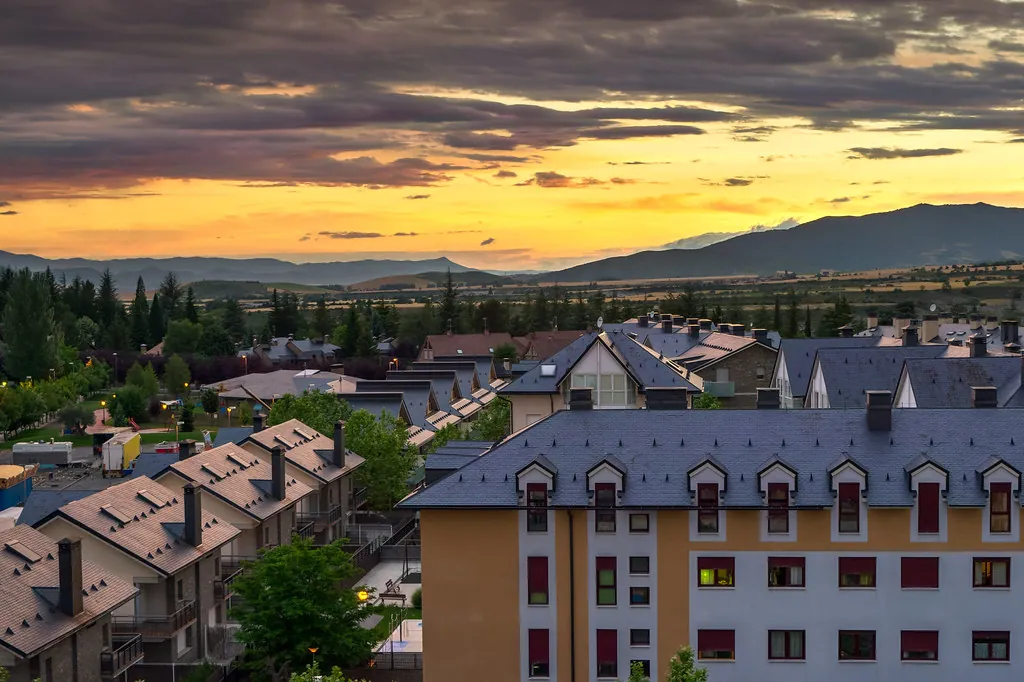
The church bell strikes seven. Within minutes, the only sounds are cowbells from the upper pastures and the occasional Renault van coughing to life. Torre la Ribera sits at 1,040 m above the Isábena valley, high enough for the air to feel thin if you've dashed up from Barcelona the same morning. Stone houses shoulder together along lanes barely two metres wide; passing a neighbour means one of you steps into a doorway. There are ninety-three inhabitants on the books, though on weekdays you might swear the number is lower.
This is not a film set. Feed sacks are stacked by front doors, a tractor half-blocks the lane to the cemetery, and yesterday's washing still drips onto geraniums. That lived-in quality is what makes the village useful to travellers who have tired of polished "heritage" towns. Come here for a base, not a checklist.
Stone, Slate and Storks' Nests
Everything is built for winter. Walls are a metre thick, windows the size of postcards, roofs weighted with slabs of local slate. The parish church of San Vicente Mártir, erected in the late 1700s after a fire, follows the same austere recipe: one nave, a timber roof, a bell turret that leans slightly west. Inside, the only flourishes are a sun-bleached fresco of the four evangelists and a brass lamp donated in 1932 by emigrants who made money in Argentina. Services are held every Sunday at eleven; visitors are welcome but hats must be removed and photographs are discouraged during the homily.
Wander downhill past the last houses and the lane turns into a dirt track that contours above the cereal plots. Within ten minutes the village is hidden and you are looking across a fold of oak and beech that glows copper in late October. There are no signposts, no entry fees, no selfie frames—just a low stone wall where you can sit while red kites circle overhead.
Walking Without Waymarks
Maps matter here. The GR-18 long-distance path passes 3 km south of the village, but the immediate web of shepherd's paths is only half-marked. A sensible outing is to follow the track signed "Borda Nostra" south-west through holm oak; after 45 minutes you reach an abandoned stone hut with views back to the Pyrenean crest that separates Aragon from France. Total ascent: 220 m. Time round-trip: two hours. In April and May the meadows are loud with skylarks; add another hour in autumn when the chestnuts tempt you to fill your pockets.
Longer routes exist, though you should download the regional 1:25,000 map first. One possibility threads east to the hamlet of Linás (abandoned 1960s, roofless church still standing) and returns via the forest road—14 km, five hours, zero facilities. Carry water; the streams run dry in July.
What You Actually Eat
Forget tasting menus. Torre la Ribera's only bar, Casa Lagar, opens at seven for coffee and keeps serving while the proprietor, Jesús, feels like working. A plate of migas—fried breadcrumbs scattered with grapes and bits of pancetta—costs €6 and will keep you walking till dusk. If you ask the day before, his wife Marisol will roast a shoulder of lamb in the wood oven (€18 pp, minimum two). Vegetarians get a tomato and onion salad; vegans should probably self-cater.
Shopping options are similarly concise. A refrigerated cabinet in the bakery sells local goat cheese wrapped in chestnut leaves and, on Fridays, a sticky almond cake called coca. For anything greener than an onion you need Benabarre, 18 minutes down the A-1605. The Saturday market there has three stalls: one for chorizo, one for honey, one for courgettes the size of cricket bats.
Seasons of Mud and Miracles
April brings melt-water streams and night frosts sharp enough to whiten windscreens. By mid-June the thermometers hit 28 °C at midday, but nights stay cool; bring a fleece even in July. September is the sweet spot: clear skies, forest mushrooms, hotel rates still off-peak. October rain turns unmetalled lanes into porridge; a car with decent clearance is wise from November to March. Snow tyres are compulsory when the red sign flashes on the approach to Bielsa—check the forecast before you set out from Zaragoza airport two hours away.
Beds, Bills and Barking Dogs
Accommodation is limited to three houses signed "habitaciones", none bookable through the usual apps. Casa Laia (doubles €55, cash only) faces the church plaza; expect church bells every hour and dogs that patrol the lane at dawn. Heating is by pellet stove—your host, Concha, will demonstrate the switch sequence in rapid Aragonese Spanish. Hot water arrives via solar panels, so evening showers after a long hike need timing.
There is no bank, no ATM, no petrol station. Cards are accepted nowhere. Fill up in Benabarre and carry small notes: a coffee is €1.20, but the till may not break a fifty.
When Everyone Returns
The population quadruples on 15 August for the fiesta mayor. A sound system appears in the plaza, and grilled sardines arrive in vats from the coast—ironic in a village 100 km inland. Visitors are handed a programme that lists processions, sack races and a dance that ends when the generator runs out of diesel. Accommodation prices stay the same, but you will be offered a mattress on someone's roof terrace if every room is taken. Book nothing; simply turn up and ask. The evening Mass is packed, the sermon mercifully short, and afterwards the priest circulates with plastic cups of mistela sweet wine. Politeness demands you accept.
Leaving Without a Fridge Magnet
Torre la Ribera will not suit travellers who require ticketed attractions or evening cocktails. What it offers is a calibrated sense of scale: a place where you can walk from one end to the other before the kettle boils, where the butcher knows how many lamb chops you ate last night, and where the night sky still looks crowded even after the village lights dim. Arrive with a pair of boots and modest expectations, and you might measure future journeys against this particular ridge.