Full Article
about Torrecilla del Rebollar
Ocultar artículo Leer artículo completo
The evening bus from Calamocha never arrives. It was cancelled years ago, leaving Torrecilla del Rebollar with only the sound of wind combing through holm-oak leaves and, somewhere below the ridge, a farmer starting his diesel pick-up. At 1,142 m the air is already cool even in July, and the village’s 121 permanent residents have learned to live with the quiet that British visitors either crave or find unnerving within an hour.
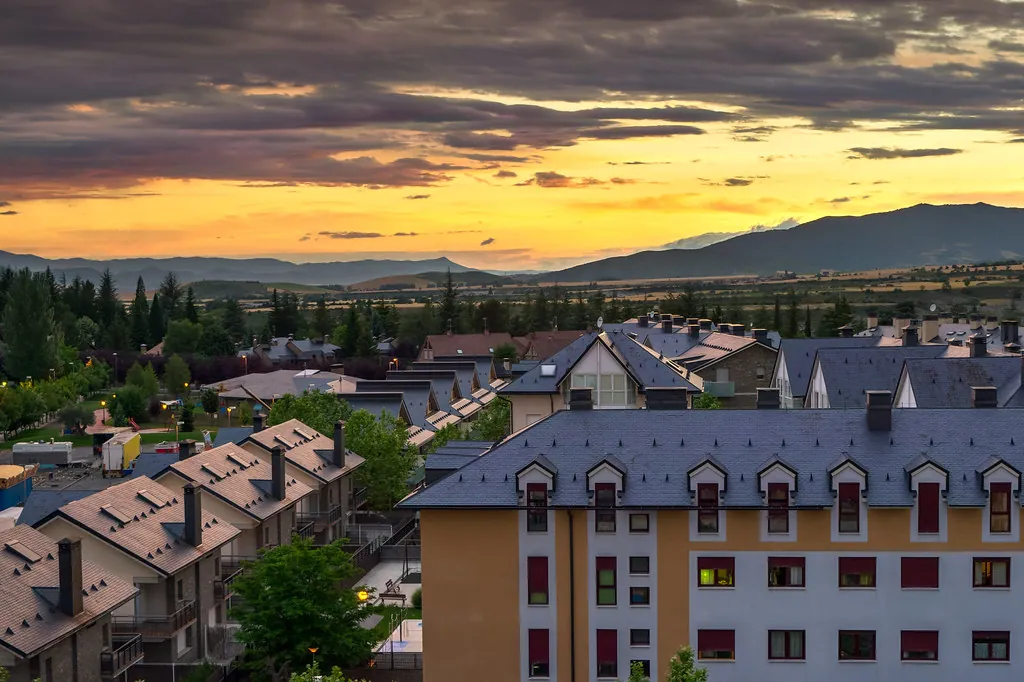
Stone houses the colour of burnt toast shoulder together along four short streets. Rooflines sag like old books on a shelf, tiles patched where winter snow loads have shifted them. There is no monumental core, no plaza mayor framed by arcades—just a modest church, a bench, and a drinking fountain that runs all year thanks to the aquifer beneath the cereal fields. Orientation takes thirty seconds; working out why you might stay longer requires a pair of walking boots and a tolerance for places that do not deliver instant spectacle.
Walking into a slower gradient
Paths leave the village as though slipping out the back door. One drops into the Barranco del Rebollar, a shallow ravine where deciduous oaks still cling on—living fossils that give the settlement its name. Another climbs gently south to the wind-sculpted pinewoods of the Cucalón foothills. Neither route is way-marked to British standards; instead you follow stone cairns placed by shepherds and the occasional stripe of faded yellow paint. In a two-hour loop you will gain—and lose—about 250 m of height, enough to feel lungs and calendar adjust to mountain time. Boot treads fill with thyme and aliaga thorns, and the only traffic is a booted eagle circling overhead.
Spring brings the sound of skylarks; autumn smells of crushed juniper and damp earth. After heavy rain the clay sections stick like treacle, and in January thin snow can glaze the north-facing track into the village, making the final kilometre dicey for ordinary hire cars. Winter visitors should carry snow socks even if the forecast looks benign; the road from the A-23 is cleared, not salted, and the sun drops behind the Sierra de Cucalón before four o’clock.
Where to eat when there is nowhere to eat
Torrecilla del Rebollar has no bar, no shop, no ATM. The last grocery closed when its proprietor turned ninety, so supplies must be bought in Calamocha twenty minutes away. Plan a picnic: a loaf from the cooperative bakery, a wedge of semi-soft Tronchón cheese, and whatever fruit looks least travel-weary. If you want a hot meal, drive to Bueña (12 km) where Casa Rufino serves ternasco de Aragón—milk-fed lamb roasted until the skin shatters like thin toffee. A quarter-kilo portion costs €14 and arrives with nothing more elaborate than roast potatoes and a jug of local garnacha tinta. Vegetarians get migas: fried breadcrumbs scented with garlic and grapes, stodge that would make sense on a Cumbrian hillside.
The village’s own gastronomy surfaces only during fiestas. On the weekend closest to 16 August the population quadruples as emigrants return. Someone produces a caldero the size of a satellite dish and fills it with rabbit, runner beans and mountain snails. Visitors are welcome to queue, but the food is cooked for the village first and late-comers may find the pot scraped clean by ten o’clock.
A church without selfies
The parish church of San Pedro opens only for Sunday mass at eleven. Its masonry is rough enough to graze a fingertip, and the bell tower doubles as a stork nursery—listen for the hollow clatter of beaks on metal during nesting season. Inside, the single-nave interior smells of candle wax and sun-warmed stone. There is no charge, no audio-guide, no gift shop selling fridge magnets. Instead you get eighteenth-century frescoes fading like damp wallpaper and a priest who, if asked politely, will point out the Roman inscription reused as building stone beside the south door. Photography is allowed; tripods are frowned upon because they echo like gunshots in the acoustic shell.
Across the lane a restored house displays a tiny interpretative panel about charcoal burning, the trade that once supplemented cereal incomes. The text is in Spanish only, but the diagrams are clear: a domed kiln, a week of controlled smoulder, charcoal worth less every year as propane canisters reached even these heights. The exhibit occupies one room and takes six minutes to absorb; it is, in its own way, the most honest heritage display you will meet in the province.
Practicalities the booking sites forget
Accommodation is the immediate headache. Torrecilla del Rebollar itself has two privately owned cottages rented by the week; both sleep four and cost around €90 a night with a three-night minimum. Booking is via WhatsApp and a Spanish deposit transfer—owners rarely answer emails within 48 hours. The safer option is to base yourself in Calamocha where the Hotel Villa de Calamocha has doubles for €65 including underground parking, then drive up for the day. Either way, mobile coverage is patchy; Vodafone picks up one bar on the plaza, EE usually none. Download offline maps before you leave the motorway.
Petrol is another consideration. The village pump closed decades ago and the nearest station is an unmanned self-service bay on the A-23 slip road—bring a chip-and-pin card, not a contactless phone, or you will join the small queue of sheepish foreign drivers waving expired Santander debit cards. Fill up before 20:00 when the automatic shutters roll down.
When to come, when to stay away
May and late September offer the kindest light for photographers and the fewest biting flies. Daytime highs hover around 22 °C but nights drop to 8 °C; pack a fleece and you can walk for six hours without meeting anyone except the local shepherd on his Honda 90. July feels perfect at midday (28 °C) until you realise the altitude UV; sun-cream is essential even for Brits who think they tan. August weekends belong to returning families, cars double-parked on the single through-lane, radios competing with the storks. If solitude is the goal, avoid those two days.
Winter has its own austere appeal—snow-dusted roofs against a cobalt sky—but services shrink further. The cottages have wood-burning stoves yet no delivery of logs; you are expected to buy a 10 € sack from the farmer whose number is taped inside the kitchen cupboard. Without four-wheel-drive you may spend an icy morning digging a wheel-track while the village dogs watch in silence.
Leaving the quiet behind
By nine o’clock the sun has slipped behind the ridge and the temperature free-falls. Headlamps pick out moths the size of two-euro coins bouncing in the beam. The only café within 15 km has shut its shutters, so you start the engine and coast down the serpentine A-1512, engine braking through black tunnels of pine. Halfway down you pull over, cut the lights, and look back: a single yellow bulb outside the church, nothing else. Torrecilla del Rebollar is not hiding; it is simply there, at altitude, waiting for travellers who measure value in silence rather than attractions ticked off a list. If that sounds like punishment rather than privilege, book somewhere livelier. If it sounds like relief, bring good boots and a full tank.