Full Article
about Torrijas
Ocultar artículo Leer artículo completo
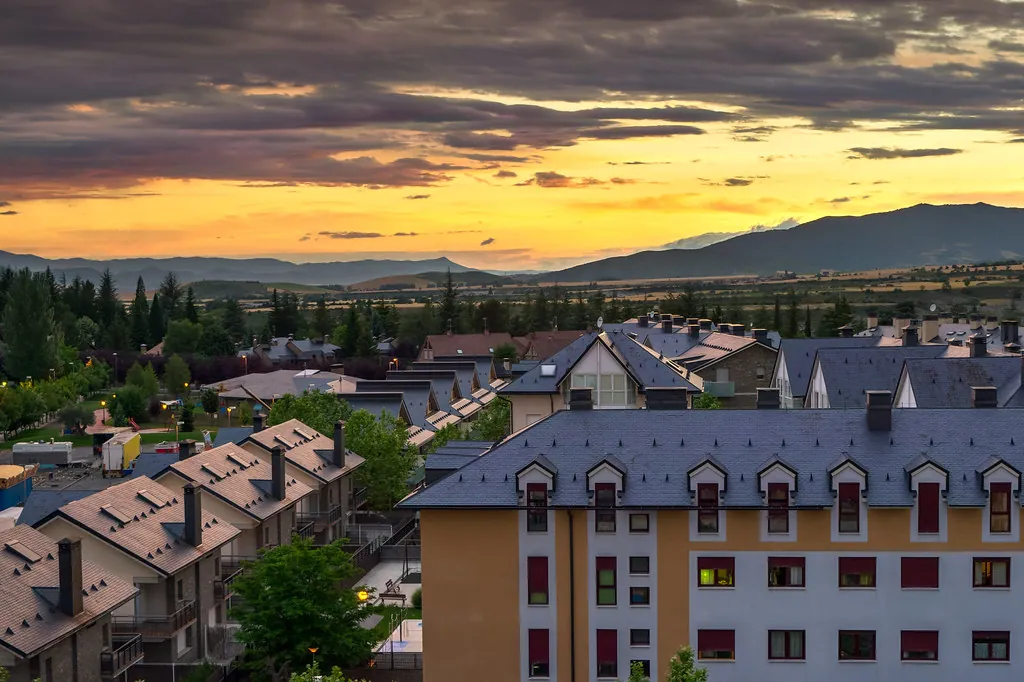
The stone houses appear suddenly after twenty minutes of hairpin bends, their slate roofs glinting like fish scales in the thin mountain light. Torrijas doesn't announce itself with signposts or souvenir shops—it simply materialises at 1,359 metres, a cluster of grey buildings clinging to a ridge in the Sierra de Gúdar-Javalambre, with the entire province of Teruel spread below like a crumpled green blanket.
The Arithmetic of Mountain Life
Thirty-five souls. That's the year-round population, roughly equivalent to a single carriage on the London Underground's Central line, except here the nearest neighbour might be three kilometres away. The maths works differently at altitude: distances stretch, time contracts, and the silence becomes so complete you can hear your own heartbeat echoing in your ears.
The village's name confuses every Spanish visitor who arrives expecting the eponymous Easter dessert. Instead they find a working mountain settlement where farmers still move sheep along ancient drove roads and the church bell marks time more reliably than any mobile phone signal. Mobile coverage, incidentally, disappears entirely somewhere around the 1,200-metre mark—download your maps before leaving the lowlands.
Morning brings the Gúdar's peculiar weather phenomenon: clouds boiling up from the valley floor below, creating the illusion of living on an island adrift in a white sea. By eleven o'clock they've usually burned off, revealing a landscape that drops away so sharply it's best not to stand too close to the edge if heights aren't your thing. The air carries a medicinal sharpness, thin enough that climbing the steep lanes to the church leaves unacclimatised visitors puffing like steam trains.
Stone, Snow and Survival Architecture
The parish church squats at the village's highest point, its rough-hewn stone walls and single-arched bell tower typical of Aragon's mountain ecclesiastical architecture. Inside, the retablos tell their own story of isolation: crude but heartfelt paintings of saints whose faces have been worn smooth by centuries of devotional touching, colours faded to the muted tones of a water-damaged watercolour.
Every house speaks the same dialect of survival. Walls built from locally quarried stone, two feet thick minimum, keep interiors cool during summer's fierce heat and retain warmth when winter's grip tightens. The distinctive Arab tiles, curved like shallow bowls, lie heavy on the roofs—necessary ballast against winds that can reach eighty miles per hour during winter storms. Wooden balconies, where they survive, face south to catch every precious ray of winter sunshine. It's architecture evolved through necessity, not aesthetics, though the result possesses its own austere beauty.
Winter transforms the village into something approaching a Arctic settlement. Snow arrives in November and often lingers until April, transforming the narrow lanes into white tunnels between houses. Access becomes increasingly perilous: the road from Mora de Rubielos, perfectly reasonable in summer, becomes an Olympic-level driving challenge. Chains become mandatory, not optional, and the sensible leave a vehicle at the bottom of the hill rather than risk the final ascent. The reward? Silence so absolute it seems to press against your eardrums, and night skies so clear the Milky Way appears close enough to touch.
Walking Into Nothing
The real attraction lies beyond the last stone wall. Wild pine forests, predominantly Scots and maritime varieties, surround Torrijas in every direction, their floor carpeted with needles that muffle footsteps to nothing. Walking options range from the gentle—a twenty-minute stroll to the mirador with views across three valleys—to the properly ambitious, following ancient drove roads that eventually connect with the long-distance GR footpath network.
Wildlife watching requires patience and dawn starts. Roe deer pick their way through the undergrowth like grey ghosts, while wild boar root noisily in the depths of the forest. Golden eagles ride the thermals above the ridge, their six-foot wingspans casting moving shadows across the mountainside. Autumn brings mushroom hunters armed with wicker baskets and an encyclopaedic knowledge of edible versus deadly—a skill worth acquiring before attempting to join them.
The forest changes personality with the seasons. Spring arrives late at this altitude, usually mid-May, transforming the understory into a riot of wildflowers. Summer brings respite from lowland heat—the temperature drops roughly one degree for every hundred metres climbed, making Torrijas a natural air-conditioning unit. October paints the deciduous oaks and beeches in colours that would make a Cotswold village jealous, though here the display comes without tour buses or admission charges.
Eating on the Roof of Teruel
Food follows mountain logic: substantial, warming and designed to fuel days of physical labour. The local speciality isn't available in restaurants because there aren't any—Torrijas supports precisely zero commercial eateries. Instead, the village's few visitors eat in Mora de Rubielos, twenty-five minutes down the winding road, where restaurants serve the hearty mountain cuisine: game stews thick enough to stand a spoon in, cured sausages that taste of smoke and thyme, and honey from bees that spend their summers working the high-altitude thyme and lavender.
Self-catering becomes essential for anyone staying locally. The nearest shop of any description sits twelve kilometres away in Rubielos de Mora, so shopping requires military-level planning. Bring everything, or learn to live on what you can carry. The altitude affects more than just breathing—water boils at a lower temperature here, so adjust cooking times accordingly or resign yourself to crunchy pasta.
Practical Reality Checks
Getting here requires commitment. From Valencia airport, it's two hours of increasingly vertical driving. From Madrid, add another hour. The final approach involves roads that would make a rally driver think twice, particularly after dark when encounters with wild boar become statistically likely. Car hire becomes essential rather than optional—public transport stops existing somewhere around Mora de Rubielos, and taxis consider the Torrijas road an unreasonable request.
Accommodation options within the village itself number exactly zero. The sensible stay in Rubielos de Mora or Mora de Rubielos, both proper towns with restaurants, shops and heating systems designed for humans rather than museum exhibits. Day trips work perfectly well, though leaving before dusk becomes advisable during winter months when the road transforms into an ice rink.
Weather demands respect. Even July nights can drop to single figures, and the temperature differential between sun and shade reaches Mediterranean proportions. Pack layers, waterproofs and sturdy footwear regardless of season. The mountain creates its own microclimate—perfect sunshine in the valley becomes thick fog at village level with depressing regularity.
Torrijas offers no entertainment beyond what you bring with you. No bars, no museums, no guided tours, no Wi-Fi, no mobile signal. Just stone, silence and space in measures that most British visitors find initially unsettling, then addictive. It's a village that asks questions rather than providing answers: how much noise do we actually need? How connected must we be? How much stuff is enough?
The thirty-five residents have heard it all before. They've watched weekenders arrive with city expectations and leave with mountain realisations. They know that Torrijas isn't for everyone—and that's precisely the point.