Full Article
about Undues de Lerda
Ocultar artículo Leer artículo completo
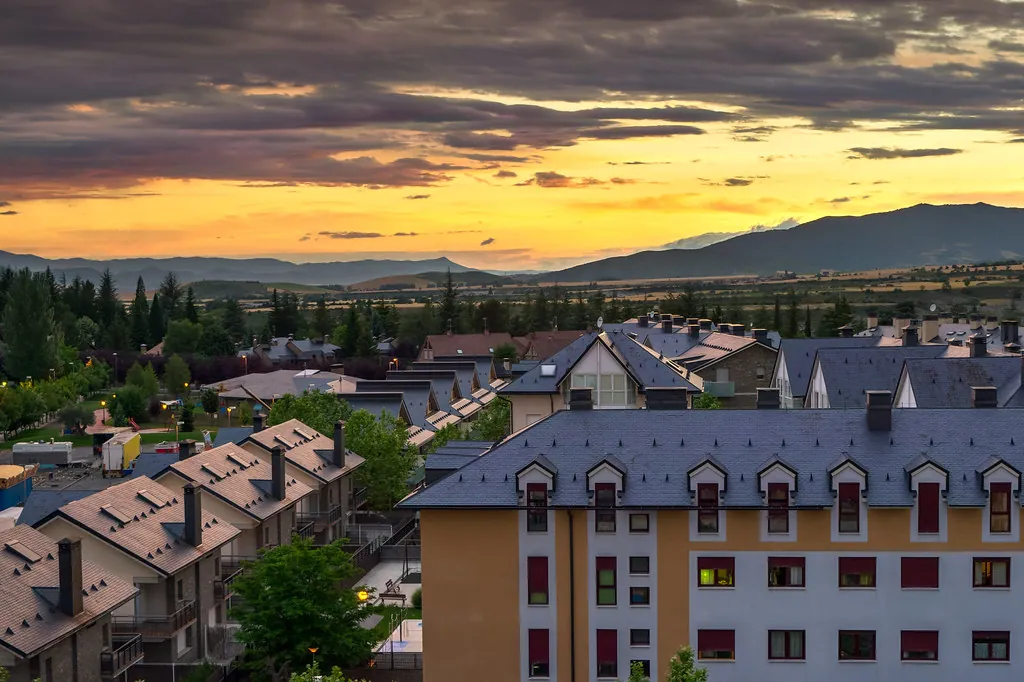
At 633 metres, the morning air bites sharper than you'd expect for southern Aragon. Undués de Lerda's stone houses—barely fifty of them—sit shoulder-to-shoulder on a ridge, angled so the north wind funnels straight up from the Bardenas Reales and smacks the church bell. The clang carries for miles across empty wheat fields. No traffic, no café terrace chatter, just the bell and the wind. That's your alarm clock here; mobile service drifts in and out, so don't rely on one.
The Village that Forgot to Shout
Guidebooks tend to stop at nearby Sangüesa, 11 km east on the N-121. They shouldn't. A minor road (the A-1602) peels off just after the Yesa reservoir, wriggles through poplars, then climbs for fifteen minutes until the cereal plateau suddenly tilts skyward and Undués appears, a charcoal-grey smudge against biscuit-coloured stubble. Parking is simple: pull in beside the sixteenth-century Iglesia de San Martín—no meters, no permits, no queues. Open the door and the silence is almost physical; British visitors routinely report their "best night's sleep in Spain" precisely because nothing stirs after 22:00 except the odd tractor heading home.
There are no boutique hotels, no gift shops selling fridge magnets. Accommodation is the municipal albergue (€12, open all year except three weeks in November; ring +34 948 888 105 to check winter availability). Rooms are clean, heated, and the hospitalero will happily unlock the kitchen for cyclists who phone ahead. If dorm life isn't appealing, the nearest casas rurales are in Undués itself—two properties, four bedrooms each, around €80 a night. Book early in fiesta week (mid-August) when returning families double the head-count and the village actually registers decibels above whisper-level.
Walking Lines through Wheat and History
Footpaths radiate like dry-stone spokes. The shortest loop (5 km, way-marked with yellow arrows) dips past threshing circles, skirts a ruined ice-house—built in 1592 to store snow hauled from the Pyrenees—then climbs back through rosemary and immortelle. Longer tracks link to the Camino de Santiago Aragonés; from Undués you can reach the medieval bridge at Lerga in two hours, sip a cortado, and still be back for lunch. Sturdier boots open the Sierra de Leyre, 14 km north, where vultures ride thermals above beech woods. Maps are sold in Sangüesa pharmacy; locally, rely on the albergue's photocopied sketch and the fact that every farmer knows the way even if Google doesn't.
The Roman road on the western approach is two millennia old and lethally slippery when wet. Trekking poles help; otherwise walk on the grassy verge and save yourself an undignified sprawl witnessed only by skylarks.
Plain Plates, Honest Prices
Undués itself offers a single bar-restaurant attached to the albergue. The menu surprises pilgrims with Asian-style noodles alongside the expected lentejas and cordero al chilindrón. A three-course menú del peregrino costs €12 and usually runs: vegetable soup, chicken escalope or trout, yoghurt or flan. Wine from neighbouring Navarra arrives by the glass—softer than Rioja, dangerously gluggable. Vegetarians manage, but coeliacs should pack emergency snacks; the tiny village shop (open 09:30-13:00, 16:30-19:00, closed Sunday afternoon) stocks UHT milk, tinned tuna and little else. Last supermarket is in Sangüesa; plan accordingly or you'll breakfast on crisps.
If you visit in February, you might catch families roasting chorizos on vine prunings behind their houses. Politeness is to admire the smoke and wait to be offered a slice; payment in conversation is preferred.
Seasons of Gold and Rust
Spring steals in late—fields flush green in April, almond blossom flickers white against red soil. Temperatures hover round 14 °C, perfect for walking, though showers sweep in fast; carry a light waterproof. Summer turns serious: July regularly tops 32 °C by noon, but the altitude means nights drop to 17 °C, so evening strolls remain pleasant. Shade is scarce away from the village; start early, siesta late. Autumn is photographers' favourite: stubble fields glow ochre, storks gather on the reservoir, and the light turns buttery. Winter is crisp, often snowy, and utterly quiet. The road is usually gritted, but the final 4 km can ice over; chains or a sturdy hire car are wise between December and February.
What You Won't Find—and Might Miss
There is no ATM, no petrol station, no pharmacy. The nearest cashpoint is in Sangüesa; credit cards are accepted at the bar, but bring euros for the albergue donation box and the vegetable van that rattles through on Tuesdays. Mobile data flickers between Vodafone and Orange; Movistar users fare best on the ridge above the cemetery. If that sounds like hardship, remember the pay-off: you can stand on the escarpment at dusk, watch the Pyrenees flush pink, and hear nothing but a distant dog and the wheat rustling like dry paper. For some travellers that emptiness is unnerving; for others it's pure antidote to the Costa bustle.
Leave time for the small things: the Roman salt pans 1 km south (look for rectangular hollows in the pasture), the Gothic window frame recycled into a farmhouse wall on Calle Nueva, the 1940s copper still in Domingo's barn—he'll show you if you ask nicely. These fragments don't shout "heritage," but they piece together a village that has been occupied, abandoned, repopulated and stubbornly maintained for over a thousand years.
Getting There and Away
From Zaragoza, take the A-68 towards Pamplona, exit at Mallén, then follow the N-125 through Tauste and towards Sangüesa. After 42 km turn left onto the A-1602 signed for Undués; the road narrows, climbs and delivers you in 12 minutes. Total driving time from Zaragoza is 90 minutes; from Pamplona it's 55. Buses reach Sangüesa twice daily from both cities; after that you're hitch-hiking or ringing the albergue for a lift—pre-arrange, don't assume.
If you expect nightlife, shopping, or Michelin stars, keep driving. If you want to reset your body clock to agricultural time, Undués de Lerda asks only that you walk gently, speak softly, and clear your table when you finish. The wind will do the rest.