Full Article
about Valdelinares
Ocultar artículo Leer artículo completo
At 1,692 m, Valdelinares is the highest municipality in Spain. Stand on the edge of the village on a clear morning and the Mediterranean glints 80 km away while the Ebro valley dissolves into a white cotton sea at your feet. The air is thin enough to make you light-headed, and the temperature can be ten degrees cooler than Teruel city on the plain below. This is not a place that happens to be high; it was built precisely because the altitude offered summer pasture and clean lungs for tuberculosis patients in the 1920s.
Stone, Snow and Silence
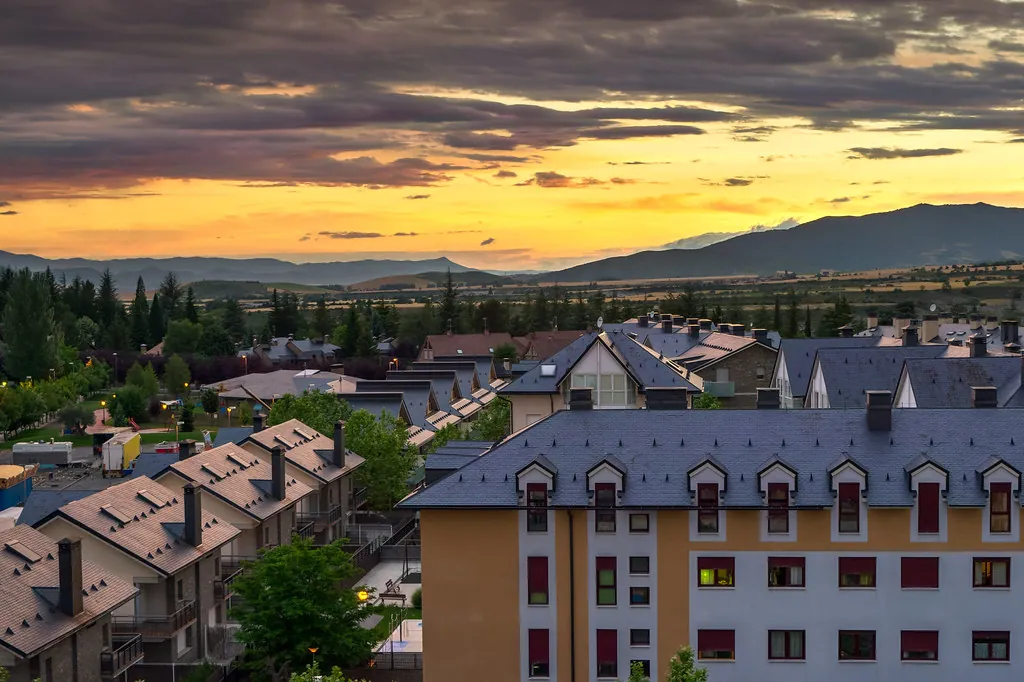
The village clings to a south-facing shelf of the Sierra de Gúdar, a ridge of dark schist and black-pine forest that feels closer to the Pyrenees than to the olive groves of coastal Castellón. Houses are squat, stone-built and roofed with heavy slabs of slate designed to shrug off snow. Chimneys puff wood-smoke from October to April; electricity bills rise sharply because every kilowatt of heat has to be dragged up a 25-km mountain road that twists through 1,000 m of climb.
There is no medieval castle, no Renaissance plaza, no postcard arcades. The single lane that serves as High Street is barely two cars wide and ends abruptly at the 18th-century church of San Roque, its baroque tower more useful as a weather vane than as a monument. Inside, the retablo is carved from local pine, painted in the sober ochres of a place that distrusts ostentation. The building is unlocked only for Saturday Mass; the key hangs on a nail in the bar opposite.
Population fluctuates with the school calendar. In winter the place is home to 78 registered souls, plus whichever ski instructors have managed to rent the apartments that line the upper street. August swells the numbers to perhaps five hundred, most of them second-home owners from Valencia who drive up on Friday night with supermarket cool-boxes and leave again before Sunday lunch. Between those weekends the village reverts to a soundtrack of wind in the pines and the occasional clank of chair-lift cables on the far ridge.
Walking Above the Clouds
Leave the church door, turn past the last house and you are immediately on a forest track that climbs into the Pinares de Valdelinares. The route is way-marked but not manicured: expect loose shale, patches of residual snow in May and the sweet smell of resin baking in the sun. After 45 minutes the treeline breaks and you reach the Collado de las Alforjas, a grassy col at 1,950 m where griffon vultures cruise at eye level. Carry on another hour and the path tops out on Peñarroya (2,018 m), the highest point in Teruel province. On a hazy day you can pick out the blue stripe of the coast; after rain the view stretches to the Moncayo massau near Zaragoza.
The circuit back to the village is 12 km and takes four hours at British walking pace—allow five if you stop to photograph every frost-rimed cowpat. Boots with ankle support are advisable; the stone is sharp and the shade keeps the ground slick until midday. Mobile reception is patchy above 1,800 m; download the IGN Spain 1:25,000 map before you set off.
Winter converts the same tracks into snow-shoe trails. The season usually runs from mid-December to late March, though a warm southerly can strip the slopes in 48 hours. When it is good, the snow is dry and squeaky, perfect for Nordic skiing. The village itself has no hire shop; arrange gear in Mora de Rubielos (30 min drive) or book through Aramón at the resort base in Aramón Valdelinares, five minutes up the hill. The ski area is modest—12 km of piste served by four chair-lifts—but uncrowded except during Spanish half-term (week of 6 February in 2025). Weekday lift passes cost €38; queues are rare enough that you can ski back to the barrier, swipe your card and be on the next chair within five minutes.
What You’ll Eat and Where You’ll Sleep
Evening options are limited to three restaurants, two of which double as cafés at breakfast. The cooking is mountain-plain: cordero al horno (lamb shoulder slow-roasted with garlic and bay), migas fried in chorizo fat, and thick vegetable soups that arrive with a slab of local bread. Vegetarians can usually negotiate a setas revueltas—scrambled eggs with wild mushrooms—provided the harvest has been decent. Expect to pay €14–€18 for a main; wine is poured from a 1-litre carafe and costs €6. The truffle pizza at La Trufa Negra in nearby Mora de Rubielos is worth the half-hour drive if you need a break from meat.
Accommodation is almost entirely self-catering apartments built in the 1990s ski boom. They are warm, functional and booked solid from 20 December to 6 January. A two-bedroom flat sleeps four and costs around €120 per night in peak season, falling to €70 once the snow melts. There is no hotel, no youth hostel, no campsite. The nearest chemist and cash machine are in Mora de Rubielos; fill your prescription before you drive up because the mountain road is not a journey you want to repeat in a snowstorm.
Getting There and When to Bother
Valencia airport is the logical gateway. Take the A23 north-west, fork right at Barracas and follow the TE-V-9031 for 26 km of hairpins. The asphalt is good but narrow; meeting a timber lorry on an inside bend concentrates the mind. Chains are compulsory between November and April—rent them at the airport if your hire agreement allows. Total driving time from Valencia terminal to apartment door is 2 h 15 m in summer, add 45 min if the snowploughs are working.
Spring is the sweet spot: meadows full of narcissus and wild thyme, daytime 15 °C, nights cold enough for a log fire. October brings scarlet rowan berries and the first frost; by November the village smells of wood-smoke and damp pine. July and August offer respite from coastal heat—expect 24 °C at midday—but the sun is fierce at this altitude; burn time is under 15 minutes without protection.
The Honest Verdict
Valdelinares will not entertain you. It offers space, silence and a chance to walk above the clouds, but you must bring your own amusement: books, board games, a tolerance for early nights. If you need artisan boutiques or evening cocktails, stay on the coast. If you fancy skiing without the Alps price tag and can live with small-resort statistics, the village delivers crisp snow, empty lifts and a bar where the barman remembers how you like your coffee on the second morning. Come prepared, lower your expectations of urban comfort and you may find that 1,692 m is exactly the right altitude to remember what stillness sounds like.