Full Article
about Valle de Bardaji
Ocultar artículo Leer artículo completo
The church bell strikes noon, yet only two cars pass through Valle de Bardají in the following hour. One carries a farmer returning from Graus with feed sacks; the other, a British couple who've driven 125 kilometres from Zaragoza airport and are now wondering if they've taken a wrong turn. They haven't. The village—scattered across three tiny hamlets—simply doesn't do crowds.
What Passes for a Centre Here
Valle de Bardají isn't one settlement but a loose federation of stone houses clinging to a fold in the Prepirineo. Aguascaldas, Biescas and Llert together house seventy permanent residents, though you'd be hard-pressed to spot them. The only commercial heartbeat is Comercio Bardají, a single-room shop that opens 9–1, closes for siesta, then unlocks again 5–7. Miss those windows and you'll go without morning bread; Monday the door stays shut entirely.
Inside, the stock is proudly local: Ribagorza lentils, Sobrarbe chorizo milder than its southern cousins, and goats' cheese from Tierrantona sold in waxed paper. Ask for directions and the proprietor will produce a photocopied walking map that predates GPS. Take it. Phone signal vanishes within two kilometres of the village, and Google assumes most of these tracks don't exist.
Walking Into the Past
The best way to understand the place is to follow the old mule paths that once linked winter settlements to summer pastures. From Biescas a marked trail climbs 250 metres to a ruined borda—a stone barn whose slate roof collapsed under snow decades ago. The ascent takes forty minutes; the views stretch south across the Isábena valley to a saw-edge of limestone peaks. Nobody charges admission, nobody sells postcards, and you're unlikely to meet another walker mid-week.
Paths are way-marked sporadically: a stripe of yellow paint here, a cairn there. After rain the clay becomes treacle; in October chestnut husks carpet the ground like spiky sea-urchins. Proper boots are non-negotiable, and carry water—the stone troughs beside the trail are picturesque but often dry by June.
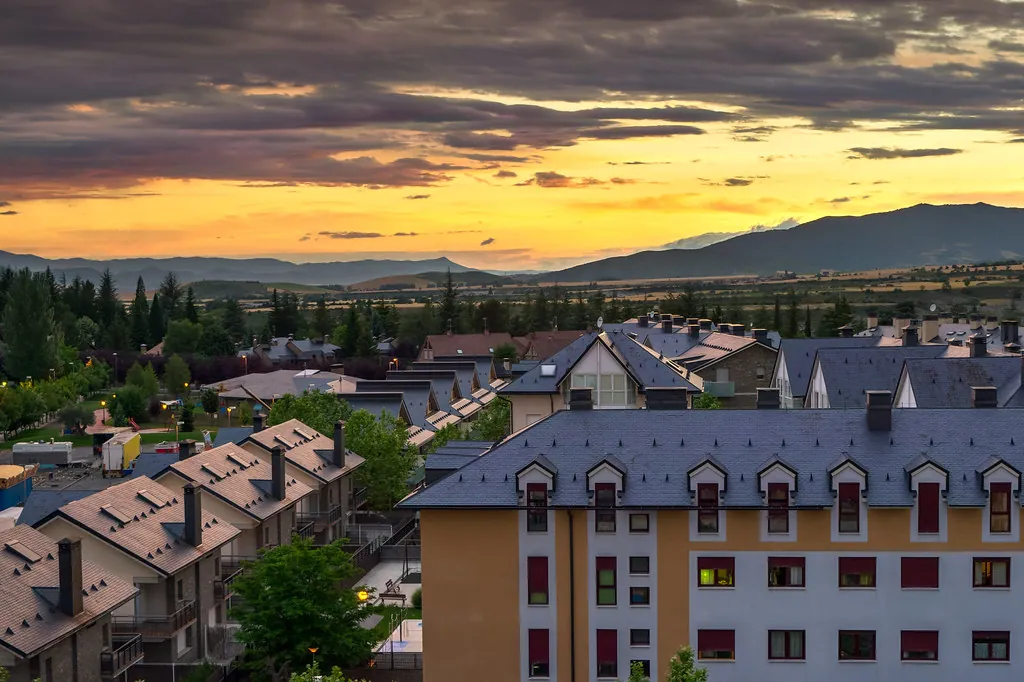
Evening brings the valley's quiet miracle. At 1,100 metres, above the light haze of the Ebro basin, the sky darkens to an inky violet. With no streetlights for twenty kilometres, the Milky Way emerges in embarrassing detail. An inexpensive pair of 10×50 binoculars will show the Andromeda galaxy from the track behind the church. Bring a red-filtered torch; white light feels almost vulgar.
Seasons That Dictate Terms
Spring arrives late. Oaks leaf out in mid-April, followed by a brief, explosive flowering of wild peonies on southern slopes. Daytime temperatures hover around 18 °C—perfect for the four-hour loop that links all three hamlets via an abandoned threshing floor. Night frosts are possible until May, so pack a fleece even when Huesca basks in 25 °C sunshine.
Summer is the busiest season, meaning you might share the village with a dozen visitors. Families rent the handful of casas rurales, children splash in the stone trough converted to a paddling pool, and the shop extends evening hours. Temperatures top 30 °C by day but drop to 15 °C after midnight; sleep is easy without air-conditioning. The fiesta mayor, usually the second weekend of August, fills the single bar with descendants who've migrated to Zaragoza or Barcelona. A communal paella feeds sixty people from one pan; bring your own spoon and a donation towards the wine.
Autumn is the photographer's window. Beech woods on the northern slopes turn copper in mid-October, contrasting with the grey-green of abandoned olive terraces. Morning mist pools in the valley bottom; by 11 a.m. thermals lift it to reveal a patchwork of ochre and rust. This is also hunting season—wear high-visibility clothing at weekends, and expect shotgun echoes to roll between the ridges.
Winter divides opinion. Snow arrives anytime after December; the final 8 km access road is gritted but never guaranteed. Daylight lasts barely nine hours, and the thermometer can dip to –8 °C. Yet the silence is absolute, broken only by the croak of ravens. If the road is clear, you'll have the entire valley to yourself. Book accommodation carefully—Casa Rural El Chinebro in Biescas keeps its wood-burner stocked, but the nearest restaurant is 15 km away in Boltana.
Eating (and Not Eating) Locally
Forget tapas trails. Evening meals happen behind wooden shutters, and invitations are extended only after you've bought cheese twice. The practical option is to self-cater. Graus, fifteen kilometres south, holds a Friday market where stallholders sell unwashed carrots, Pyrenean honey and small game birds that still wear their feathers. Pick up a kilo of tempranillo for €4; the village has no off-licence.
If you must eat out, drive to Boltana's Hotel Monasterio, a converted seventeenth-century monastery whose restaurant serves lamb shoulder slow-roasted with rosemary and local thyme. Three courses cost €24; book ahead even in low season because Spanish weekenders treat it as a destination.
Getting It Wrong, Then Right
Most British visitors arrive with one of three assumptions: public transport will be available, the village will contain at least one café, and mobile mapping will suffice. Disabuse yourself quickly. The last bus passed through in 2012. Monday's shuttered shop will leave you breakfast-less unless you've stocked up. And your OS-style appreciation of rights-of-way won't help when a path forks at an unmarked boulder field.
Hire a car at Zaragoza airport (Ryanair from Stansted, two hours). Fill the tank before leaving the motorway; the final climb from Campo burns more fuel than the map suggests. Download offline maps, then ignore them in favour of the paper one from the shop. Allow forty minutes for the final 15 km—curves are tight, and encountering a tractor around a blind bend is not hypothetical.
Leaving Without a Souvenir
Valle de Bardají won't sell you a fridge magnet. What it offers instead is a calibration of scale: seventy souls, three hamlets, one shop, zero traffic lights. Drive out at dawn and the valley recedes in the rear-view mirror like a half-remembered tune—simple, stubborn, refusing to speed up for anyone. Most visitors spend two nights; a handful stay a week and return the next year with groceries already packed. They understand the village's unspoken bargain: bring your own entertainment, respect the quiet, and the mountains will do the rest.