Full Article
about Veracruz
Ocultar artículo Leer artículo completo
The church bell strikes eleven and only the dogs notice. From Veracruz's single street you can see three ranges of empty hills folding into each other like crumpled paper, and somewhere far below a tractor coughs once, then gives up. At 1,100 metres this is balcony-country: the village sits on a limestone lip that lets the whole of Ribagorza spread out beneath it, but keeps the modern world at arm's length. Eighty souls, stone roofs thick enough to shrug off winter, and silence that actually has weight.
Stone, Slate and the Art of Staying Put
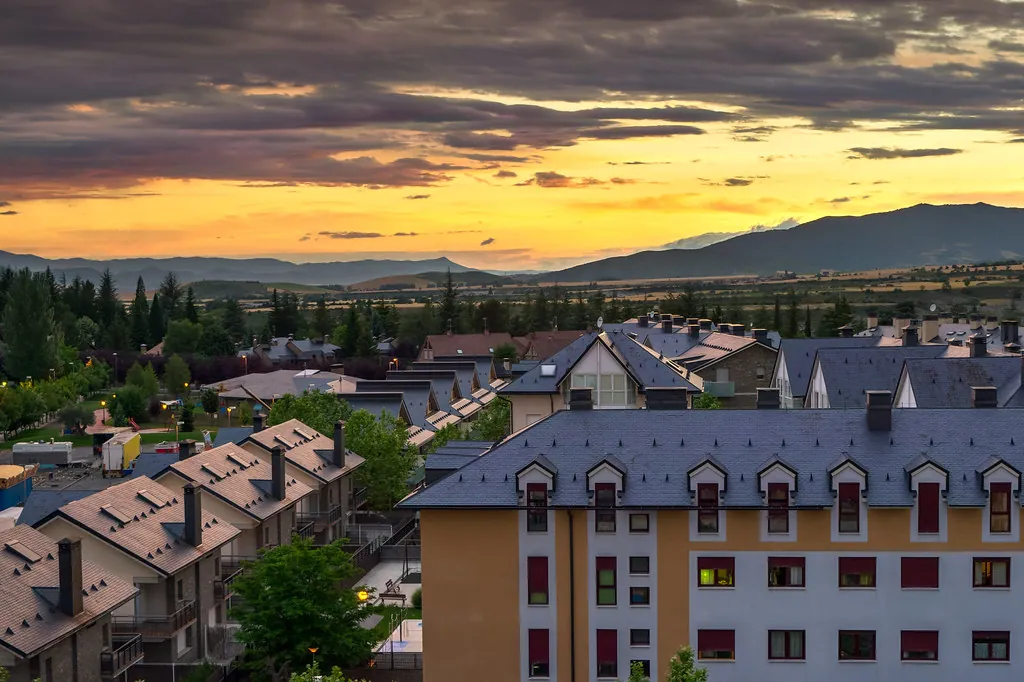
Every house here wears the same uniform: grey local stone, slate tiles pinned with the odd patch of moss, windows the size of postcards. Walls are a metre thick; you feel the temperature drop when you step through a doorway. These aren't holiday cottages tarted up for weekenders – they're working buildings that have watched centuries come and go and decided none of them were worth changing for. Peek over a low wall and you'll still find vegetable plots, chicken coops, woodpiles stacked with the mathematical precision of someone who knows how long January lasts at this altitude.
The church tower punches up from the ridge line, no frills, just a rectangle of stone with a bell and a weather vane that actually works. Inside it's cool even at midday, the floor worn smooth by boots that have walked in from surrounding fields for longer than anyone can remember. There's no ticket office, no multilingual boards, just a notice asking you to close the door quietly because the neighbour's cows startle easily.
Wander downhill past the last house and the track turns into a farm lane between low walls. Within five minutes tarmac feels like a rumour. The footpaths here pre-date ordnance survey maps; they're the routes people took to reach scattered fields, summer pastures, the next village for market day. Some peter out in a meadow, others keep going right across the sierra. Waymarking is sporadic – a splash of paint on a rock, sometimes nothing at all – so carry the map you told yourself you wouldn't need.
Light, Leaf and the Smell of Cold Air
Come in late October and the beech woods below town ignite: copper, rust, ember-orange. The slope catches morning sun and the whole hillside steams gently, frost lifting in thin ribbons. An easy two-hour loop drops from the cemetery gate, follows an irrigation ditch through oak and hazel, then climbs back past stone huts whose roofs collapsed decades ago. You might meet a hunter with a scruffy dog, or an elderly couple gathering chestnuts in plastic buckets, but no crowds. The village is the car park, and on weekdays yours might be the only one.
Spring arrives late and in a hurry. One week the hills are brown, the next they're fluorescent with new grass and the air smells of wild thyme. This is when the GR-15 long-distance trail becomes irresistible: it passes just above Veracruz, threading through meadows loud with cowbells. A stiff five-hour walk south-east gets you to the abandoned village of Paúles, roofs gone but stone terraces still clamped to the hillside like limpets. Take water – there's none on the ridge – and remember that weather can gallop in from the Atlantic faster than you can say "waterproof".
Summer nights cool fast. Even in August you'll want a jumper once the sun drops behind the western ridge, and by midnight the temperature can dip below 15°C. Locals treat the evening paseo as serious business: up the lane, past the last streetlamp (there are three), stand at the bend where you can see the lights of El Pueyo de Araguás glimmering 600 m below, then turn back before the chill settles. Silence is so complete you hear your own pulse.
Food that Knows the Forecast
Don't expect restaurants with English menus. There aren't any. What you will find is the village bar, open when the owner feels like it, serving coffee that could float a spoon and tapas that change with the season – wild-boar stew in winter, mountain rice with snails when spring rains coax them out. Cheese comes from a flock of thirty sheep grazed on the slopes above town; the shepherd sells it from a fridge in his garage, €8 a wheel, cash only. If you're staying more than a day, ask about the bread lady: she delivers loaves twice a week in an old Renault, honking once so people know to come out.
For a proper meal you'll need wheels. Drive twenty minutes to Graus on the valley floor and you can choose between family bars grilling local trout or a Saturday market that sells everything from saffron to shotgun cartridges. Try the longaniza de Graus, a pork sausage scented with mountain herbs; it keeps for days in a rucksack and tastes better at altitude. Stock up before you head back – Veracruz has no shop, and the nearest supermarket is half an hour away on roads that demand full attention.
Getting There, Getting Out, Getting Cold
From Huesca the A-22 speeds north until the mountains say "no further", then it's the N-123, a wriggle over the 1,350 m Puerto de Monrepós, followed by the A-1605, a strip of tarmac that feels like someone's private driveway. Allow two hours for the 120 km, more if the high section is white – snow gates close without ceremony and the diversion adds an hour. Winter tyres are not legally required but you'll be grateful for them; the final 4 km climb to Veracruz faces north and holds ice like a grudge.
Buses? Forget it. The weekday service from Barbastro to El Pueyo stops five kilometres short and doesn't run on Sundays. Hitching works, slowly, but don't rely on it if weather is turning. A hire car from Zaragoza airport (two-and-a-half hours) is the realistic option; fill the tank before you leave the valley – the village has no petrol station and the closest is back down the hill.
Accommodation is limited to three self-catering houses rented out by families whose children now live in Huesca or Barcelona. Expect stone floors, wood-burning stoves, Wi-Fi that flickers when the wind is in the wrong direction, and prices around €70 a night for two. Bring slippers – those thick walls suck heat in May as well as December. Booking ahead is essential outside August; owners need time to drive up and turn the water on.
When the Village Decides to Wake Up
For fifty-one weeks of the year Veracruz dozes. Then, mid-August, the fiesta explodes: brass bands echo off stone, neighbours who emigrated to Zaragoza thirty years ago reappear with toddlers and folding chairs, the plaza fills with long tables and the smell of roasting lamb. Traditional dances start at midnight and finish when the wine runs out. If you crave authenticity arrive for this weekend, but accept the trade-off – no parking, no silence, no illusion of discovering somewhere secret. Book accommodation a year in advance or sleep in your car.
The rest of the time the village belongs to its residents and whoever respects the unspoken contract: walk quietly, drive slower than you think necessary, greet people in Spanish (a mumbled "buenos días" works), don't photograph someone's vegetable plot without asking. Break the contract and you'll feel it – not hostility, just a gentle collective withdrawal that reminds you this place functions fine without tourism, thank you very much.
Leave before dawn in late autumn and the thermometer can show minus three. Your breath fogs inside the car, headlights pick out frost on the stone walls, and the valley below is a black bowl with one string of orange lights marking the main road south. By the time you drop 500 metres the heater finally kicks in, radio stations start to crackle back to life, and Veracruz is already folding itself into the hillside, content to wait for whoever arrives next – or for no one at all.