Full Article
about Villanova
Ocultar artículo Leer artículo completo
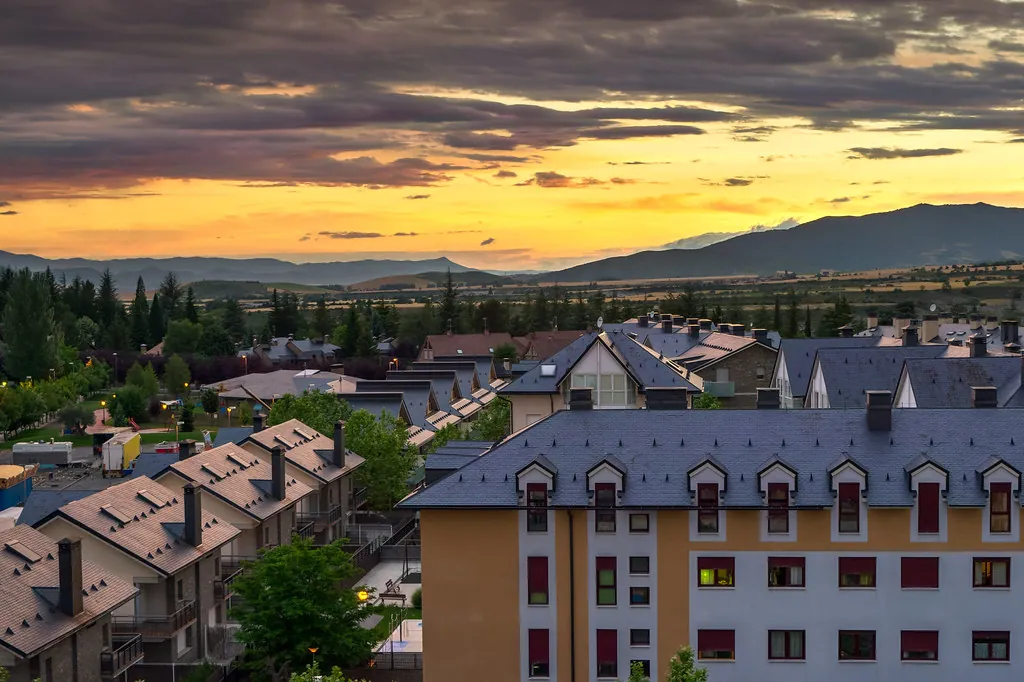
The church bell strikes seven and the only other sound is a tractor reversing down Carrer Major. From the stone balcony of the old schoolhouse, now the village's only hotel, you can watch the sun lift itself over Sierra de Chía and turn the slate roofs silver. Villanova doesn't do dawn yoga or sunrise smoothies. It does silence, thin air at 966 metres, and the smell of woodsmoke that drifts out of chimneys all year round.
Stone, Slate and the Smell of Snow
Everything here is built from what the mountain discarded. Walls the colour of weathered sheep's cheese, roofs cut from local slate, doorways just wide enough for a mule and a year's supply of hay. The village tumbles down a ridge in three short terraces; if you walk from top to bottom in five minutes you've seen most of it, yet the same stroll can take an hour once you start reading the stone plaques that mark houses rebuilt 'después de la guerra' – after the Civil War – and peer into the irrigation channels still running with melt-water from last week's snow.
Romanesque? Yes, the parish church has the thick walls and narrow windows you'd expect from the twelfth century, but its bell tower was rebuilt in 1953 after a lightning strike. Inside, the smell is candle-wax and damp hymn books. The retablo is dusty, the organ silent, yet someone always leaves fresh wild irises in a vase by the altar. You won't find ticket desks or audio guides; if the door is open you go in, and if it isn't you come back after siesta.
Walking Without Waymarks
Maps sold in the hotel drawer are photocopies of photocopies, hand-annotated with biro: "bridge washed out 2021" or "boar prints here after rain". They are more reliable than any phone app. Three paths start from the last lamppost: one climbs to a ruined lime kiln in twenty minutes, another follows the river Cóllega to a pool deep enough for a bracing swim, the third zigzags up to a col where red and white paint marks meet the GR-18 long-distance trail. None are signed in English; all are obvious once you've found the first cairn.
Spring brings orchids and the low growl of melting snow. Summer smells of resin and hot pine needles, but the altitude keeps nights cool enough for a jacket. October is the locals' favourite: beech woods turn copper, wild mushrooms push through the leaf litter and the village fills with the metallic clack of hunting rifles. Winter is serious – roads can close after a hard frost and the chemist only opens three days a week – yet the reward is a sky so clear you can read by starlight.
Lamb, Lentils and the Only Traffic Jam in Town
There are two places to eat. Bar Casa Julian opens when Julian feels like it, which is usually noon till three and again from eight. Order the ternasco – milk-fed lamb roasted until the edges caramelise – or, if you're lucky, a bowl of migas: breadcrumbs fried in olive oil with streaky bacon and grapes that burst on your tongue. The wine list is red or white; both come from Somontano vineyards forty minutes away and cost €2.50 a glass. Bring cash – the card machine has been "broken since Easter".
Across the square, the newer asador has printed menus in Spanish and French but still no English. Starters hover around €8, mains €14-€16. Portions are built for people who spent the morning shifting hay bales; the house trick is to bring a plate of roasted piquillo peppers "on the house" so you end up too full for pudding. The only traffic jam happens at 14:30 when six tractors converge on the bar's single hitching post.
If you prefer to self-cater, the tiny grocer stocks UHT milk, tinned tuna and locally made chistoría sausages. Fresh bread arrives in a white van at 11:00; by 11:30 it's gone. The nearest supermarket is in Benabarre, 18 minutes down the valley – remember that siesta shuts it from 14:00 to 17:00.
When the Village Returns
August changes everything. Population swells from 174 to somewhere north of 600 as grandchildren arrive from Zaragoza and Barcelona. The plaza fills with plastic chairs, brass bands rehearse at midnight, and someone strings coloured bulbs between the plane trees. The fiesta programme is pinned to every door: foam party for kids, greasy pole over the fountain, outdoor mass followed by a communal paella that needs a pan the diameter of a satellite dish. Rooms that were €55 in May jump to €80 and must be booked months ahead. Bring earplugs or join in; there is no middle ground.
Come September the exodus is swift. By the last week of the month you can park where you like and the night sky belongs again to owls. This is when walkers who value solitude over sunshine appear, setting off early to beat the cloud that often sits in the valley until coffee time.
Getting Here, Staying Warm, Leaving Again
No train, no bus, no Uber. Fly to Zaragoza with Ryanair (Stansted, twice weekly, about £45 each way if you avoid school holidays), collect a hire car and head north on the A-23 for ninety minutes. Petrol stations thin out after Huesca – fill up. The final 12 km on the HU-341 are twisty but paved; if you meet an oncoming lorry one of you reverses to the nearest passing bay. Snow chains go in the boot from November to March; the Guardia Civil will turn you back if the surface is white and your tyres are summer.
Accommodation is limited to the aforementioned Casa del Río (seven rooms, €55-€90 depending on season, Wi-Fi that struggles with anything more than email) and two self-catering cottages booked through the town hall website – enquiries handled by someone called Conchi who answers WhatsApp messages after 22:00. Heating is by pellet stove; instructions are in Spanish but the principle is identical to a Surrey log-burner. Nights can drop to 4 °C even in June – pack a fleece.
Check-out is 11:00, but nobody rushes you. The landlord will appear with a plastic jug of coffee and ask which pass you plan to drive over. If the answer is "France", he'll suggest the tunnel at Somport rather than the old smugglers' route – not because of customs, but because the latter still has three metres of snow drifted across it. You nod, pay the bill in cash, and realise the car radio hasn't found a signal since yesterday lunchtime. Thirty minutes down the valley you pick up a scratchy version of Radio 2, and the real world, with its traffic bulletins and Brexit debates, re-enters the windscreen. Behind you, Villanova resets to its default soundtrack: wind, water, and the slow clap of a single tractor making the morning rounds.