Full Article
about Villanueva de Jiloca
Ocultar artículo Leer artículo completo
The church bell strikes noon, yet nobody quickens their pace. A tractor putters past the only shop, its driver raising two fingers from the steering wheel in greeting. This is Villanueva de Jiloca, population sixty-eight, where time hasn't stopped so much as learned to dawdle.
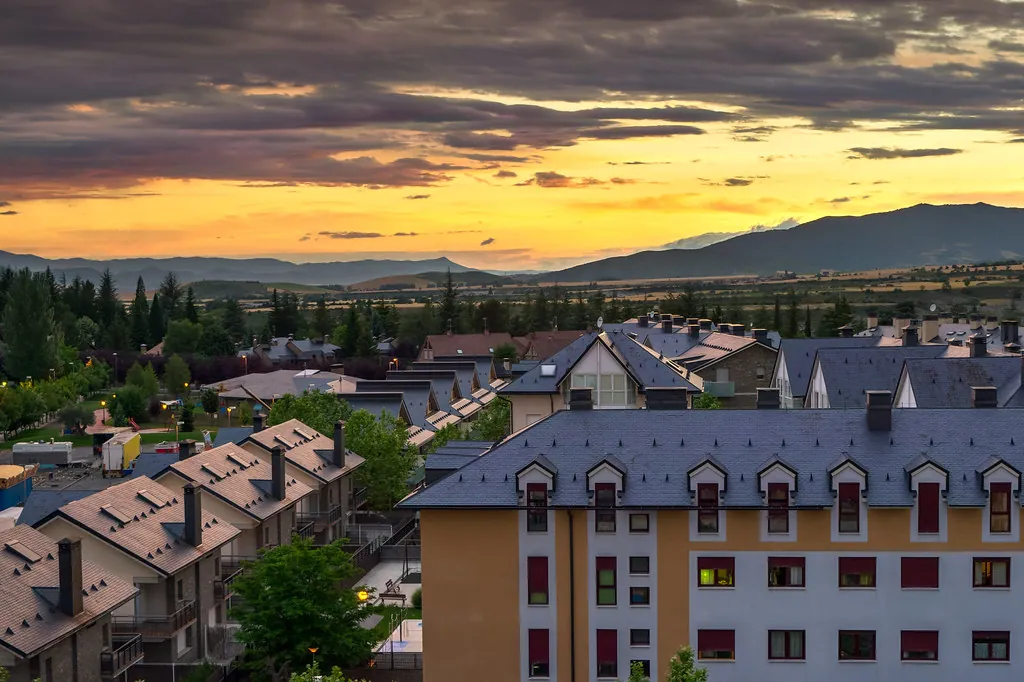
At 790 metres above the Campo de Daroca plain, the village sits high enough for the air to carry a thin edge of coolness even in July. The wheat fields roll away in every direction, a golden ocean that makes the handful of stone houses look like a shipwrecked cluster clinging to a limestone outcrop. It's a landscape that defeats photography: cameras can't capture the way the wind turns the cereal stalks into waves, nor record the particular silence that falls when even the larks stop singing.
The Architecture of Making Do
Walk the single main street and you'll see what happens when centuries of poverty meet stubborn pride. The parish church, rebuilt after the Civil War with whatever materials came to hand, wears its patchwork of brick and stone like a badge of honour. Next door, houses grow from the bedrock itself – walls of local limestone mortared with mud, roofs of curved Arabic tiles heavy enough to defy the gales that sweep across the plateau in March.
Many stand empty now, their wooden doors reinforced with iron straps that speak of winters when wolves still came down from the Sierra de Santa Cruz. Peer through the iron grilles and you'll spot original stone staircases, bread ovens blackened by two centuries of use, and occasionally a courtyard where a single pomegranate tree still fruits. The abandonment isn't picturesque; it's simply what happens when the young leave for Zaragoza and the old die without heirs. Yet the buildings refuse to crumble. Someone always patches a wall, replaces a tile, keeps the village skeletal rather than deceased.
Walking Through Empty Country
The GR-90 long-distance path skirts the village, following an old drove road that once took Aragonese shepherds to winter pastures in Andalucía. You can pick it up by the ruined ermita outside the settlement and walk east towards Used, where the land drops into a canyon thick with black pine. It's eight kilometres of easy going – the path never rises more than 200 metres – but you'll need water and a hat. The sun here has teeth.
For something shorter, follow the farm track north towards Villadoz. After twenty minutes the village disappears behind a rise, leaving only the sound of your boots on flint and the occasional shout of a hawk overhead. The track passes an abandoned cortijo where swallows nest in the rafters; in April the males dive-bomb your head if you venture too close. Turn back when you've had enough – nobody's checking timesheets here.
When Darkness Falls
Astronomers know the Campo de Daroca as one of Spain's last dark-sky preserves. Street lighting in Villanueva de Jiloca consists of four sodium lamps that get switched off at midnight, leaving a darkness you rarely experience in Britain. Walk a hundred metres beyond the last house on any clear night and the Milky Way appears overhead like spilled sugar. In August, Perseid meteors streak across the sky at a rate that makes wishes feel compulsory.
The village's altitude means temperatures drop sharply after sunset even in midsummer. Bring a fleece if you plan to star-gaze, and beware the dew – it soaks shoes within minutes. Local farmers claim they can predict tomorrow's weather by the clarity of the stars: if the Pleiades look fuzzy, rain is twelve hours away. Meteorology hasn't improved on their accuracy.
Eating Without Restaurants
Villanueva de Jiloca has no bars, no restaurants, not even a bakery. The shop opens for two hours each morning and stocks tinned goods, UHT milk, and those rock-hard Aragonese biscuits that last forever. Self-catering isn't optional; it's survival.
Drive fifteen minutes to Calatayud for supplies, but don't expect the Waitrose experience. The Consum supermarket stocks local lamb that's never seen refrigeration, cut to order by butchers who remember when every family kept sheep. Buy morcilla de Calatayud – blood sausage spiced with onions and rice – plus a wedge of Tronchón cheese, the same semi-soft goat's cheese that Don Quixote carried in his saddlebags. Back in the village, fire up the ancient barbecue in the plaza (everyone uses it; nobody owns it) and cook while the sun sets behind the wheat.
The August Resurrection
For eleven months of the year, Villanueva de Jiloca practices a slow-motion evacuation. Then August arrives and the exodus reverses. Cars with Barcelona and Madrid number plates appear like migrating birds. Grandchildren who've never collected eggs shout at chickens in patios. The church, empty since Christmas, hosts nightly services where the priest has to bring in extra chairs.
The fiesta proper lasts three days around the Assumption. A sound system appears in the plaza, playing cuplés until 4am. The village's single restaurant – opened only for this week – serves migas fried in lamb fat to crowds who eat standing up. On the final night, everyone walks to the ermita ruins for a candlelit mass that ends with fireworks launched from a wheelbarrow. By 20 August it's over. The cars leave. The wheat fields reclaim their silence. The village settles back into its real population: sixty-eight souls and a handful of dogs who've learned not to bark at strangers.
Getting There, Staying There
From Zaragoza airport, collect a hire car and take the A-2 west towards Madrid. After 70 kilometres, exit at Calatayud and follow the N-234 through the Moncayo foothills. The turn-off appears suddenly: a minor road signposted to Villadoz and Villanueva de Jiloca. The final twelve kilometres narrow to single-track with passing places; meet a combine harvester and you'll be reversing into a barley field.
Accommodation means renting one of three restored houses through the village association. Expect thick stone walls, wood-burning stoves, and Wi-Fi that works when the wind blows from the right direction. Prices hover around €80 per night for two, minimum stay three nights. They'll leave a bottle of local olive oil and instructions for starting the temperamental boiler. After that, you're on your own.
Come prepared for solitude. The nearest petrol station is twenty-five kilometres away; the nearest hospital, forty. Mobile reception varies between patchy and fictional. But if you want to understand how Spain lived before tourism, before the euro, before everything became easier but less real, Villanueva de Jiloca keeps the memory alive. Just don't expect it to make a fuss about it.