Full Article
about Villar de los Navarros
Ocultar artículo Leer artículo completo
At 850 metres above sea level, the wind arrives before you do. It slips across the Meseta, rattles the barley stubble and presses the stone houses tight against the ridge. Villar de los Navarros has no grand approach: the A-23 spits you out at junction 267, you zig-zag past a solar farm, and suddenly the single traffic light – yes, just the one – is flashing amber as if to say “decide quickly”. Straight on for the village, left for the grain silo. Most visitors turn right by mistake and end up in a field.
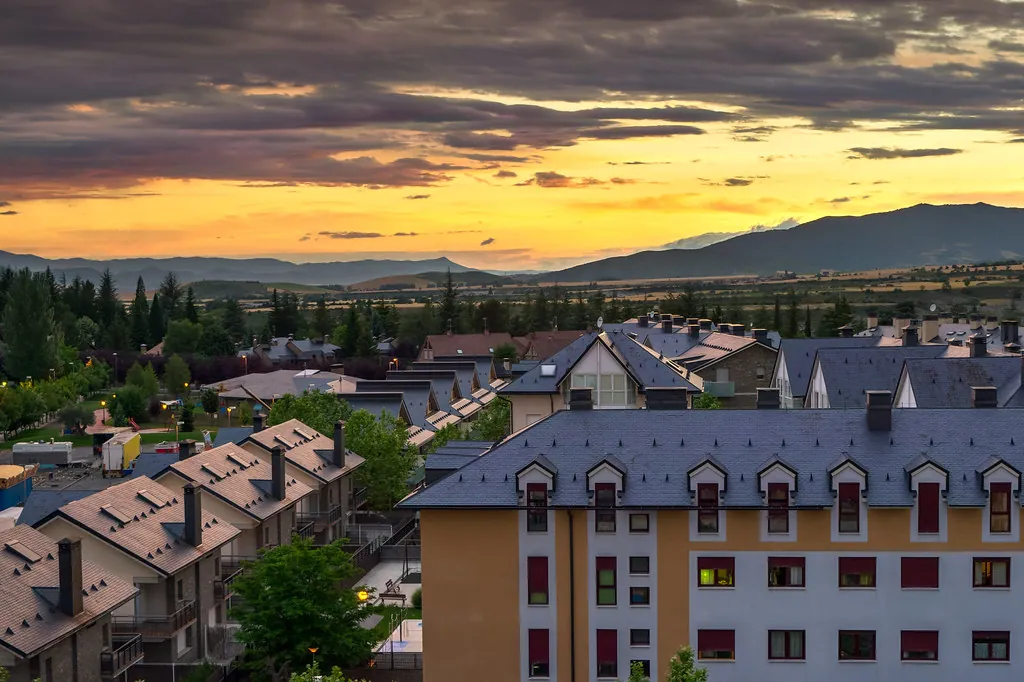
The place is small even by Aragonese standards: 140 souls on a busy day, fewer once the combine harvesters have gone north. Yet the municipal boundary sprawls across 62 square kilometres of undulating steppe, a biscuit-coloured checkerboard broken only by sudden gullies and the occasional holm-oak that looks as though it’s been planted upside-down by the wind. From the church roof you can watch weather systems travel for half an hour before they reach you; in winter the snow front arrives like a slow-motion curtain, first whitening the distant wind turbines, then the cemetery cypresses, finally the bar terrace where the regulars refuse to come inside until their coffee has a skin on it.
Stone, sun and silence
San Miguel Arcángel stands at the top of the only hill, its tower a blunt stone finger you can see from ten kilometres away. Inside, the air smells of candle stub and damp plaster; retablos from the 16th and 18th centuries lean at tired angles, gold leaf flaking like sun-burnt skin. The key hangs on a nail in the ayuntamiento opposite. If the secretary is at her desk she’ll loan it without questions; if not, the bar-owner keeps a spare and will probably insist on a caña while you wait. Opening hours are unpublished – a kindness, really, because disappointment tastes better with beer.
Below the tower the streets are barely two mules wide. Adobe walls bulge outward as if trying to escape their foundations; lintels carry coats of arms so eroded they look like failed Rorschach tests. Many houses still wear the iron rings once used for tethering mules, and at dusk swallows perch on them like coat-check girls between shifts. Doors are vast, wooden, and frequently open onto cool corridors smelling of wine and garlic. Peek in and you’ll spot the traditional bodega: a clay tinaja half-buried in the floor, its rim darkened by decades of splash-back from poured tempranillo. These are working storerooms, not museum pieces – the family next door may be bottling last year’s harvest while you gawp.
Walking on the roof of the province
Villar’s real monument is its territory. Marked farm tracks radiate outwards, wide enough for a tractor pulling a drill. Follow any of them for twenty minutes and the village shrinks to a grey comma on the horizon; the only sounds are your boots, the larks and the soft metallic click of wheat heads knocking together. The GR-90 long-distance footpath passes nearby, but most visitors simply create their own loop: south to the abandoned railway halt at Las Pardinas (6 km), east to the tumbled stone chapel of San Pedro de la Nalda (4 km), or north onto the plateau where the earth curves like a poorly set table and you can watch thunderstorms build over Moncayo thirty kilometres away.
Cyclists arrive with thicker tyres and lower expectations. The surface is compacted clay that turns to axle-deep porridge after rain; locals claim you can tell a British mountain biker by the amount of orange paste stuck to their calves. Bring water – there’s none between the village and the horizon – and don’t trust the green lines on Google Maps: they’re olive groves behind locked gates.
Calories and credit cards
Food is upland fuel, not fine dining. The solitary bar opens at seven for truck drivers and doesn’t close until the last dice game ends. Order the menú del día (€12, weekdays only) and you’ll receive soup thick enough to support a spoon upright, followed by ternasco de Aragón – milk-fed lamb roasted with nothing more than salt, rosemary and the conviction that vegetables are suspicious. Pudding is cuajada, a sheep’s-milk junket that tastes faintly of barn. Vegetarians get eggs; vegans get a lecture on the rainfall average. Cards are accepted, but the machine is unplugged when the owner pops home for lunch. Carry cash, preferably in small notes; the till doubles as the village betting fund and nobody wants to break a fifty.
If you need supplies beyond crisps and tinned tuna, drive 19 km to Daroca before 20:00. The village has no petrol station, no ATM and no shop – just a vending machine outside the medical centre that sells cola at hospital prices.
When the plateau parties
Festivity here is measured in decibels and second-degree burns. San Miguel, 29 September, kicks off with a procession that circles the village twice because the priest once forgot the incense and had to go back. Brass bands arrive from neighbouring towns, trumpets slightly flattened by months of agricultural dust; fireworks are strung between two tractors and lit by the mayor with a welding torch. At midnight everyone squeezes into the plaza for chocolate caliente spiked with anís. British visitors usually admire the stars; locals admire the fact that the stars are still there after the fireworks finish.
Easter is quieter – three pasos, six drummers, total darkness apart from the wind-up altar lights. The Good Friday vigil starts at 22:00 sharp because the sacristan needs to catch the agricultural weather forecast at midnight. Temperatures can dip below freezing; borrow a blanket from the bar, they keep a pile behind the door specially.
Staying the night (or not)
Accommodation is the village’s missing tooth. There is no hotel, no pension, not even a municipal albergue. The closest beds are in Cerveruela, five minutes down the road, where a British-Spanish couple rent out Casa Larrueda (from €80, two-night minimum). The house is a converted grain store with under-floor heating and a telescope on the roof; they’ll leave you fresh eggs and a bottle of Cariñena garnacha if you promise not to play REM after midnight. Alternative strategy: base yourself in Daroca’s medieval walled core and day-trip – the drive takes twenty minutes, slightly longer if you stop to photograph the lambs that wander onto the road and refuse to acknowledge cars.
The honest verdict
Villar de los Navarros will not change your life. It offers no souvenir shops, no audio guides, no epiphany moments on scenic balconies. What it does offer is a calibration of scale: the realisation that 140 people can keep a landscape alive, that lunch can taste of the year’s weather, and that silence, when you finally let it in, has a colour – the pale wheat-gold of central Aragón under a sky big enough to make you look sideways. Come for the walking, stay for the coffee that costs one euro twenty and stays hot because the cup is thick. Leave before you need Wi-Fi.