Full Article
about Villar del Salz
Ocultar artículo Leer artículo completo
The church bell strikes noon, yet only three cars sit outside the Bar Sociedad. At 1,219 m above sea level, Villar del Salz keeps time by daylight and hunger rather than clocks. Sixty-three residents remain, enough to keep the bakery oven warm but few enough that every face is known before coffee is finished.
Stone that Outlasted the Rush
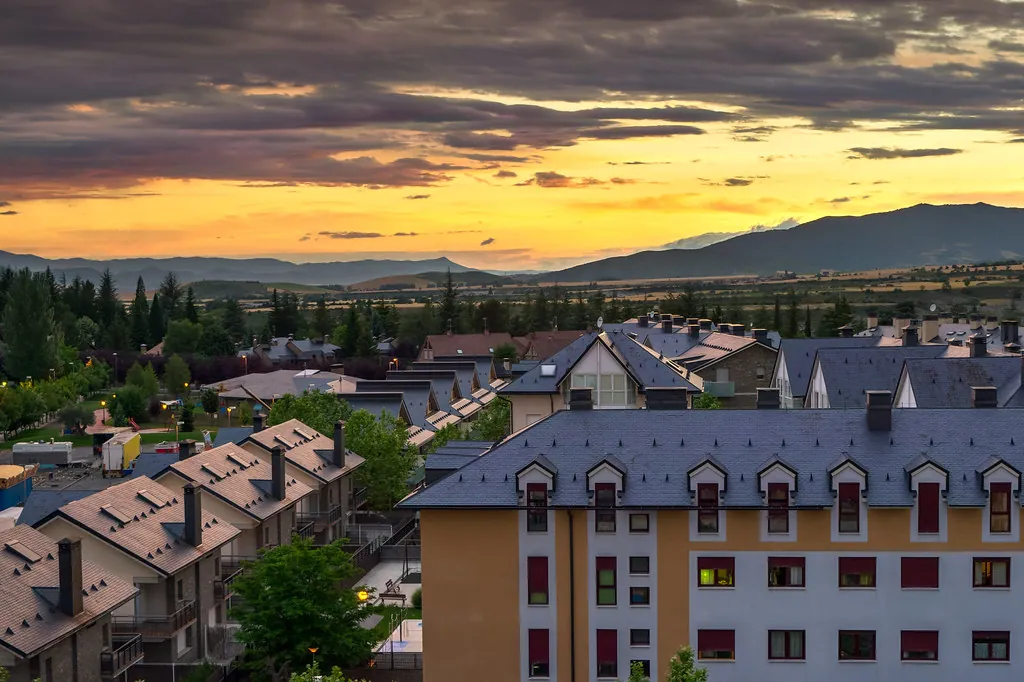
Approach roads coil through cereal terraces that glow ochre by late June. The village crests a ridge like a ship’s bridge; step from the single petrol pump and the land falls away on three sides, revealing a quilt of wheat stubble and holm-oak scrub all the way to the Monreal wind farm thirty kilometres north. Granite houses, their rooflines sagging like old horses, share walls because that is how they survived the 1950s exodus. New aluminium windows shine from one façade, yet the next remains sealed by timber shutters last painted under Franco. Nothing is staged for visitors—paint peels where it peels, geraniums flourish in olive-oil tins, and the mayor still unlocks the Ayuntamiento at 08:00 because the key is too large for anyone else’s pocket.
Inside the parish church of San Miguel, the air smells of candle wax extinguished decades ago. A Mudejar brick tower rises in tapering rectangles, each course set slightly askew by winter frosts. Restoration grants never arrived, so the congregation patched the nave themselves; mismatched limestone blocks record which neighbour donated a morning’s labour. On the south wall a 1789 inscription lists wheat quotas owed to the priest—read it and you understand why half the parish sailed to Argentina the following spring.
Walking without Waymarks
No gift shop sells route maps. Instead, cattle paths fan out from the top edge of town, graded by centuries of hooves rather than engineers. Follow the track past the last streetlamp and within ten minutes stone gives way to red clay littered with quartz shards. The GR-90 long-distance footpath brushes the municipal boundary but refuses to enter; serious hikers pass by, heads down, chasing kilometres. Locals prefer an aimless circuit: east to the abandoned threshing floor where golden eagles nest in the rafters, south along the ridge to the trough of frozen snow that lingers until May, then back via the pine plot planted by the forestry school in 1978. Allow two hours, plus another thirty minutes if the cloud base drops and you wait for it to lift—mobile reception vanishes at 1,100 m.
Spring arrives late; crocuses push through melting drifts in April, and night frosts can puncture car radiators until early May. By contrast, July is dry enough that grass snaps underfoot like biscuits. Carry more water than you think necessary—streams marked on older maps are now seasonal, and the single fountain in Plaza Mayor flows only when the reservoir above Monreal releases surplus. In October the cereal stubble is burned off, sending columns of smoke skyward like signal fires; the smell drifts into the village bars, mixing with espresso and kerosene from the heaters being lit for the first time since spring.
What Appears on the Table
Lunch is served at 14:30 sharp, and outsiders are noticed if they loiter outside the Bar Sociedad after the bell. The chalkboard rarely changes: ternera estofada (£9) that has simmered since dawn, potatoes fried in the same iron pan for three generations, and a quarter-litre of house red drawn from a plastic drum behind the counter. Vegetarians get eggs—fried, scrambled, or in a thick tortilla the diameter of a tractor wheel. Puddings depend on which grandmother felt like baking; arrive on a Wednesday and you might be offered magdalenas still warm, flecked with aniseed and wrapped in a paper napkin that sticks to the crust. Ask for coffee and you receive café solo unless you specify otherwise; request milk and the barman will top the cup from a steel jug kept chilled in the fridge that doubles as the village noticeboard—wedding invitations share shelf space with veterinary flyers.
Dinner options shrink further. The only restaurant opens Friday through Sunday because the chef doubles as the postman and prefers early rounds the rest of the week. His cordero al chilindrón (£14) arrives under a pastry lid shaped like the regional coat of arms; break the crust and the aroma of sweet paprika drifts across the room, drawing jealous glances from tables still waiting. Vegetables are whatever survived the 1,200 m growing season—expect swiss chard, maybe a tomato salad if July was kind. Payment is cash only; the card machine was installed in 2019 but the telephone line never arrived.
Festivals Meant for Locals
The calendar contains two pulses of noise. On the night of 28 September, San Miguel’s eve, teenagers who left for Zaragoza or Valencia squeeze into their parents’ cars and drive home. A brass band comprising one trumpet, two saxophones and a drum set borrowed from the school in Monreal marches through streets too narrow for formation. They stop outside every household that donated petrol money; someone appears with a tray of rosquillas and limonada spiked with aguardiente. By 03:00 the music is more enthusiasm than tune, yet old women still clap on the off-beat because that is how it has always been done. Visitors are welcome to watch, but folding chairs carry family names stitched in fading thread—sit at your peril.
Mid-January belongs to San Antón. At 10:00 sharp the priest blesses dogs, sheep, even the occasional pet rabbit outside the church porch. Temperatures can hover just below freezing; breath mingles with incense while paws scuff frost on the flagstones. After the final Amen, everyone squeezes into the bar for chocolate con churros priced at €2 a ration. If snow blocks the road back to Teruel, the mayor unlocks the casa consistorial and lays out gym mattresses—accept; taxis refuse these heights once darkness falls.
Getting There, Staying Over
From London, fly to Zaragoza (two hours), collect a hire car and head south-west on the A-23 for 110 km. Turn onto the N-234 at Daroca; after Monreal del Campo watch for the brown sign that only appears once you’ve almost passed the exit. The final 12 km climb 400 m through pine plantations where wild boar wander at dusk—drive with headlights on even before sunset. Petrol pumps close at 20:00 and all day Sunday; fill up in Calamocha if the gauge drops below half.
Accommodation is limited to three rooms above the bar. Each has a small balcony overlooking the cereal silo, bathrooms updated in 2005, and radiators that clank like a tram whenever the diesel generator wakes. Expect to pay €35 a night including breakfast—tostada rubbed with tomato, olive oil from Lower Aragón, and coffee strong enough to stain the cup permanently. Book by telephone; the proprietor answers after the sixth ring and will ask where you heard about the village. Say you read about the eagles—he likes that. Alternative lodging exists in Monreal, 19 km downhill, but the road back is unlit and deer regard tarmac as a convenient crossing; unless you fancy explaining impact damage to a Spanish hire firm, stay in the village and listen to the wind write tomorrow’s weather across the roof tiles.