Full Article
about Villarluengo
Ocultar artículo Leer artículo completo
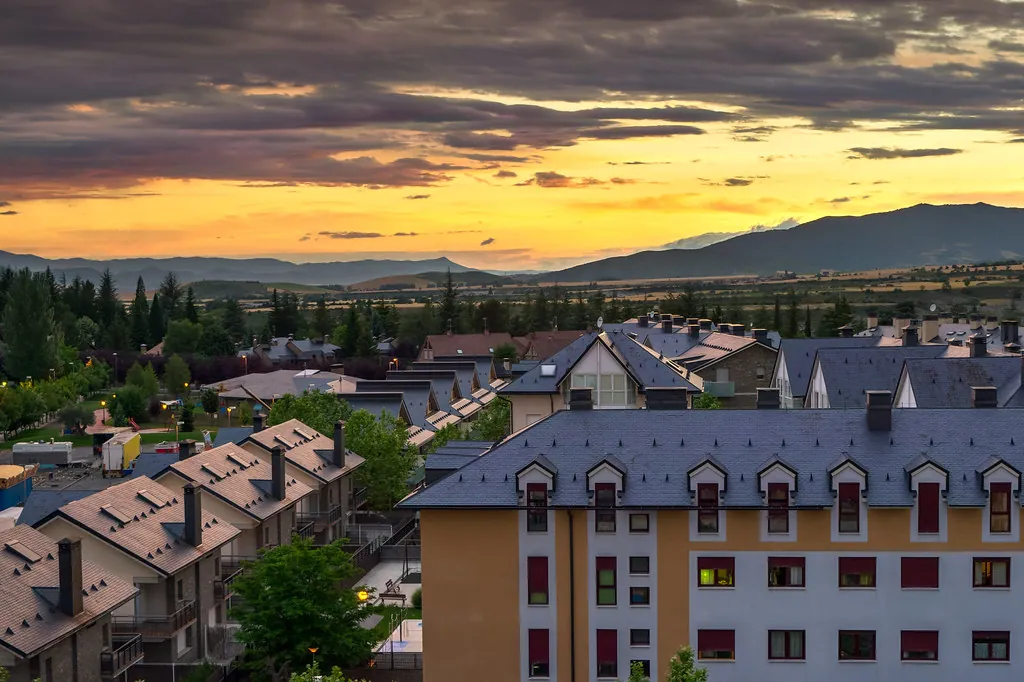
The village appears first as a dark line balanced on a knife-edge ridge, then resolves into stone roofs that seem poured rather than built. One minute you're driving through empty thyme-scented hills, the next you're braking for a Templar arch that suddenly blocks the lane. Villarluengo does not creep up on visitors; it simply arrives, 1,100 m above sea level and hanging over a limestone canyon like an afterthought someone forgot to secure.
A balcony you can sleep on
Fewer than two hundred people live here year-round, enough to keep one bar, one small shop and the medieval church bells in working order. The houses are made from the same grey-white stone they stand on, so walls and cliff merge until it becomes impossible to tell where geology ends and architecture begins. Narrow lanes tilt downhill, drain into tiny squares, then tilt back up again; handrails are provided by the next house's corner. Locals call the arrangement "el balcón del Maestrazgo", and on a clear morning you can see the Mediterranean glinting 80 km away, a silver coin laid on the horizon.
The altitude keeps summer temperatures civilised—mid-twenties instead of the low-forties that fry the Ebro valley—but the wind arrives without warning. Even in July you may wish you'd packed a fleece; in January the place is an ice box and half the shutters stay closed. The official season runs roughly Easter to late October, the only months when the bar guarantees hot coffee and the bakery unlocks its door.
What counts as sightseeing
There is no ticket office, no audioguide, no craft market. Instead you walk until the street runs out, then keep going on a footpath that quickly turns into rough grey scree. The parish church of Nuestra Señora de la Asunción closes at dusk but the side door is often open; inside, an eighteenth-century retable glows with gilt paint that someone decided not to scrape off during the last restoration. Round the back, four ruined towers mark the site of a castle dismantled in 1390 after an argument between rival Aragonese lords—stones were carted away to build the very houses you're walking past.
The real draw is the limestone amphitheatre encircling the village. Pick up the signed PR trail at the football pitch (one goalmouth, no nets) and drop 400 m to the river Pitarque, where old railway tunnels pierce the cliff. The line was meant to connect Teruel with the coast but money ran out in 1959; walkers can now stride through the cool dark for half a kilometre, torch advised, boots essential. Beyond, the path climbs again to the Organ of Montoro, a cliff punched with vertical pipes that look exactly like the facade of York Minster rendered in rock. Allow four hours for the circuit, carry water—there is none en route—and expect thighs to complain the following morning.
Eating what the wind flavours
Food is mountain-plain: lamb, breadcrumbs, herbs that goats ignore. The weekday menú at the Bar Centro (it has no other name) costs €12 and changes according to what the owner finds in the market at Teruel. Expect migas—fried breadcrumbs laced with garlic and streaky bacon—followed by chiretas, lamb-and-rice sausages that taste like a Caledonian haggis meeting Spanish saffron. Teruel's famous ham appears in paper-thin sheets so mild even children eat it raw; locals dunk the slices in local honey as a quick pudding. To drink, order red from neighbouring Cariñena; the altitude keeps alcohol levels sensible and the price rarely tops €3 a glass.
If the bar is shuttered—the owner sometimes nips to Valencia for family business—drive ten minutes to La Puebla de Valverde for the weekend asador, or pack sandwiches and picnic on the lip of the gorge. The village shop opens unpredictably but stocks tinned tuna, bricks of Manchego and bottles of Fanta; don't rely on it for fresh milk.
Getting here without a helicopter
From Teruel the A-226 winds east through Mora de Rubielos, then smaller numbers appear on the signposts and the tarmac narrows. The final 30 km take just under an hour: hairpins, sudden cattle grids, views that make you swerve onto the verge for photographs. Fuel at the Repsol in Mora; the next pump is 70 km away and may be closed for siesta. There is no bus on Sundays, one on Tuesday and Thursday that reaches Villarluengo at 15:47, and even that terminates if the driver decides the weather is foul. In short, you need a car, nerves steady on cliff-edge bends, and an offline map because the phone signal dies after Albentosa.
Accommodation is limited. Five village houses have been converted into basic rural apartments—think stone walls, wood-burning stove, Wi-Fi that remembers the 1990s. Prices hover round €70 a night for two, cheaper mid-week. Check-in is often at the owner's second home down the lane; ring when you reach the square rather than loiter with suitcases. Camping is technically allowed in the pine woods 2 km south, but water sources are unreliable and nights can drop to 4 °C even in May.
The quiet that costs something
Villarluengo will never be a blockbuster. The souvenir industry never started, the young still leave for Zaragoza and Valencia, and winter can feel like voluntary imprisonment. Yet that is precisely why some travellers make the detour: to stand on a battlement of rock and hear nothing but wind, church bells and the occasional clatter of a farmer's van. If you want flamenco, stay south; if you want spa hotels, head west to Teruel. Come here for the lesson that Spain is also empty space, limestone silence and a bar where the coffee arrives simply because the owner heard your footsteps on the stone.