Full Article
about Alagon
Hide article Read full article
Where the rivers meet
Any look at Alagón begins with water. The Ebro reaches this point after passing Zaragoza and, nearby, is joined by the Jalón, which descends more steeply from the Moncayo. That meeting of rivers explains much of what follows: a wide, fertile plain where human settlement appeared early. The Iberians of Alaun, the ancient name of the place, were minting coins as early as the 2nd century BC, a sign that this was more than a simple farming village.
That same logic still holds. Much of the municipality remains devoted to irrigated agriculture, shaped by the steady presence of the rivers and the systems built to manage them. The landscape is not dramatic, yet it is deeply tied to how people have lived and worked here for centuries.
A landscape organised by water
The network of acequias, traditional irrigation channels, is part of everyday life in Alagón. Some follow very old routes, later reorganised and expanded as needs changed. The major shift came with the Canal Imperial de Aragón, completed in the late 18th century, which firmly established irrigation across much of the Ebro’s riverbank. From that point on, Alagón functioned as an الزراicultural community connected to the wider market gardens of the Ebro valley.
Crops vary with the seasons, though vegetables are a constant and feature heavily in local cooking. Walking along the paths that trace the acequias and smaller channels offers a clear sense of how the land is organised. Long plots stretch out from dirt tracks, and small hydraulic structures regulate how water is distributed. It is not a monumental setting, but it reveals the practical logic of a landscape shaped over generations.
The historic centre sits slightly higher, beside what was once the castle hill. That choice of location was deliberate. The Ebro has flooded periodically, and settlements traditionally sought safer ground, leaving lower areas for cultivation. The result is a compact urban layout with relatively narrow streets, reflecting both defensive concerns and the need to adapt to the terrain.
From Iberian mint to medieval assemblies
Alagón appears regularly in medieval records due to its position on an important route linking Zaragoza with the north-west of the Iberian Peninsula. That role as a place of passage helps explain why meetings of the Cortes de Aragón were held here in the 13th century. These assemblies brought together representatives of the kingdom at key moments, giving the town a political relevance that might not be obvious today.
Another episode preserved in chronicles is the wedding of Pedro IV and María de Navarra in the 14th century, celebrated in Alagón when both were still very young. Moments like these hint at a period when the town held a more prominent place within the region.
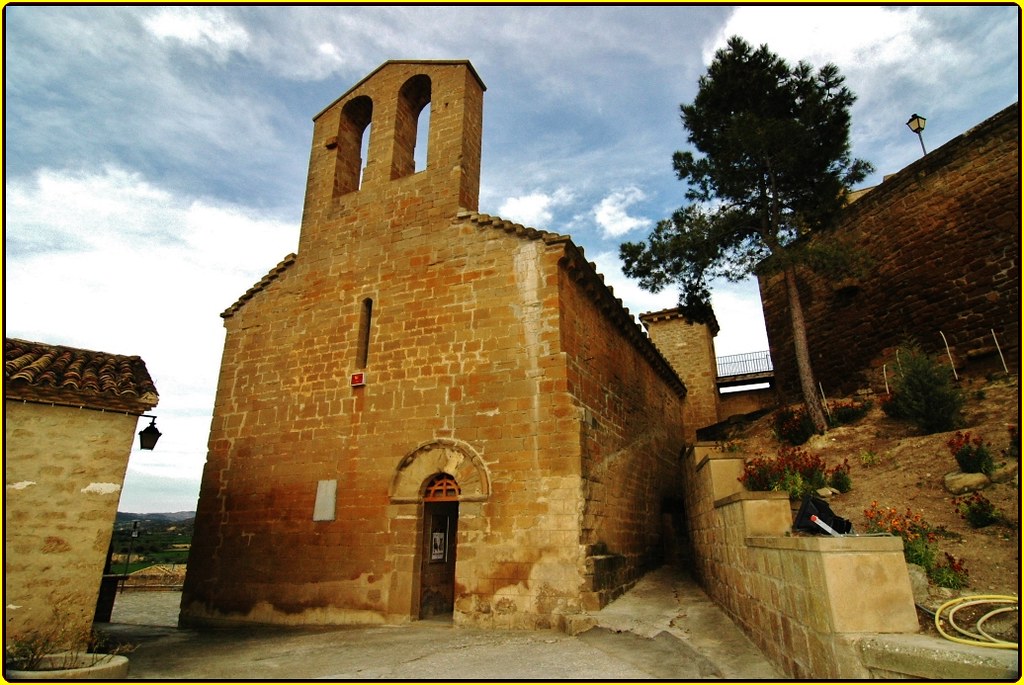
Little remains of the medieval walls in a clearly visible form, though the layout of the streets still reflects that defensive past. The church of San Pedro stands as one of the main historic buildings. It was rebuilt between the 16th and 18th centuries, with later alterations. Its tower was raised in the 16th century to ease structural tensions in the building, a fairly common solution at the time. Inside, there is a late Baroque altarpiece and several funerary elements linked to local families, including the 15th-century tomb of the Luna lineage.
Cooking shaped by the huerta
Food in Alagón follows the rhythms of what is grown nearby. The fertile plain supplies ingredients that move directly into the kitchen, with little separation between field and table. Borraja, a vegetable typical of the Ebro valley, appears often. It is usually boiled and served with potato and egg, a simple preparation tied to the months when the plant is at its best. It is a domestic dish rather than something associated with restaurants.
Ternasco, a young lamb typical of Aragón, is commonly roasted with potatoes in the same tray, allowing the flavours to blend. Migas, another traditional dish, incorporate grapes when they are in season along with local cured meats, reflecting the long-standing habit of making use of whatever was available in the countryside or pantry.
In January, the celebration of San Antón brings activity to the streets. Bonfires are lit and tortillas are prepared using products from the pig slaughter, including chicharrones. Each household tends to have its own way of making them, keeping small variations alive within a shared tradition.
Along the banks of the Ebro
The area around the river draws attention away from the centre. Several routes follow the Ebro’s banks or cross the plain along agricultural tracks that have been in use for decades. Some connect with longer itineraries that run through the Ebro valley, making it possible to walk or cycle through riverside groves, cultivated land and small patches of woodland.
The scenery shifts noticeably with the seasons. Spring brings green fields, while late summer shows recently harvested plots. Winter often settles in with low-lying mist. Birdlife is a regular presence along these routes, including herons, ducks and occasionally birds of prey.
Alagón itself can be explored in a short time. What really explains the place lies just beyond its streets: the web of acequias, the agricultural paths and the constant presence of the Ebro setting the pace of the land. This is not a landscape designed to be viewed from a distance. It is one to move through on foot, following the same routes that have connected water, crops and settlement for centuries.