Full Article
about Boquineni
Hide article Read full article
A slow start in the Ribera Alta del Ebro
Early in the morning, it is still hard to find anyone in the main square of Boquiñeni. The light in the Ribera Alta del Ebro arrives pale, bouncing off light-coloured walls and the fine dust stirred up by slow-moving cars. Around twenty kilometres from Zaragoza, the village wakes without urgency: a shutter being raised, the metallic sound of a garage door, the smell of damp earth when nearby vegetable plots have been watered.
Boquiñeni has just over seven hundred inhabitants today. Life follows the pace of an agricultural settlement along the river. Days are shaped by the fields, by the nearby Ebro, and by regular journeys to the provincial capital. The urban layout is compact, with short, narrow streets that tend to lead, one way or another, towards the church of San Miguel Arcángel.
The brick tower at the heart of the village
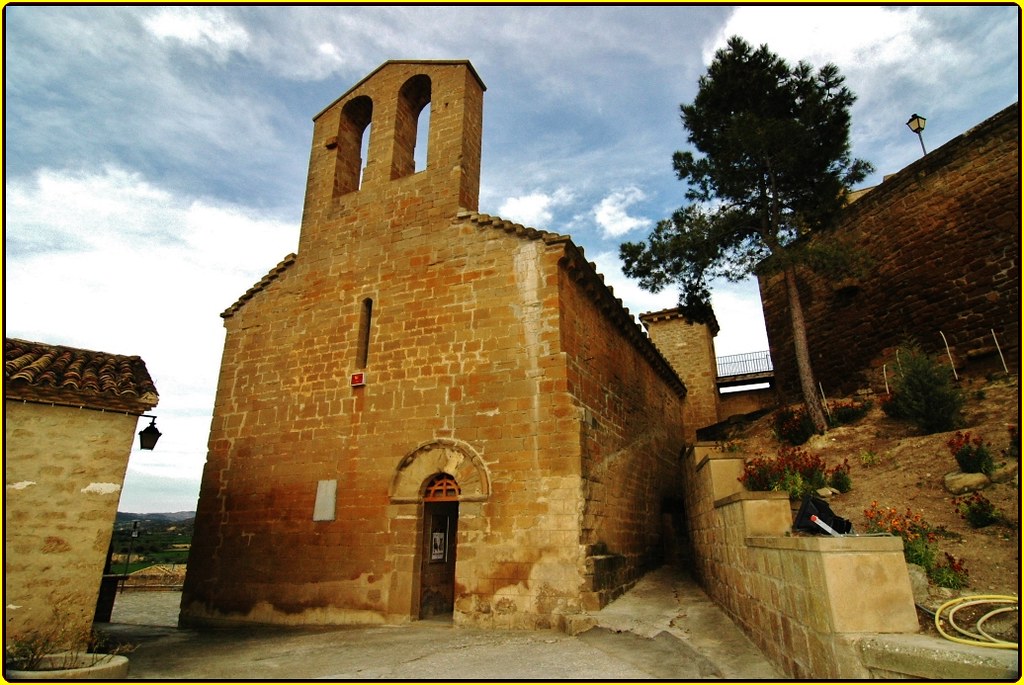
The church appears almost unexpectedly among the houses. Its reddish brick tower rises above the rooftops and can be spotted from several streets before you reach it. It carries the feel of Mudéjar architecture typical of this stretch of the Ebro valley: simple lines, small openings, and the pattern of exposed brick defining the surface.
Inside, the atmosphere shifts. Light filters in softly and the silence feels heavier than outside. Baroque altarpieces have been preserved, along with carpentry details that still show the craft of earlier centuries. It is not a monumental building, but it is one of those places where time has quietly accumulated through the life of the village.
Adobe walls, lime façades and inner courtyards
Walking through Boquiñeni means moving through a tightly woven network of streets. Many houses combine adobe, brick and sandstone, materials typical of this part of the valley. Some façades still feature enclosed galleries made of wood or iron, and wide gateways that once allowed carts to pass through.
The town hall stands along one side of the square. It is a restrained building, well maintained, without grand architectural gestures. Around it, there are interior courtyards where plant pots appear, perhaps a small fig tree or a young olive tree planted close to a wall. At certain times of day, the air carries the smell of firewood or freshly cooked food drifting out through open windows.
Paths through orchards and riverside fields
Once you leave the built-up area, the landscape opens quickly. The riverside here is broad and largely flat, with agricultural plots that change noticeably with the seasons. In spring, the green is vivid. In summer, dust clings to your shoes if you walk along the dirt tracks. By autumn, the fields turn more ochre, and the air often feels clearer.
Several rural tracks connect Boquiñeni with nearby villages and cultivated land. These are not mountain trails, but agricultural paths that can be followed on foot or by bicycle without much change in elevation. It is worth carrying water in summer, as the heat intensifies from midday and there is very little shade beyond the village.
On particularly clear days, looking north from the fields, a distant line of hills comes into view. It is not always easy to make out, but when the air is clean the horizon sharpens and the landscape feels more defined.
A calendar shaped by local life
Festivities remain one of the moments when Boquiñeni shifts its rhythm. Traditionally, events are held around San Miguel, the village’s patron saint. There are also celebrations in summer, when the population grows for a few days as residents return and the streets stay lively into the night.
This is not a calendar designed for passing visitors, but for the people who live here. If you happen to arrive during one of these periods, the change is immediate: more noise in the square, music after dark, long tables set up outdoors.
When to spend time in Boquiñeni
From spring to early autumn, the surrounding paths are easier to explore. In May and June, the fields are at their most active and the evenings stretch out longer. In September, the light softens over the crops.
In the height of summer, it is best to set out early if you plan to walk along the tracks. By the middle of the day, the sun falls directly onto the plain and the heat settles heavily across the fields.
Boquiñeni is not a place of major monuments or long itineraries. It is better understood through small details: a quiet street in mid-afternoon, the sound of a tractor returning from the fields, the brick tower outlined against the clear sky of the riverside. Life here follows a steady rhythm, and that, too, is part of the landscape.