Full Article
about Cabañas de Ebro
Hide article Read full article
A village on the river’s bend
Cabañas de Ebro occupies a curve of the river, a position that has defined its history and its shape. The Ebro here runs wide and slow through the Ribera Alta of Zaragoza, its course dictating the limits of the old huerta. With a population that rarely exceeds five hundred, the village follows the cadence of the agricultural year, not the tourist calendar.
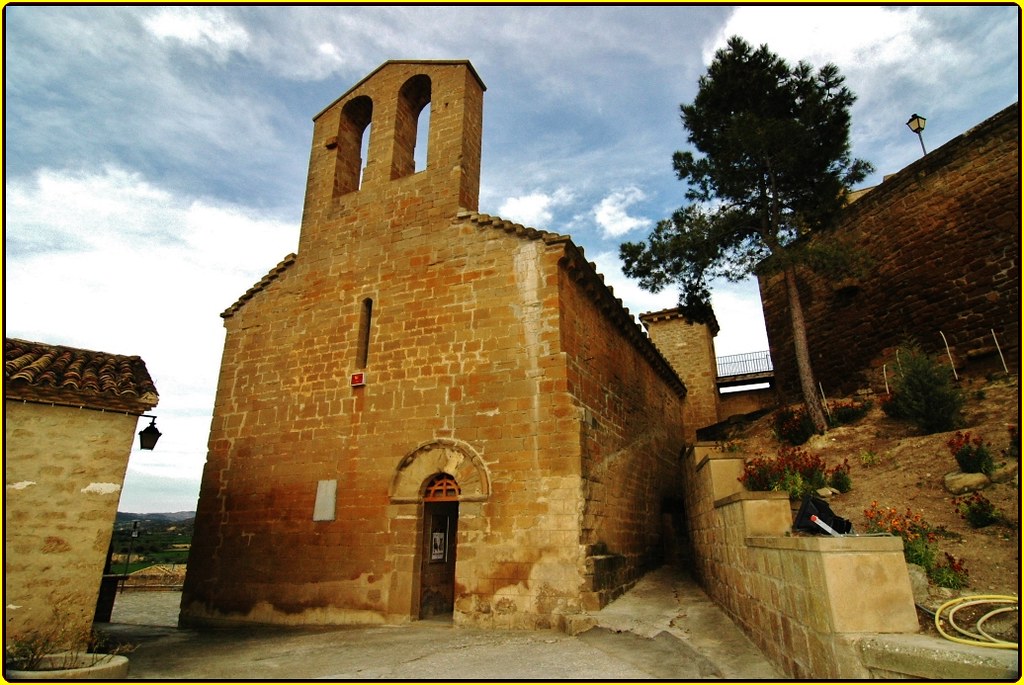
Its streets form a simple grid of brick and stone houses, built close together. This isn't an architectural showcase, but a practical settlement. The parish church of the Asunción de Nuestra Señora stands at the centre. Its construction shows several phases, from early modern masonry to later brickwork, a common narrative in these parts where churches were adapted over generations rather than built in a single campaign.
Built for the climate
The houses tell you more than any monument. You see thick brick walls, large doorways for carts, and sun-facing galleries. These are direct responses to the climate: harsh winters and dry, hot summers. The architecture prioritises utility. Some balconies and corredores are made from wood, now weathered to grey. Their original purpose was to provide a shaded, ventilated space during the long summer months.
Inside the church, the atmosphere is quiet and unadorned. The value of the place lies in its continuity as a communal meeting point, not in its artistic patrimony. It feels like a working building, which it is.
The life of the sotos
To understand this place, walk down to the river. The sotos, those dense riverside woods of poplar and willow, form a green corridor along the banks. This is a different ecosystem from the open fields just beyond it, cooler and full of sound.
Historically, these areas were used for grazing animals, collecting firewood, and small vegetable plots. Today, flat, unpaved paths trace the water's edge, suitable for a slow walk or a bicycle. The goal isn't reaching a viewpoint, but observing the shift from cultivated land to wilder growth.
Birdlife is part of the scene. Grey herons are common. With patience, you might see the flash of a kingfisher. These encounters are fleeting and subject to the time of day and season.
The agricultural rhythm
Everything in Cabañas de Ebro relates back to the land. The view from any street is of fields: the irrigated vega close to the river, and the drier secano beyond. What grows changes the colour of the landscape monthly—the green of winter cereal, the gold of harvested barley, the dark earth of ploughed soil.
The main local festival honours the Asunción in mid-August. It coincides with a lull in the summer harvest cycle, a time when families return and the village's population briefly swells. For the rest of the year, life is quiet and centred on daily work.
A practical visit
The village is about 45 kilometres northwest of Zaragoza. The most direct route is via the A-68, exiting towards Alagón before taking local roads. Coming by car is simplest. While there is a bus service, its schedule is infrequent and requires prior checking.
Once there, you can walk everywhere. The river path starts at the edge of the village. There are no designed tourist trails, just the existing network of farm tracks and riverside walks.
Cabañas de Ebro doesn’t offer landmarks to check off. It presents a way of life organised around a river and its seasons. You come to see that relationship, not to be entertained by it.