Full Article
about Grisen
Hide article Read full article
Evening light over the Ribera Alta
Late in the afternoon, when the sun drops low over the Ribera Alta del Ebro, the fields around Grisén turn a muted gold and the air carries a dry, earthy scent. Time in the village often begins like this, with long light slipping between brick houses and walls worn by years of use. Grisén sits about fifteen kilometres from Zaragoza, yet the pace shifts once you step into its streets. A car passes slowly, a voice drifts from a balcony, and beyond it all there is the steady hum of farmland.
From the road, the village appears compact: two-storey houses, enclosed courtyards, iron balconies. Many façades combine brick with pale stone, marked by alterations that hint at different periods of building and repair. Agriculture still shapes everything nearby. In spring, the fields open up in bright green; by late summer, the air often carries the dry smell of freshly cut cereal.
Brick, towers and everyday streets
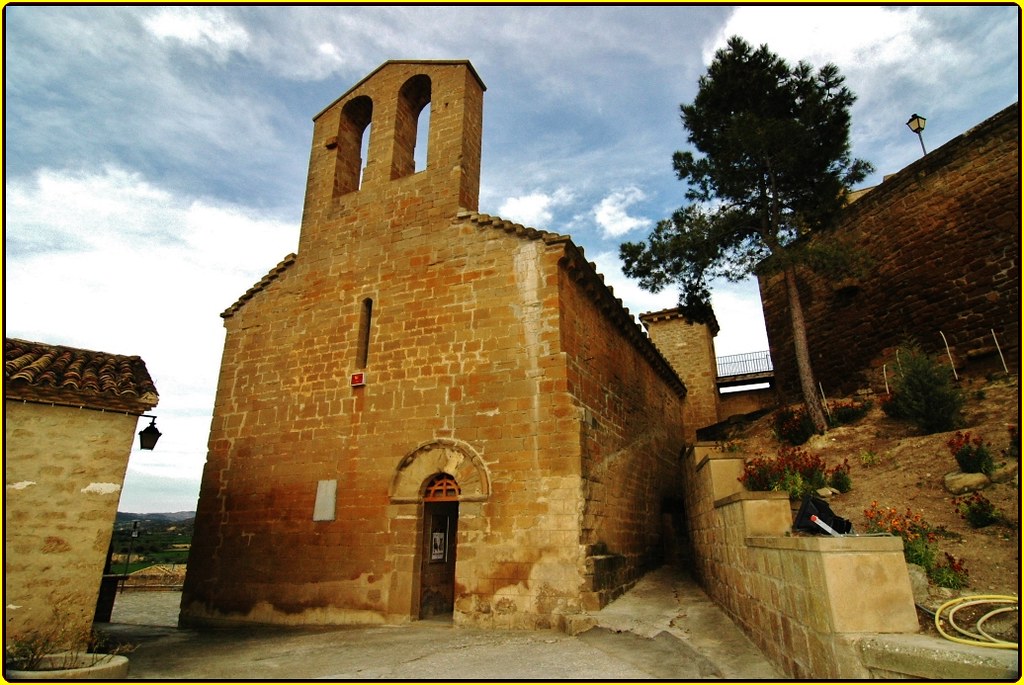
At the centre stands the parish church of Santa María Magdalena. Its base preserves Mudéjar features, visible in the use of brick and in arches that can still be picked out if you take a closer look. The tower rises above the village and can be seen from the surrounding paths, acting as a simple reference point when returning from the orchards or fields.
The streets around the square are short and quiet. Houses have small windows, flowerpots on balconies, and wooden doors that open directly onto the pavement. This is not a layout designed to impress. It reflects decades of daily life, gradual extensions and small repairs carried out over time.
At certain hours, especially towards the end of the day, the square becomes a meeting point. Neighbours sit and talk as the light fades. That scene says a lot about how the village works, without needing much explanation.
From the centre, agricultural tracks lead out between plots of land and small vegetable gardens. In some courtyards, strings of garlic or onions can still be seen drying in the sun when the season comes.
Fields through the seasons
The dirt tracks around Grisén are easy to follow on foot or by bike. They are working routes used daily by farmers, so it is worth stepping aside when a tractor passes and always respecting the cultivated land.
The landscape shifts noticeably with each season. Spring brings strong greens and the blossom of some fruit trees. Summer lightens everything: the soil turns paler, and cut cereal leaves behind stubble across the fields. In autumn, softer tones return as the land is prepared for new sowing.
Closer to the river and irrigation channels, birdlife is fairly easy to spot. Herons, small groups of ducks, and birds of prey circle above the open ground, watching for movement below.
Inside the village, traditional cooking remains closely tied to what the land provides. Migas, made from stale bread, appear alongside vegetables from local gardens when in season. Roasted meats are common during family gatherings or on festive days.
Festive moments and the village calendar
Celebrations in Grisén are concentrated in mid-August, when the patron saint festivities are held in honour of Santa María Magdalena. During these days, the atmosphere changes. There is music in the square, activities organised by local associations, and the return of residents who come back to spend time with family.
Holy Week is also observed, with processions moving through some of the main streets. It is not a large-scale event, but a quieter, more reflective occasion shaped mainly by the people who live here.
Throughout the year, many important gatherings remain tied to the agricultural calendar. Harvest periods, preparation of the land, and family meet-ups often coincide with these moments, linking social life closely to the work of the fields.
Getting there and choosing your moment
Grisén is about a twenty-minute drive from Zaragoza, following roads that run west along the Ebro valley. The route is straightforward and mostly flat, passing through open farmland.
Spring and autumn are generally the most comfortable times for walking along the agricultural tracks. There is more activity in the fields, and the light shifts constantly across the land. In summer, the heat becomes intense during the middle of the day, so early mornings or the hours when the sun drops are more suitable.
If time is short
An hour is enough to walk the streets near the square, stop by the church, and head briefly out along one of the paths at the edge of the village. Towards the end of the day, when noise fades and the fields begin to cool, Grisén becomes easier to understand: a small place closely tied to the land, where much of life still turns around what happens in the surrounding fields.