Full Article
about Pleitas
Hide article Read full article
A village shaped by its surroundings
Pleitas, in the Ribera Alta del Ebro in Aragón, is the kind of place that only makes sense when you look beyond it. With just 29 registered residents, the village sits amid cultivated fields and agricultural tracks that have structured the landscape for centuries. It lies a short distance from Alagón and other settlements along the Ebro valley, in a broad plain where the terrain barely interrupts the view and where the rhythm of life follows the farming seasons.
This is not a place defined by landmarks or busy streets. Its identity comes from its setting, the open land, the working fields, and the long continuity of rural life.
An agricultural settlement on the Ebro plain
The municipality occupies land traditionally devoted to cereals and irrigated market gardening, linked to the Ebro’s network of acequias, or irrigation channels. Although the river itself does not run alongside the village, its water system has long shaped how the surrounding land is cultivated.
Within the village, the typical building techniques of this part of Aragón are still clearly visible. Many houses combine adobe walls with stone at the base, alongside later alterations, often dating from the 18th and 19th centuries. Wide wooden gateways, originally designed to allow carts through, are a recurring feature. Windows are often fitted with simple iron grilles, practical rather than decorative.
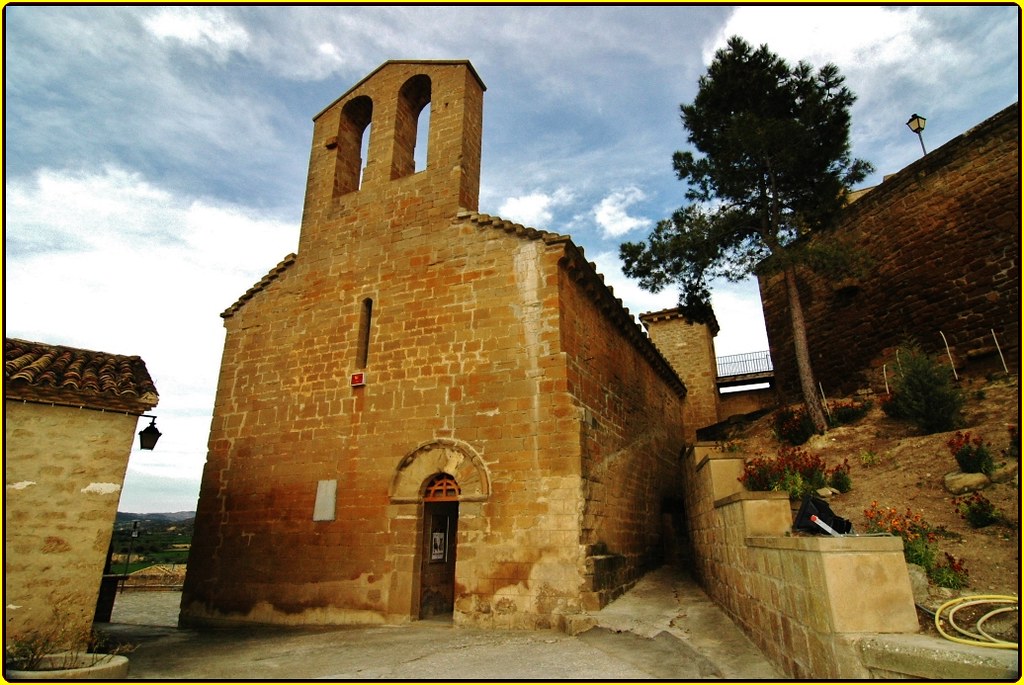
The parish church is dedicated to San Andrés. The current building dates roughly to the 16th century, though it has undergone later repairs and modifications. In a village of this size, the church has traditionally served more as a meeting point than as an artistic monument. That role is still evident in its scale and its position within the settlement.
Short streets and everyday architecture
Pleitas can be walked in very little time. Its streets are short and irregular, forming a compact cluster around the church and a handful of older houses.
The interest lies in the details of domestic architecture. Deep eaves, thick walls and subtle variations in façades reveal extensions or repairs carried out with whatever materials were available at different moments. In places like this, buildings reflect practical responses to climate and local resources rather than any formal design.
The overall layout feels organic rather than planned. Corners turn unexpectedly, façades shift slightly in alignment, and the scale remains consistently modest. There is little sense of separation between public and private space, the village reads as a continuous fabric shaped over time.
Agricultural tracks and an open landscape
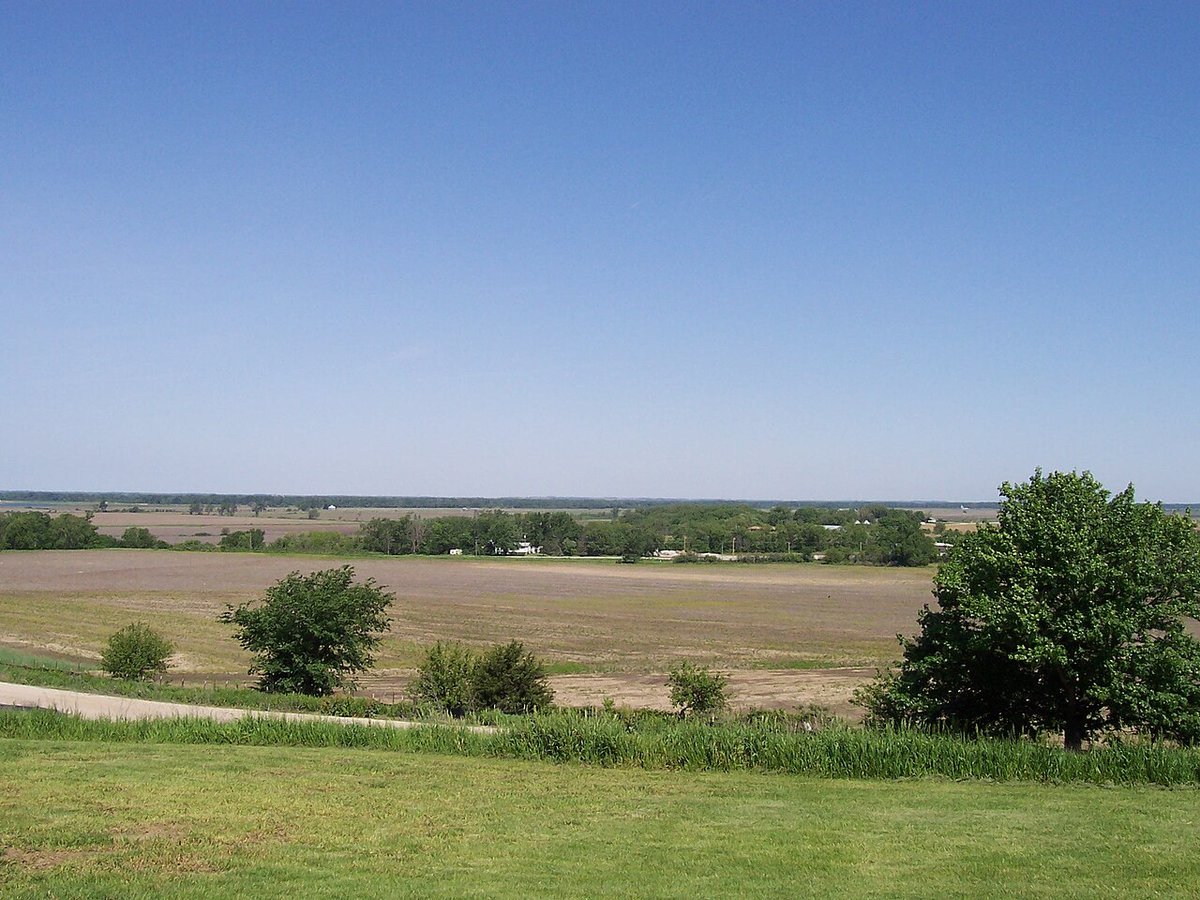
Beyond the built-up area, the defining feature is the agricultural landscape typical of the Ribera Alta del Ebro. Large cereal plots stretch across the plain, intersected by straight farm tracks and irrigation channels that organise the land.
Some traditional elements remain visible, including ribazos, the raised edges between fields, and small agricultural structures that explain how the land has been worked across generations. These features are not presented as heritage in a formal sense, but they form part of the everyday environment.
The tracks themselves are flat and technically easy, used mainly by farmers rather than visitors. Walking along them gives a clear sense of scale. Fields extend in long lines, agricultural machinery appears at certain times of year, and the dominant sounds are wind and birds typical of open farmland.
There is little shade outside the village, and the openness of the terrain means that weather conditions are felt directly. The landscape does not attempt to impress, but it does reveal how consistently it has been used and shaped.
Local life and the rhythm of the year
Social life in Pleitas revolves around the religious calendar and the periods when former residents return. The feast of San Andrés remains the key moment of the year. In a village with so few inhabitants, celebrations naturally adapt to the number of people present at any given time.
Summer brings a modest increase in activity. Family houses that remain closed for much of the year reopen for a few weeks, and gatherings take place between current residents and those who have moved elsewhere. These moments temporarily change the atmosphere, adding movement to an otherwise quiet setting.
Outside these periods, daily life follows a slower pattern, closely tied to agricultural work and seasonal cycles. The small population means that changes are subtle rather than dramatic.
Visiting Pleitas
Pleitas works best as a brief stop within a wider route through the Ribera Alta del Ebro. The village itself can be explored in under an hour.
Spring and autumn are generally the most comfortable times to walk along the surrounding agricultural tracks. In summer, heat can be intense, and there is very little shade once outside the village.
Those interested in traditional architecture or agricultural landscapes will find enough to engage with here. A slow walk through the centre, followed by a short wander along any of the surrounding tracks, is enough to understand how life has been organised in a place of this scale. The point is not the number of sights, but the way everything fits together in a small, working rural environment.