Full Article
about Pradilla de Ebro
Hide article Read full article
At seven in the morning, light slips through the poplars along the dyke and lays thin gold lines across the surface of the Ebro. From the bridge, the church tower leans slightly to the north, as if still keeping an eye on the river that passes just a few metres away. A stork on a nearby lamppost adjusts its nest with unhurried movements. The village is still asleep, apart from the soft splash of a boat and the sound of a van crossing the main street.
Pradilla de Ebro wakes to the smell of bread and damp earth as the dew lifts. The streets in the old centre, some with worn stone stretches, show the marks left by years of use and the steady passage of carts and tractors heading towards the vegetable plots. The main square has that open feel typical of riverside settlements that relied for centuries on the river and on cereal farming. On some façades, weathered stone coats of arms remain visible. It is often recalled that these lands passed through the hands of military orders and various lordships, a common story across this part of the Ebro valley.
Cooking from home and garden
By midday, when the sun falls directly onto Calle Mayor, the dominant smell is often longaniza sizzling in a pan. In many homes it appears alongside asparagus from nearby plots or freshly fried eggs. The cooking is straightforward, built around local ingredients and without much complication.
In spring, some tables also feature coscoranas, a sweet flatbread prepared here during pilgrimages or local festivities. Each household has its own way of making it, so the flavour rarely matches from one kitchen to another. It is a small detail, but it reflects how food here stays tied to family habits rather than fixed recipes.
The Ebro, always close
The Camino Natural del Ebro, also known as the GR‑99 long-distance path, passes right below the bridge. In this stretch it is wide and fairly flat, easy to follow on foot or at a relaxed cycling pace. Heading downstream towards Gallur, the route continues through riverside groves where poplars provide shade for much of the way.
When the river rises, it becomes noticeable quickly. Along the bank there are marks showing how far the water reached during some recent floods. Older residents still talk about a time when crossing from one side to the other meant using a boat held by a rope stretched across the river, pulled from bank to bank by hand. Today the bridge has made that crossing straightforward, yet near the water there is still a small structure linked to that earlier system.
The presence of the Ebro shapes daily life in ways that go beyond the view. It affects the rhythm of the seasons, the condition of the paths, and even the way people talk about the landscape. The river is not something separate from the village, it runs alongside it in every sense.
The church above the village
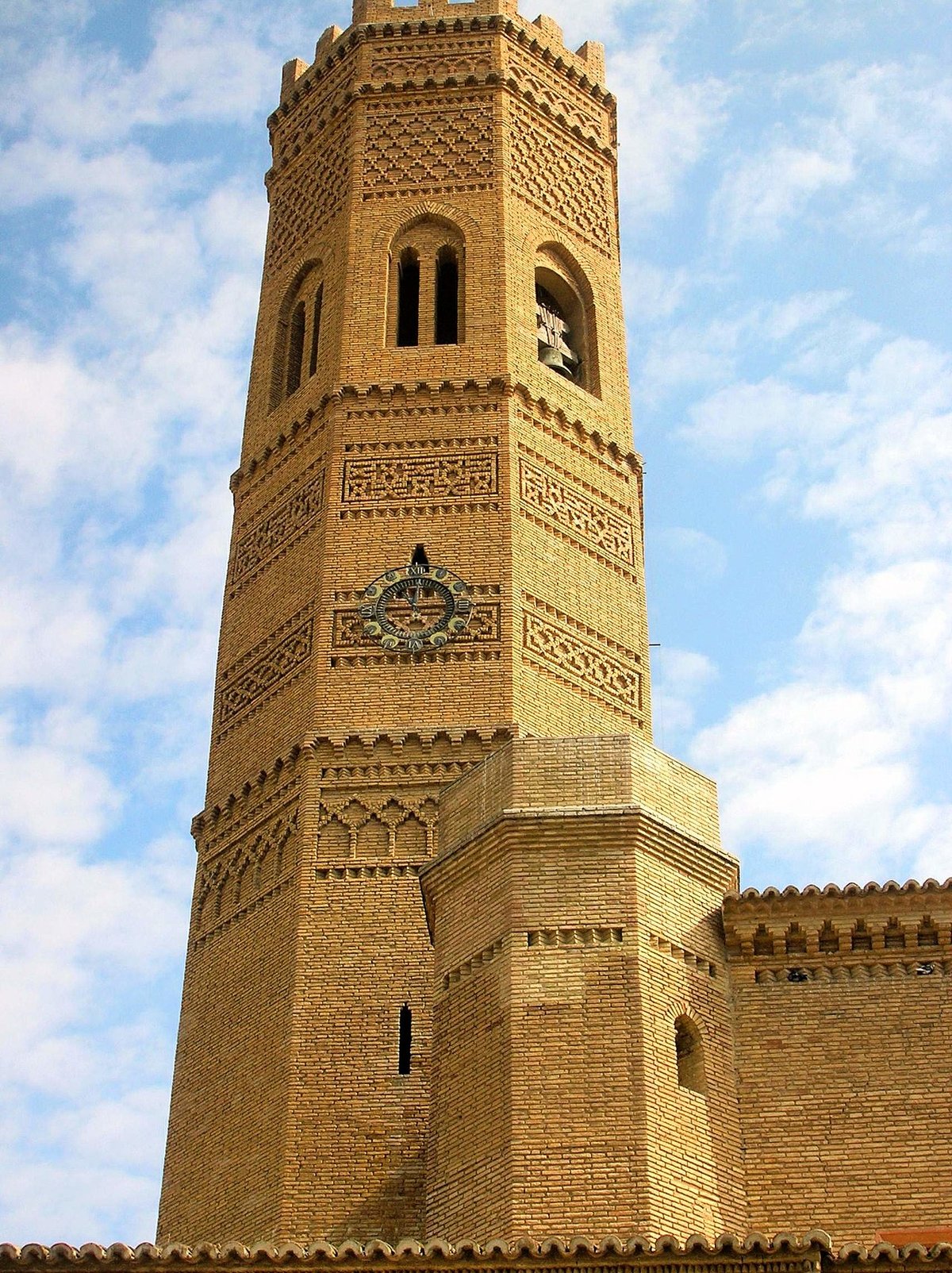
The Iglesia del Rosario stands on the highest point of the built-up area. Its Mudejar tower, with an octagonal plan, has a slight tilt that can be clearly seen from the square below. In the Ebro valley this is not unusual, as many older towers were built on clay-heavy soils that gradually shift over time.
Inside, the light is dim and the walls are thick. In the main chapel there is a Baroque altarpiece with gilding that has worn down noticeably. If the church happens to be open, it is sometimes possible to see a Romanesque baptismal font as well. According to local accounts, it comes from an older monastery somewhere in the area.
The building does not aim to impress through scale or decoration. Instead, it reflects the same steady continuity that appears elsewhere in the village, shaped by time, materials and use rather than grand design.
When to come by
Early May is often a good moment to see the riverside in full green, with stork nests occupied and active. The path along the dyke is calm then, and the river runs full but steady.
In July and August, the atmosphere shifts, especially at weekends when more people head to the river area. Parking near the dyke can become somewhat chaotic by mid-morning.
Winter visits call for sturdy boots. When the Ebro overflows or after several days of rain, mud clings to the path and walking along the bank becomes slower and heavier going.
Towards evening, the light turns amber and the water takes on a dense grey tone. From the dyke, Pradilla appears gathered behind the trees: the slightly leaning tower, low rooftops, and several stork nests rising above chimneys. The village, home to just over five hundred people, continues to face the river as it always has. Here, the Ebro is not just scenery, it is a constant presence.