Full Article
about Remolinos
Hide article Read full article
Remolinos: A Village Built on Salt
The story of Remolinos is written in the land itself. To the eye, it is a village of brick and stone set within the irrigated farmland of the Ribera Alta del Ebro. But its foundation lies deeper, in the thick seams of rock salt beneath the fields. This resource was known in Roman times and actively worked by the Middle Ages, when salt was a commodity of strategic value. Its extraction dictated the settlement’s early economy and forged its enduring link to Zaragoza, some twenty-five kilometres downriver.
The Ebro’s presence is constant. The village’s name comes from the swirling currents, remolinos, that form along this stretch. Generations of labour have shaped the surrounding huerta with a network of irrigation channels, a system that still orders the cultivation today. With little over a thousand inhabitants, life here maintains a direct, tangible rhythm with both the river and the soil.
The Parish Church and the Logic of the Streets
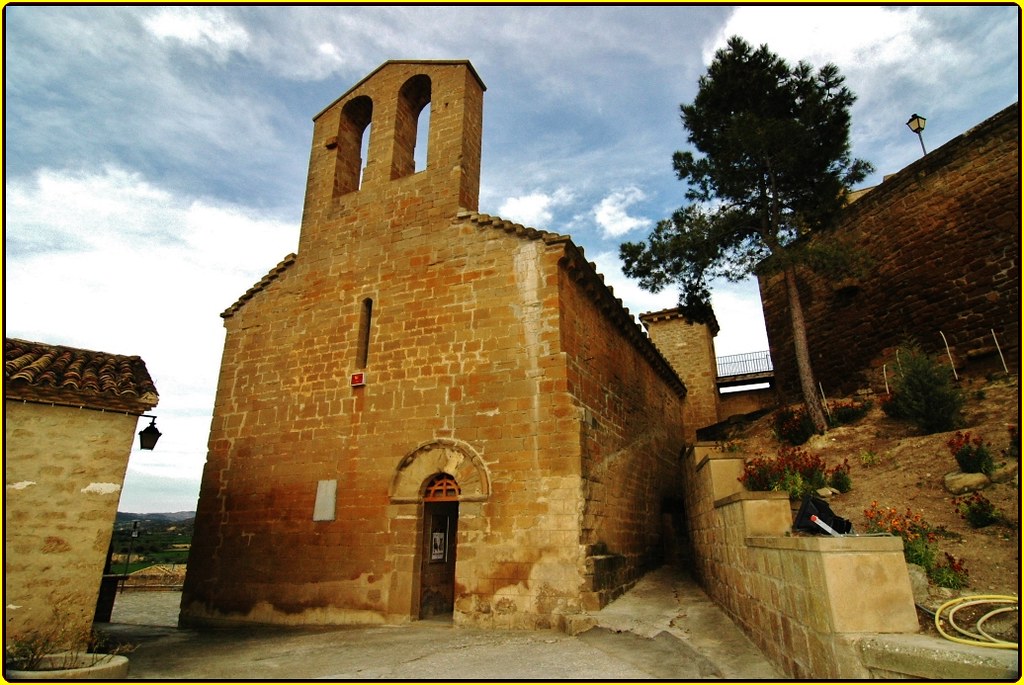
The parish church anchors the village layout. Its tower, visible across the flat terrain, has long served as a reference point for those working the fields. The building shows several phases of construction, a common trait in these riverside communities where churches were modified as needs changed.
The streets follow a practical logic. Traditional houses combine brick and stone, with deep eaves designed for shade and shelter from the persistent cierzo wind. You see wide doorways that once accommodated carts and tools, and wrought-iron balconies overlooking lanes scaled for pedestrian and animal traffic. This is not grand architecture, but a built environment that clearly speaks of an agricultural past, of a time when domestic life and farm work were closely intertwined.
The River’s Edge: Sotos and Shifting Currents
A brief walk from the village centre leads to a different landscape. Here, the Ebro’s sotos—remnants of riverside woodland—create pockets of dense vegetation. Poplars and willows crowd the banks, their reflection broken by the current. This is a habitat for herons, kingfishers, and other waterfowl, especially in the quieter backwaters.
These woods were never merely scenic. For centuries, they provided timber, forage for animals, and a buffer against floods. The Ebro has always been a dual presence: a source of fertility and a force requiring careful negotiation. The community’s relationship with the river is one of use and respect, shaped by its unpredictable moods.
A Landscape of Layers
What defines Remolinos is the connection between its elements. The irrigated fields, the riverine woods, and the memory of salt mining are chapters of the same story. One helps explain the other. The meticulous water distribution systems speak to agricultural permanence, while the historical mines reveal a parallel, subterranean economy.
This layered identity becomes apparent when moving through the area. The shift from orderly plots to the wilder sotos happens quickly, tracing a long history of adaptation. The village sits at the centre of this exchange, its form shaped by natural resources and human enterprise.
For Your Visit
Remolinos is roughly a thirty-minute drive from Zaragoza, following the road that traces the Ebro northwest. The village is small; its streets can be walked in under an hour. Its value lies not in a checklist of monuments but in reading the landscape as a whole.
Look for the traces of salt works in local memory and place names. Walk out to see where the cultivated land meets the river’s edge. The context is what gives the place its particular character—a community shaped by what lies both above and below the surface.